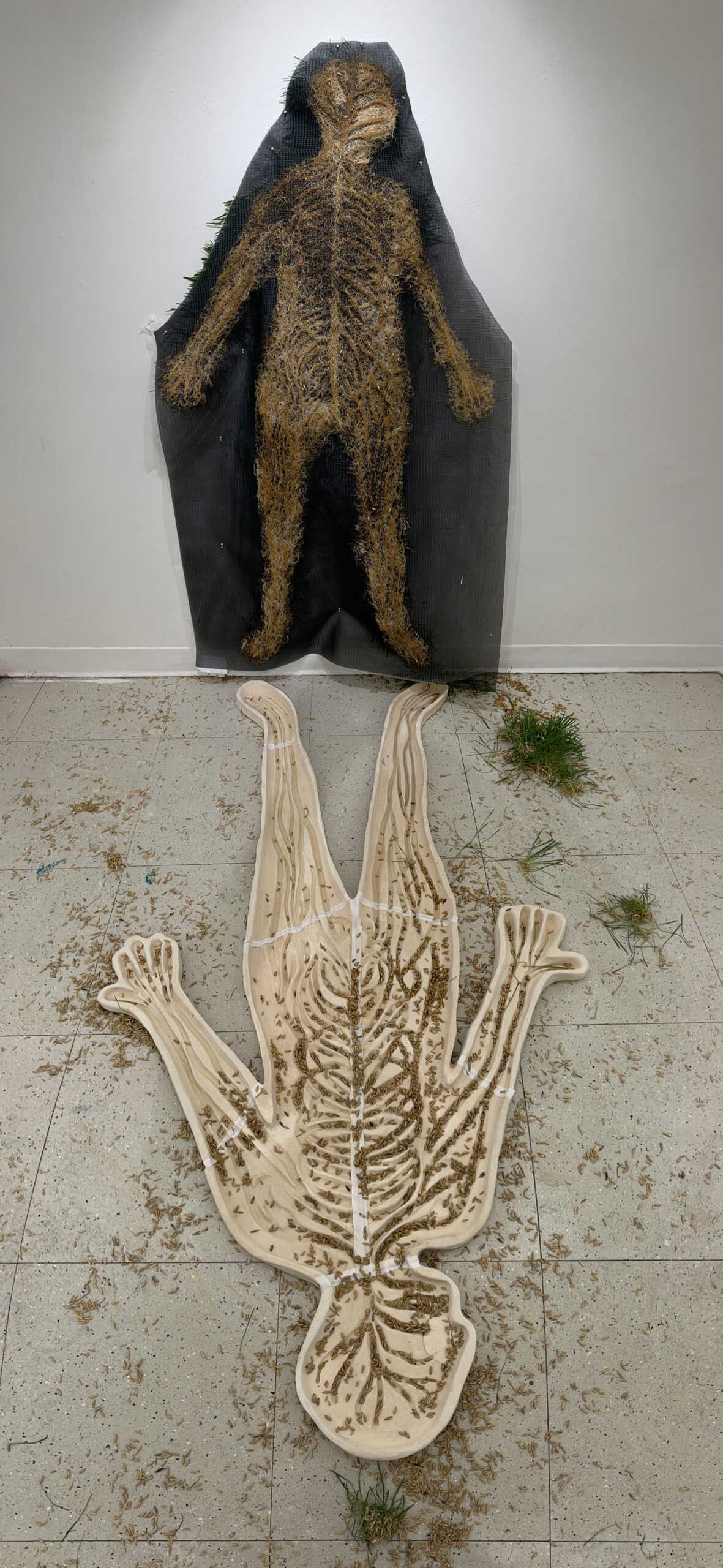
My work is based in the bio-art tradition, using materials and techniques associated with science to make art. For this Bio-Portrait I will create a female human and grow sculptural works from mycelium (the root like structure supporting the fruiting fundi/mushroom) and plant seeds (identifying those native to the area). I will also use clay/mud as part of the sculpture. The work will be strictly temporary, and ideally it would cease to exist at the end of the exhibition, the component parts having returned to the earth.
Heritage continues to take root in the soil and will always be remembered, no matter where we are.
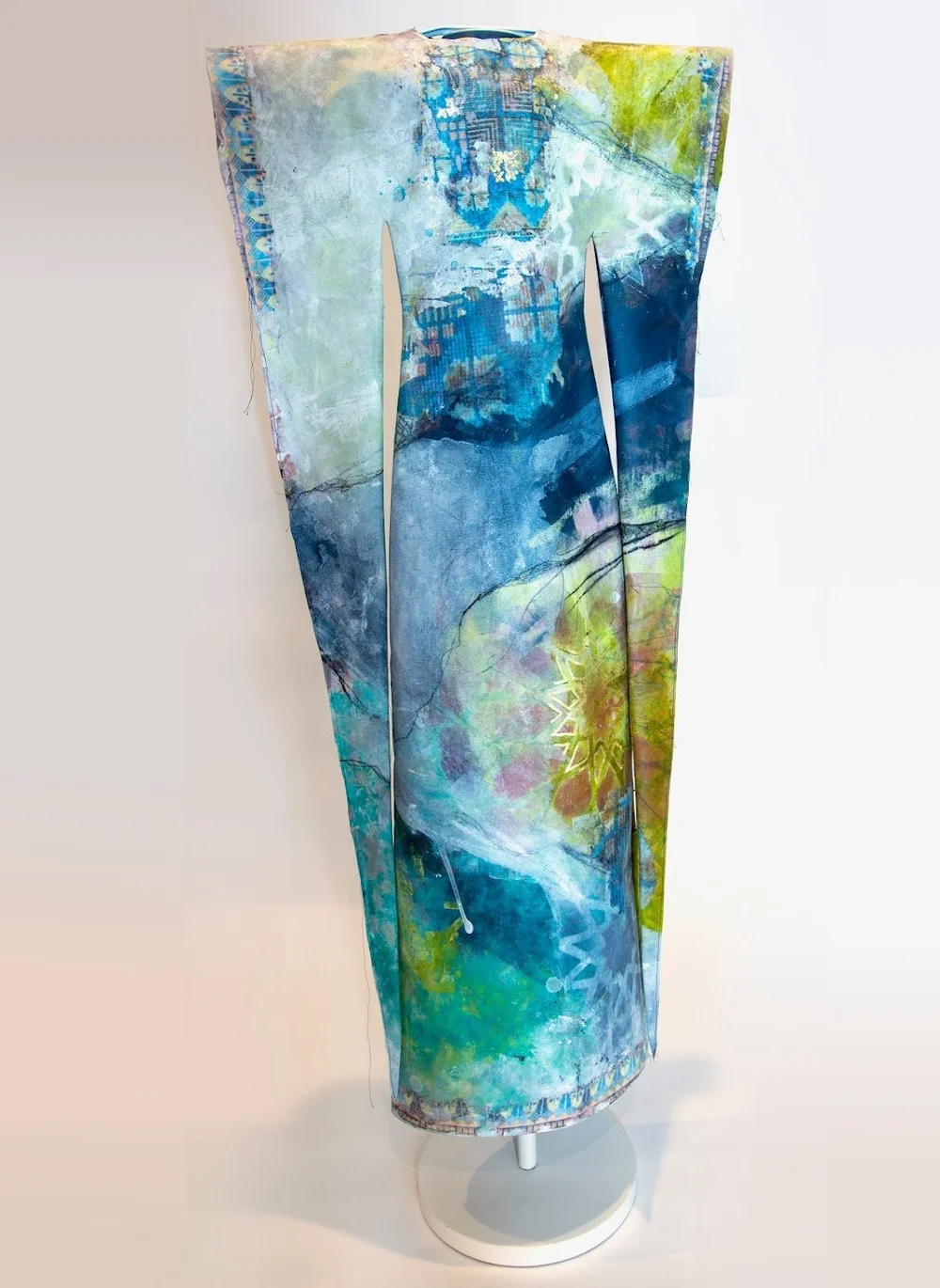
As a first-generation displaced Palestinian, the sculptural dresses reflect the experience of carrying identity, memory, and ancestral connection. Like root systems adapting to different environments, they speak to the resilience of diaspora communities who remain deeply connected to their cultural roots despite displacement from their homeland. The work is grounded in the idea that the land is always within you, carried through memory, tradition, and inherited practices such as tatreez and folk music.
Created as an homage to past, present, and future generations of women, the sculptural forms honor the passing of cultural knowledge from grandmother to mother to daughter to granddaughter. Installed in nature, the dresses become part of a larger root system, connected through shared histories, memory, and intergenerational knowledge.
Like roots spreading beneath the surface, these connections continue to grow and sustain identity across distance, time, and place.
The generational series of reinterpreted sculptural dresses explores resilience, cultural memory, and identity through the exaggerated form of the Palestinian thobe, a traditional dress featuring distinctive tatreez cross-stitch embroidery that tells the wearer’s story and reflects regional cultural identity and land through its patterns and motifs. The project transforms painted canvases into large-scale sculptural dress forms designed for the outdoor landscape.
Inspired by the colors of nature, layered abstract surfaces are created on canvas using paint, texture, and mixed media. Layered within these compositions are Palestinian tatreez motifs (cross-stitch embroidery), such as the Cyprus tree, olive branches, and the tree of life, all symbols that carry connections to ancestry, place, and cultural continuity.
Though not wearable, the sculptural dresses honor the women of past, present, and future generations who carry Palestinian culture and traditions forward. The works speak to the resilience of remaining rooted in identity and heritage despite displacement, fragmentation, and distance from homeland.
Through painting, textile, and form, these dresses become a visual language of remembrance, resilience, and the enduring strength of cultural roots.
This project has taken many twists and turns; at its heart, it is about connection: to self, to place, and to the life that sustains us. In developing this work, I became so focused on the details that I lost sight of the bigger picture: the importance of connection. Yet the materials themselves are part of this story.
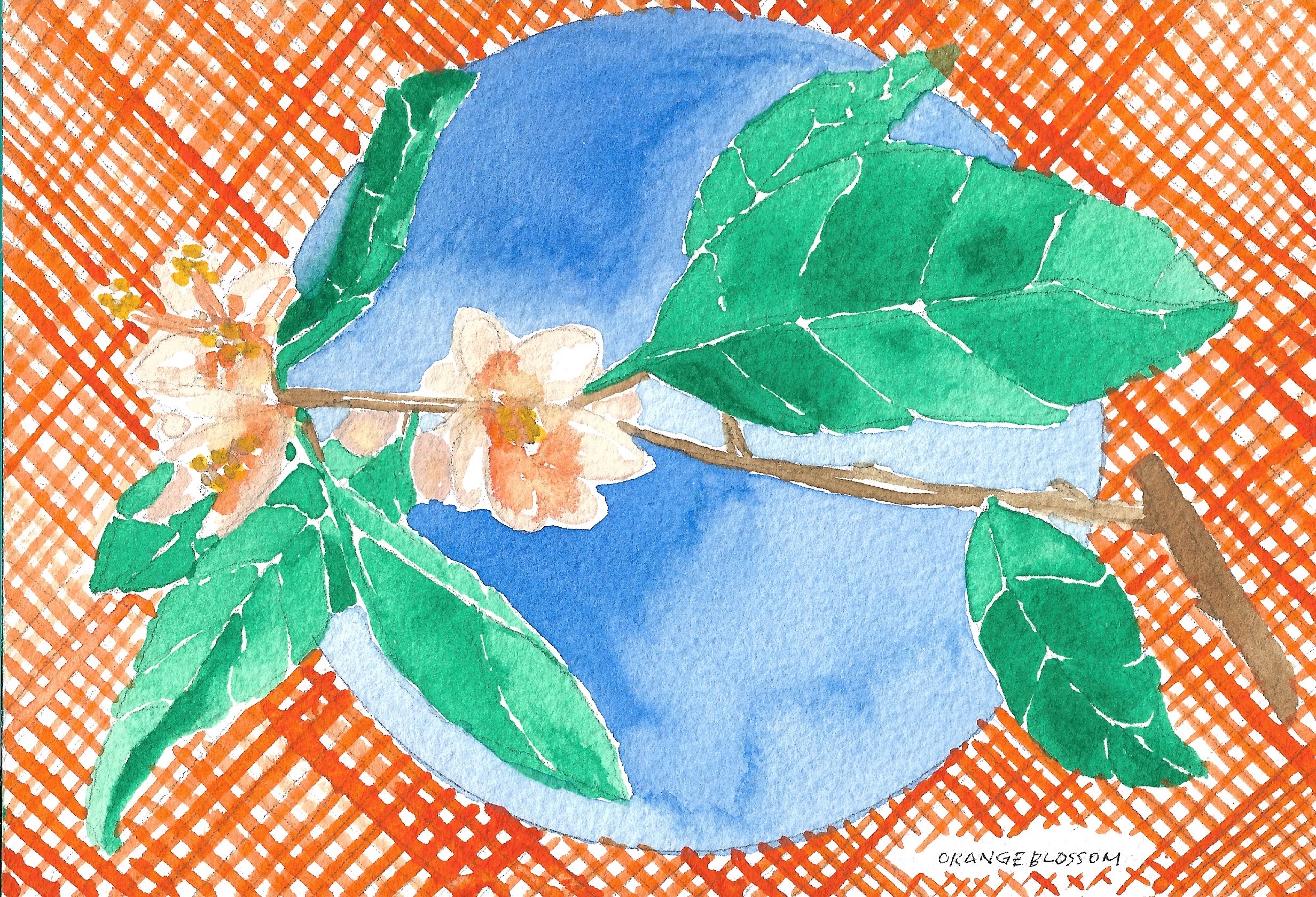
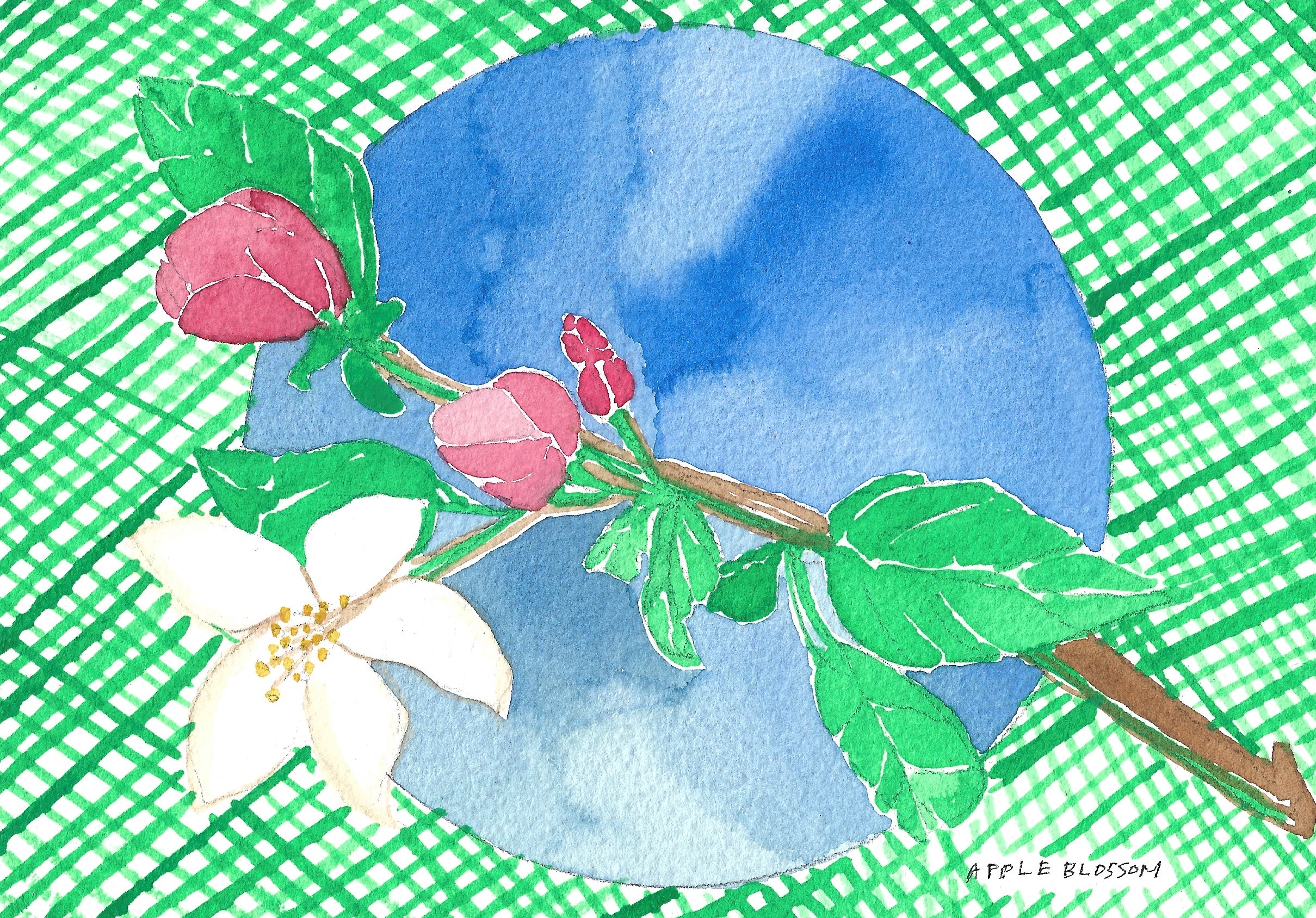
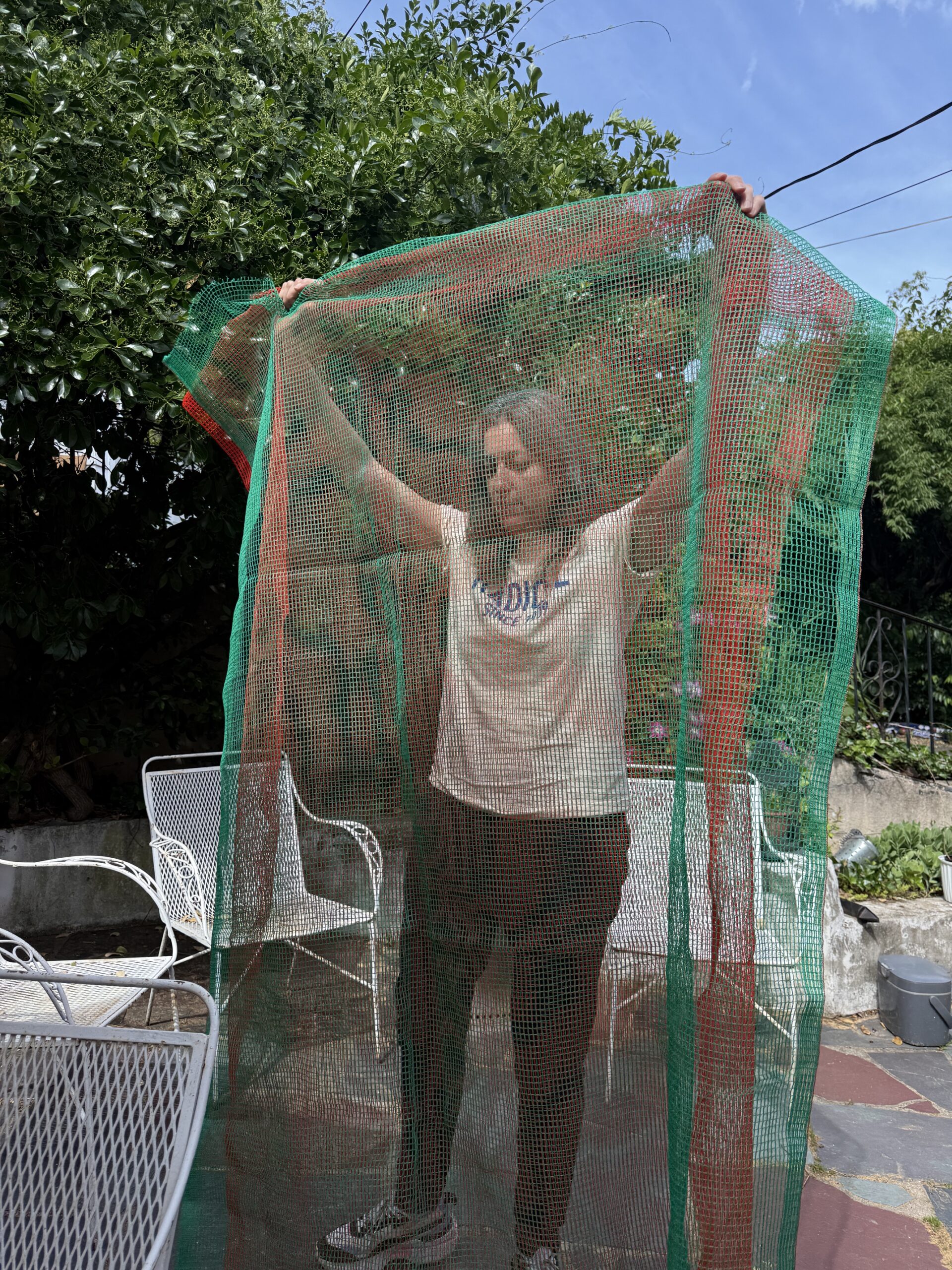
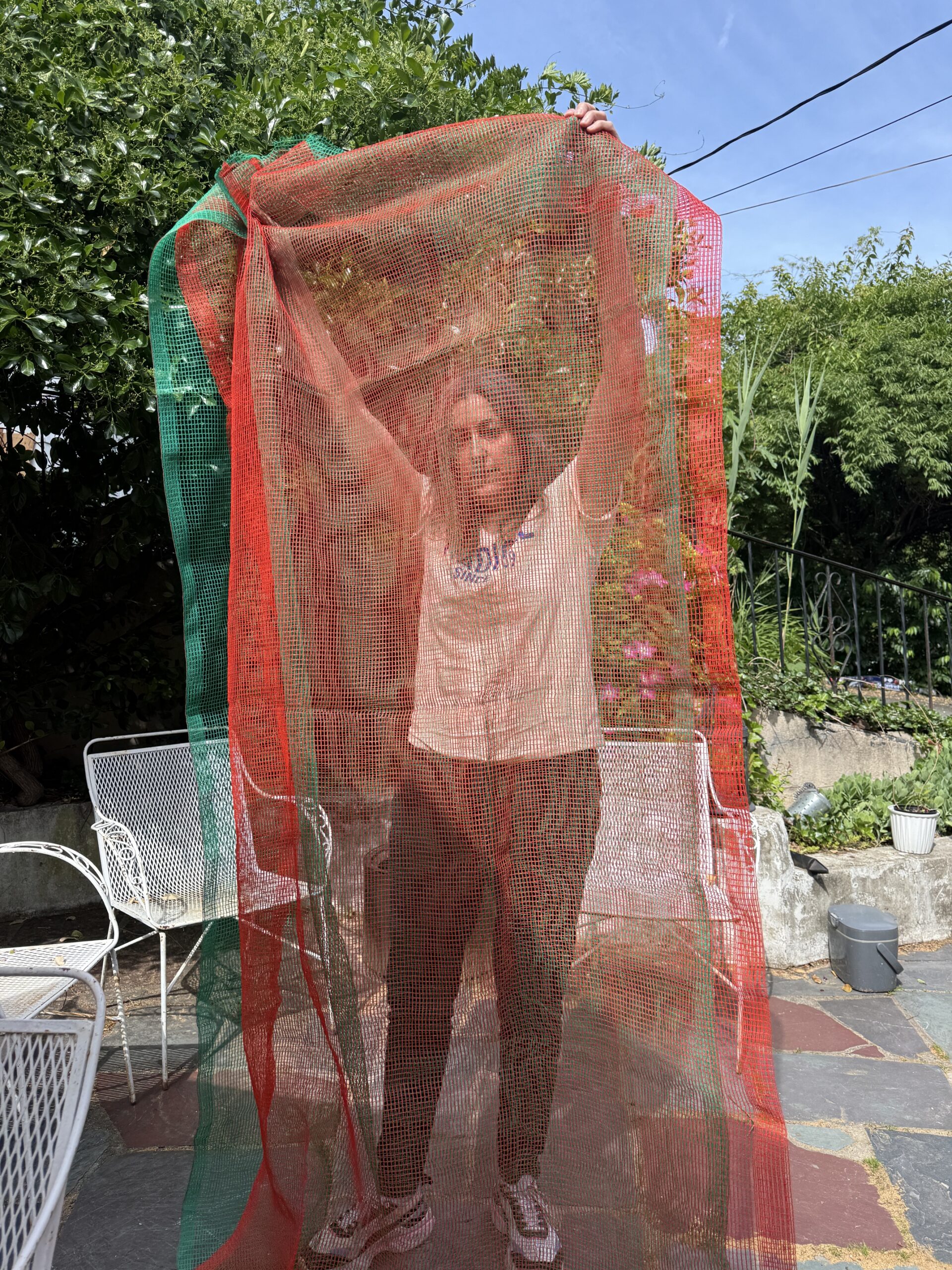
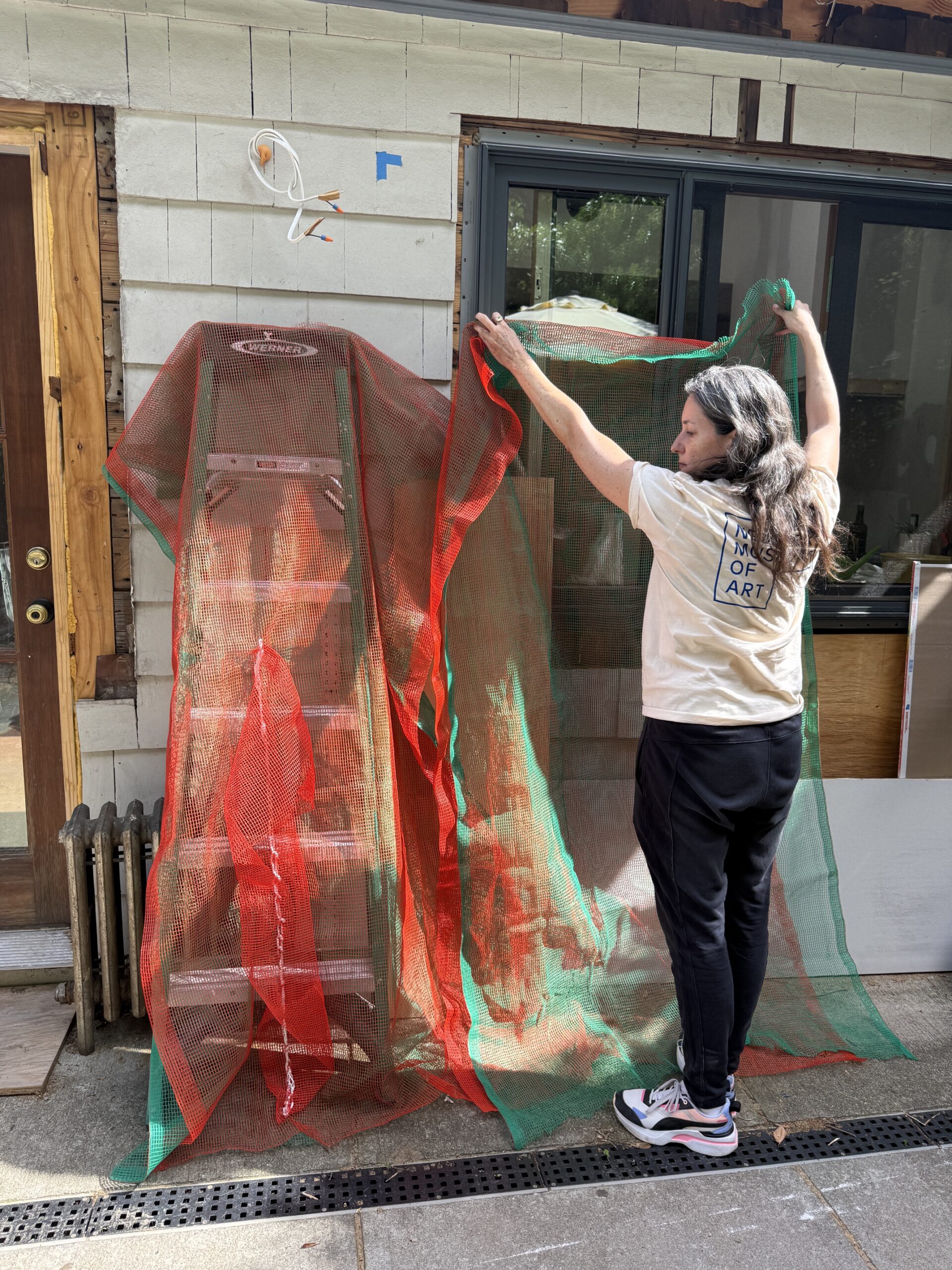
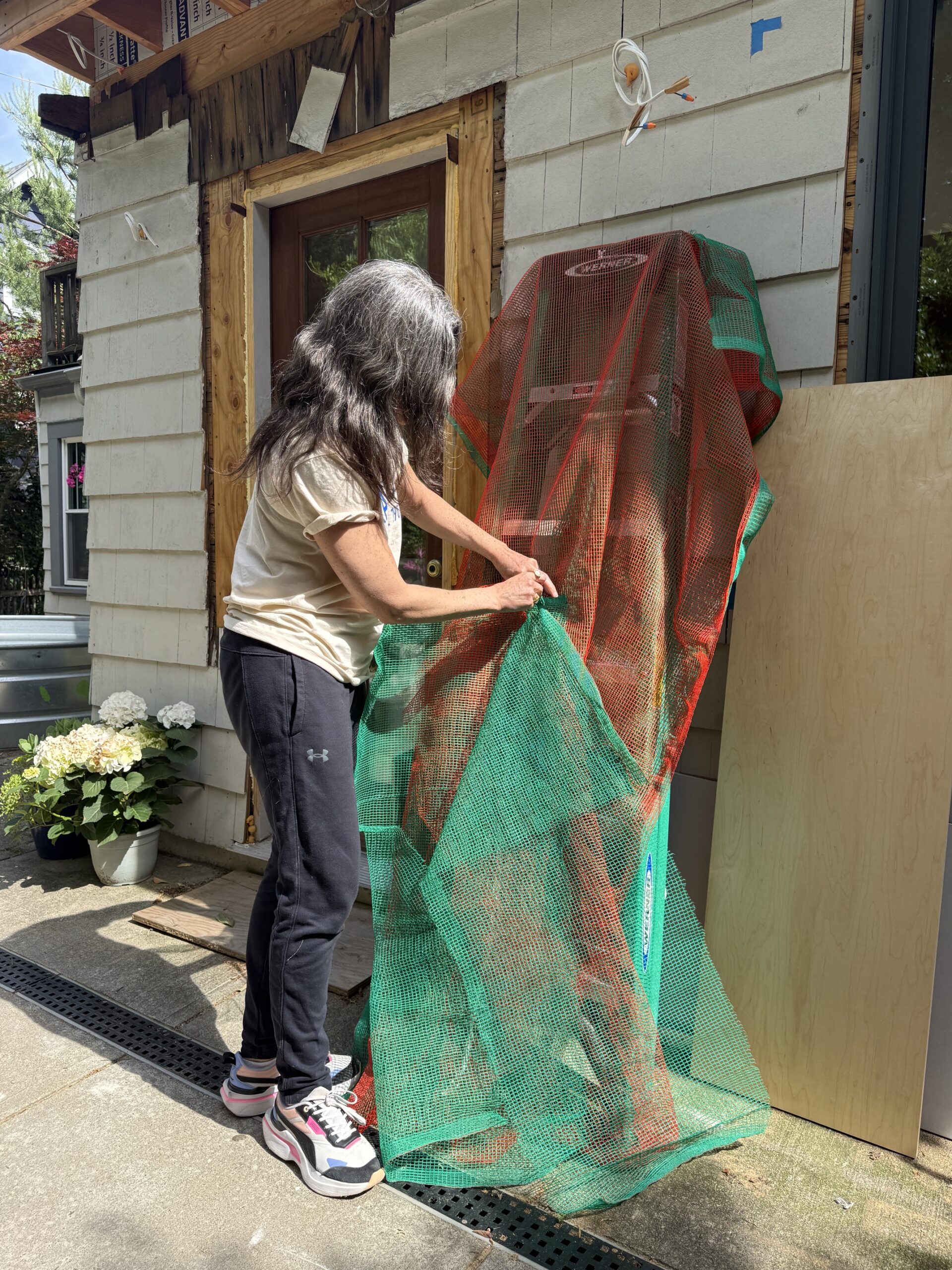
For this project, I am creating tree forms on orange and green construction netting held together by threaded tree shapes that I weave through the fabric. The trees represented are all fruit-bearing: orange, fig, plum, persimmon, and olive, among others. These trees depend on systems of pollination to thrive. The panels will be connected by wooden dowels staked into the ground to form a honeycomb shape. The hexagonal pattern represents the interconnected networks found in nature.
The structure will also resemble a ‘para-vento,’ a windbreaker commonly used on beaches in Portugal. Some of my most formative experiences have taken place in Portugal, a landscape that is also home to the fruit trees I am exploring in this work. As the wind moves through the netting and threaded forms, the installation becomes activated in its environment, emphasizing the ongoing exchange between the work and the natural world around it.
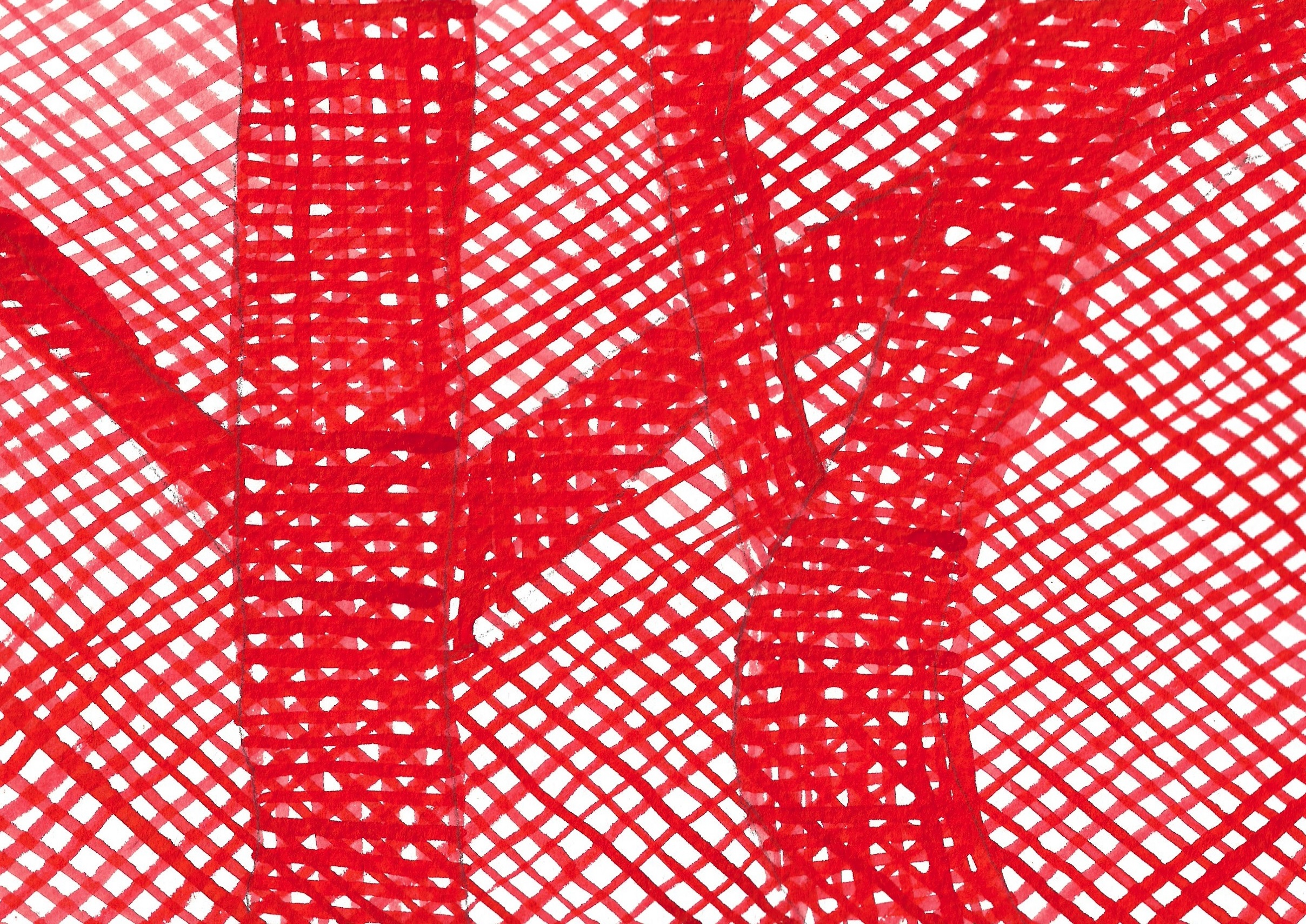
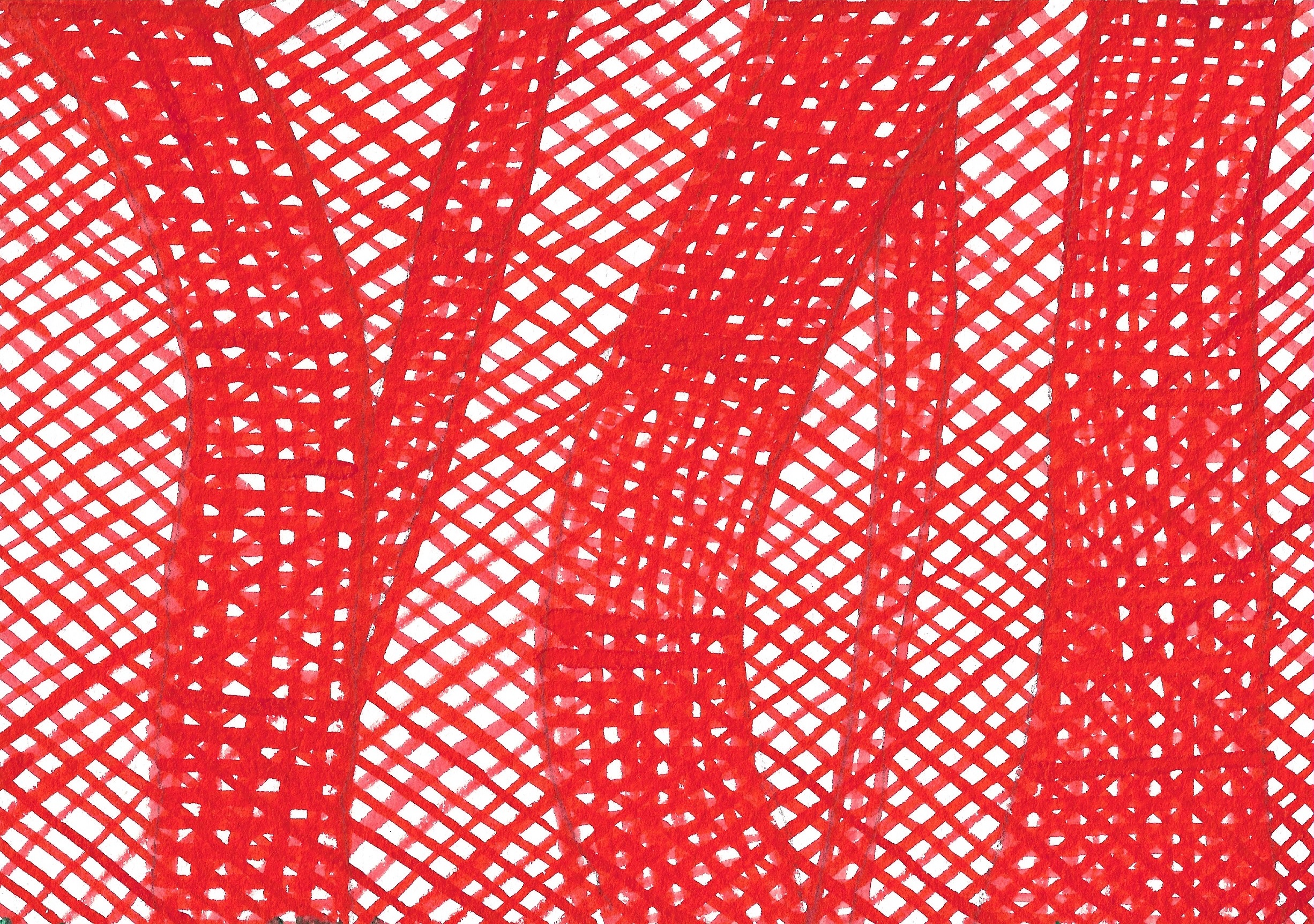
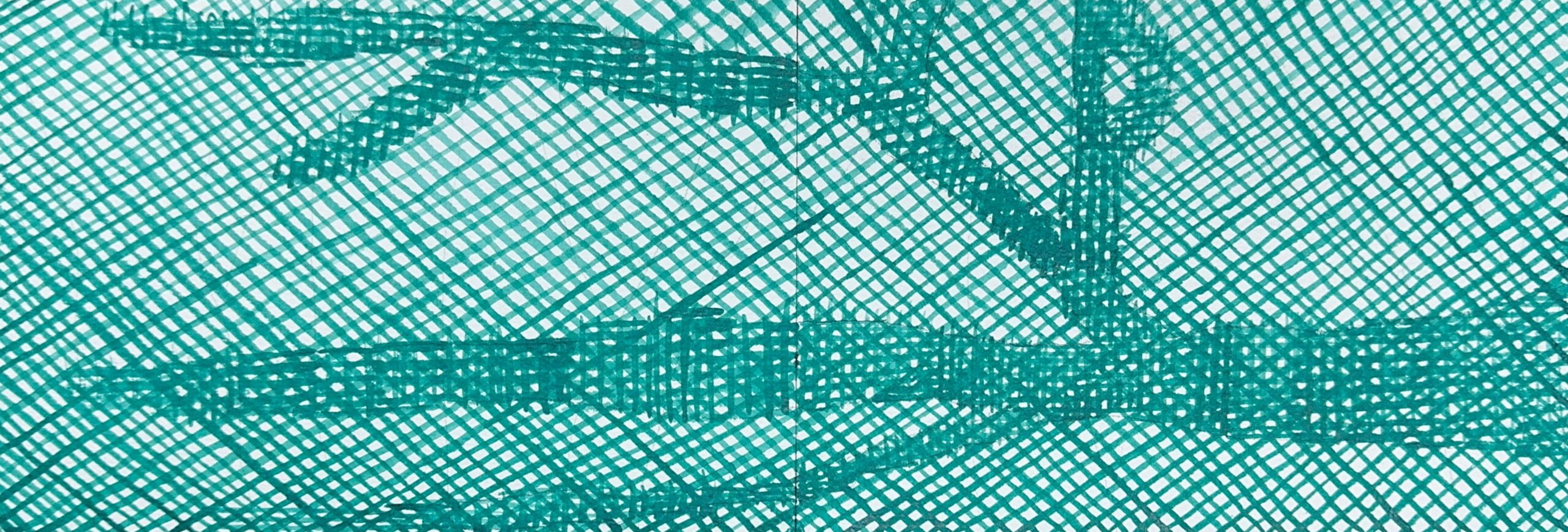
A watercolor study of green on green netting.
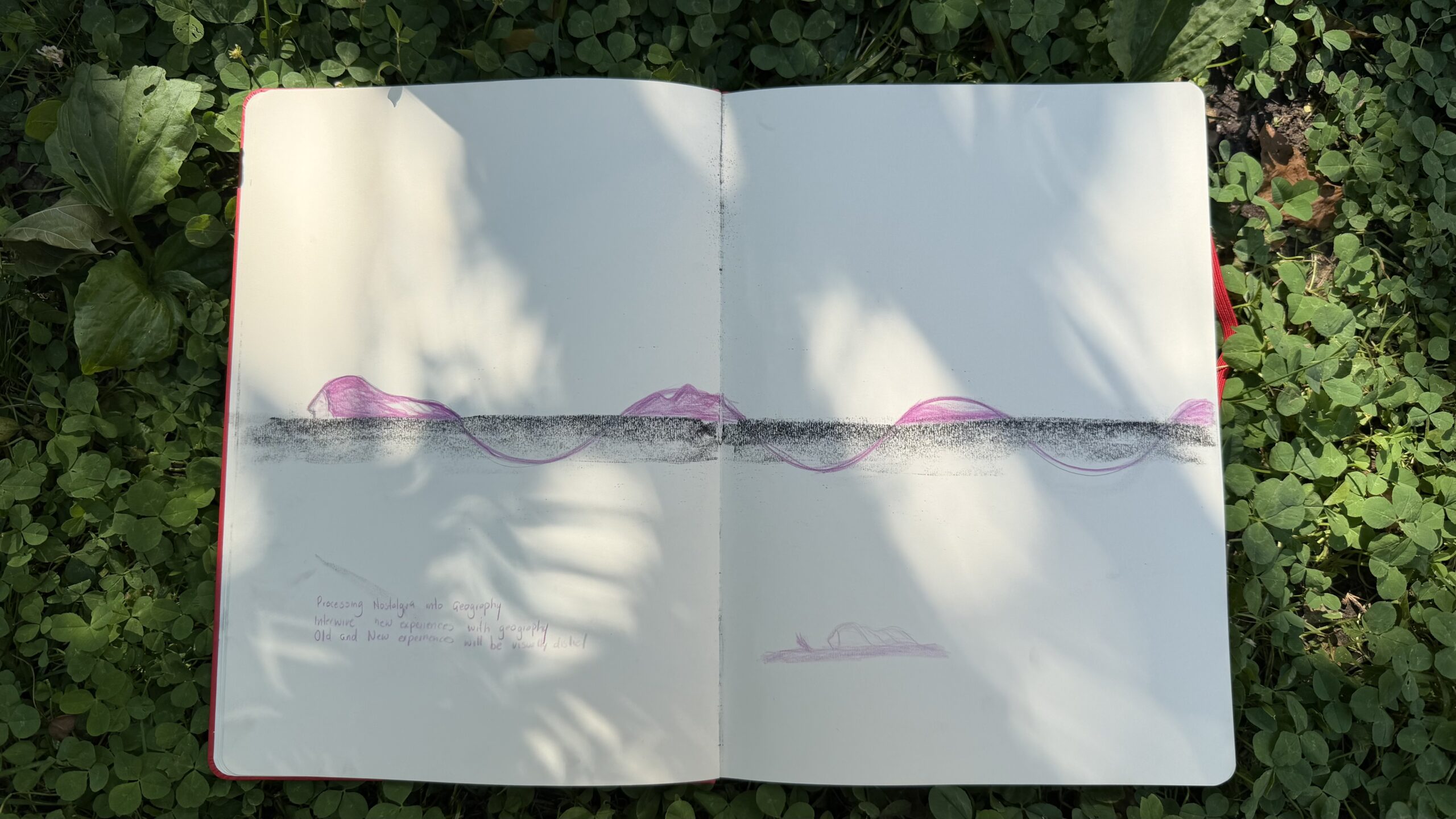
This project is rooted in the experience of living between two places, and the feeling of not fully belonging to either. By bringing these trees into a space where they do not naturally grow, the fruit trees become stand-ins for memory, migration and lineage.
I plan to complete the panels in Portugal and photograph them among the landscapes that inspired them. In this way, the project embodies its own network of connections: conceived in the US and physically created in Portugal and informed by direct observation of the trees themselves. The work becomes a living reflection on connection, and where we find ourselves within larger communities of human and non-human life.
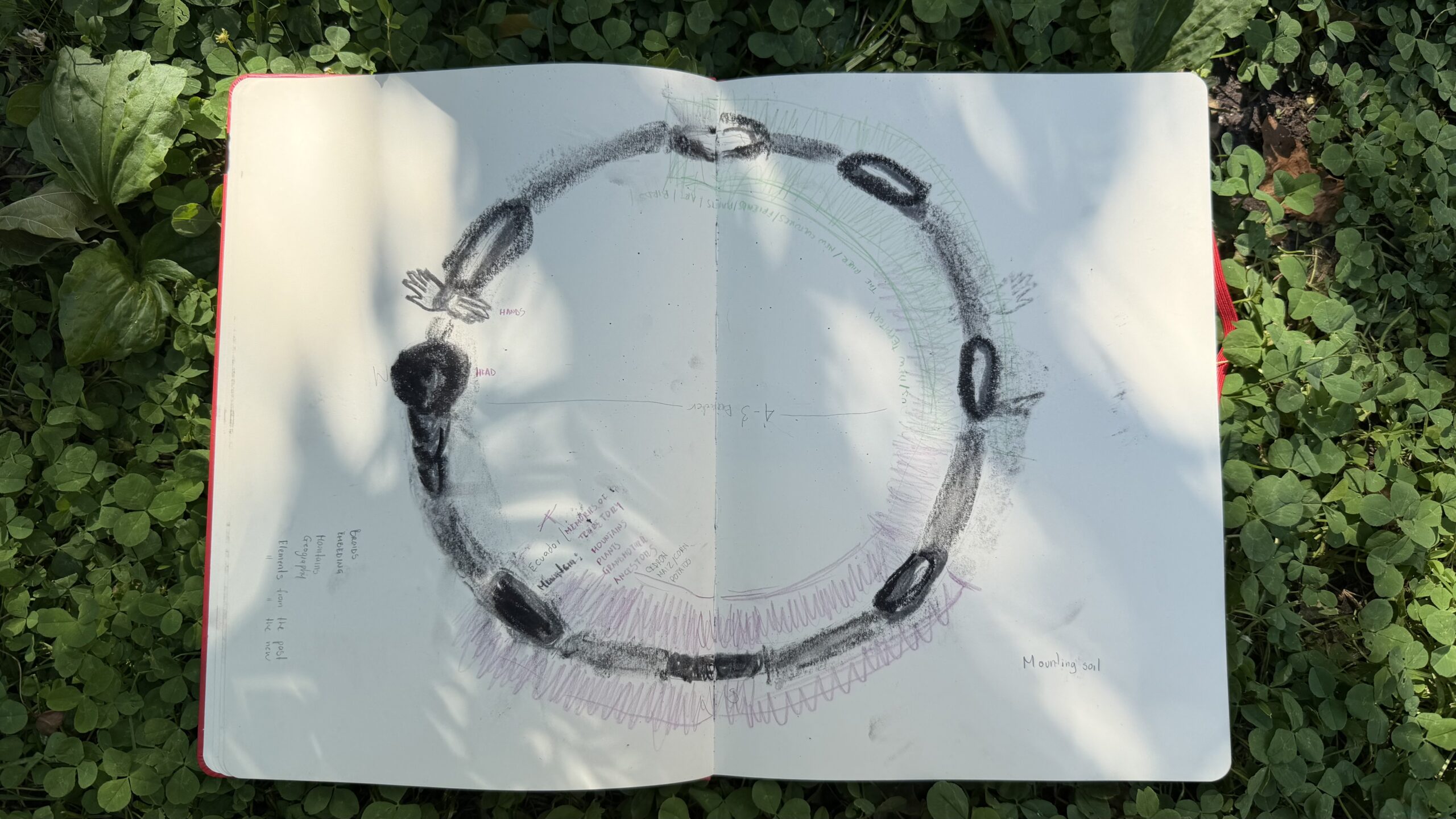
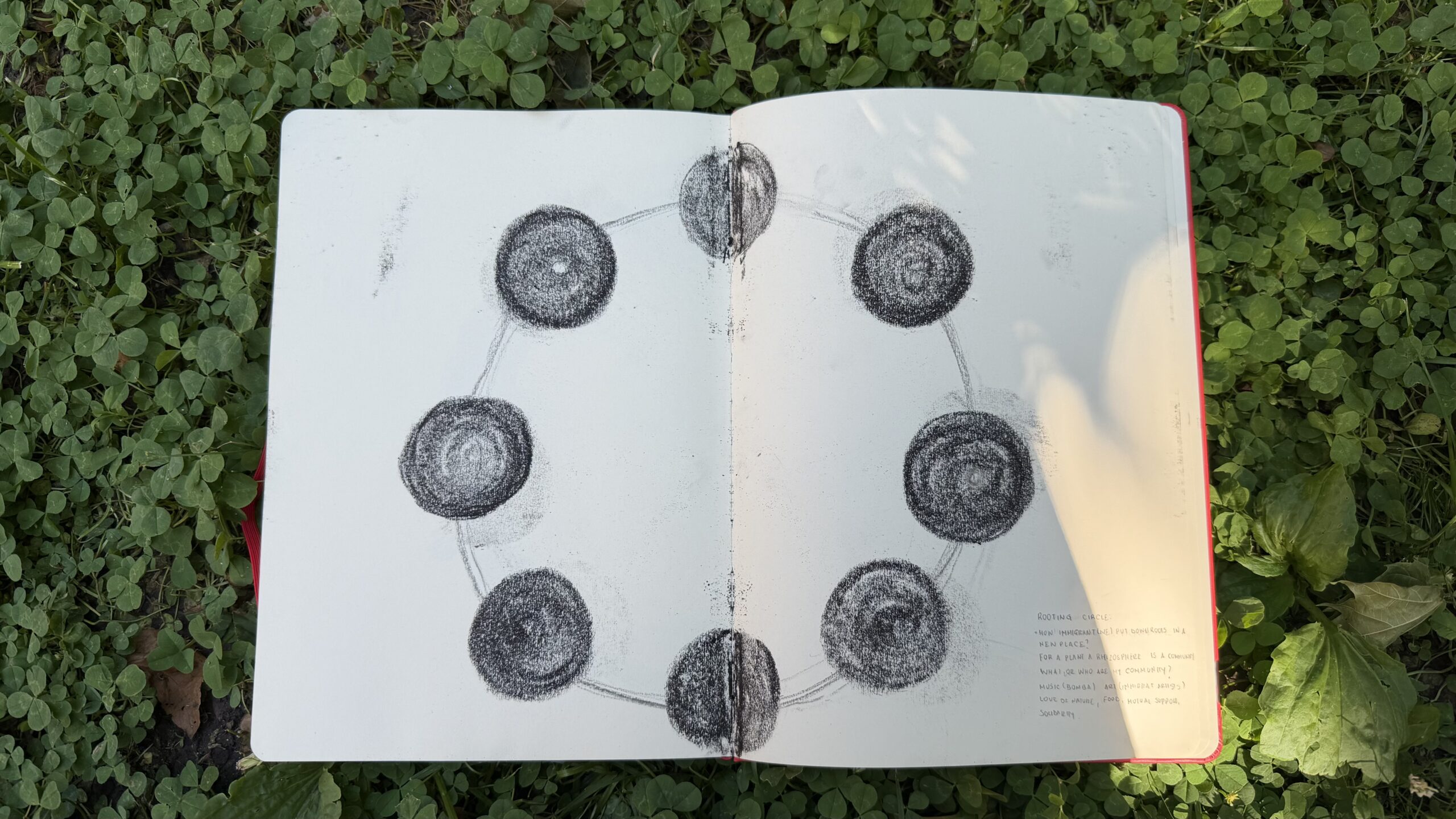
Cuerpo-Tierra or Earth-Body is an exploration of migration, memory, identity, and community as mediated and nurtured by the diverse geographies that hold us. Humans are not ethereal, floating beings; our souls, minds, and bodies are intimately and inextricably connected to the Earth. Just like our plant kin, we are intertwined with the land beneath us, no matter how often we seem to forget this simple yet powerful truth. Immigrant women, specifically, carry the land-based knowledge of our ancestors and have the potential to re-root and flourish in our new home. Our brown bodies may be rejected by a political system, but Mother Earth welcomes us wherever we arrive, as long as we take the time to recognize her and remember our ancestral ways.
My proposal is to represent a woman who travels below and above the ground, living between two cultures, and carrying her memories like a patchwork of keepsakes. Evident in her rooted body are pieces of the geographies, people, and experiences that create who she is – a symbiosis with the potential to dream and embody a more benevolent future for all women and Mother Earth.
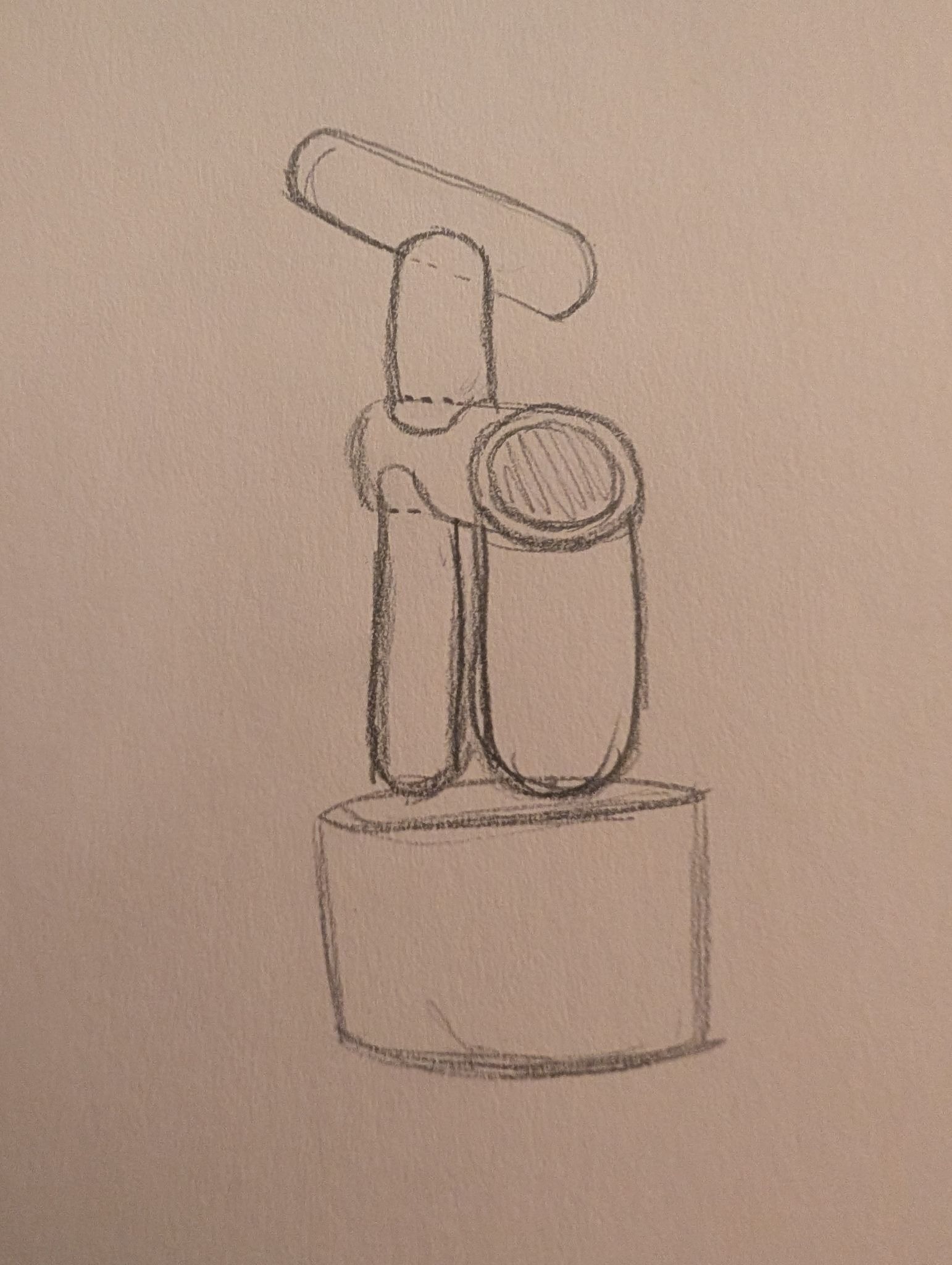
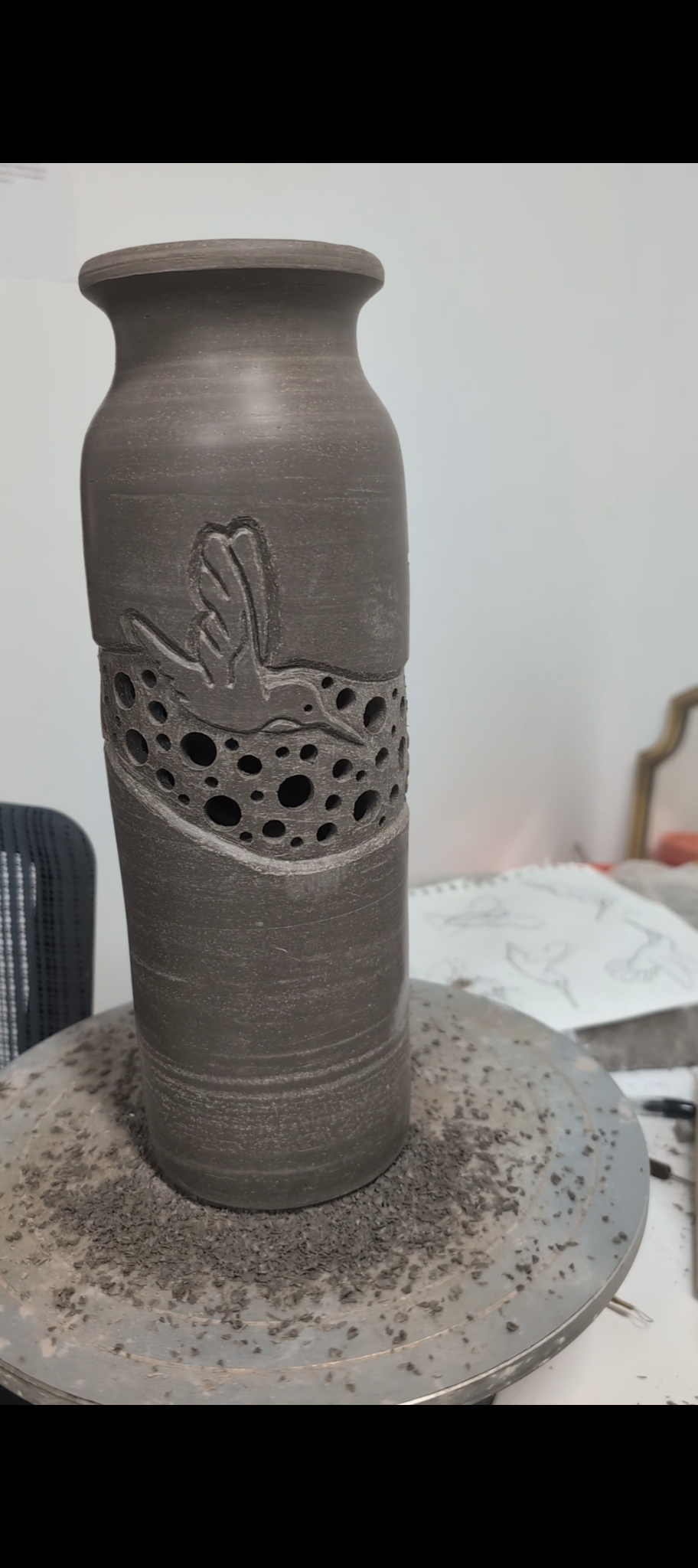
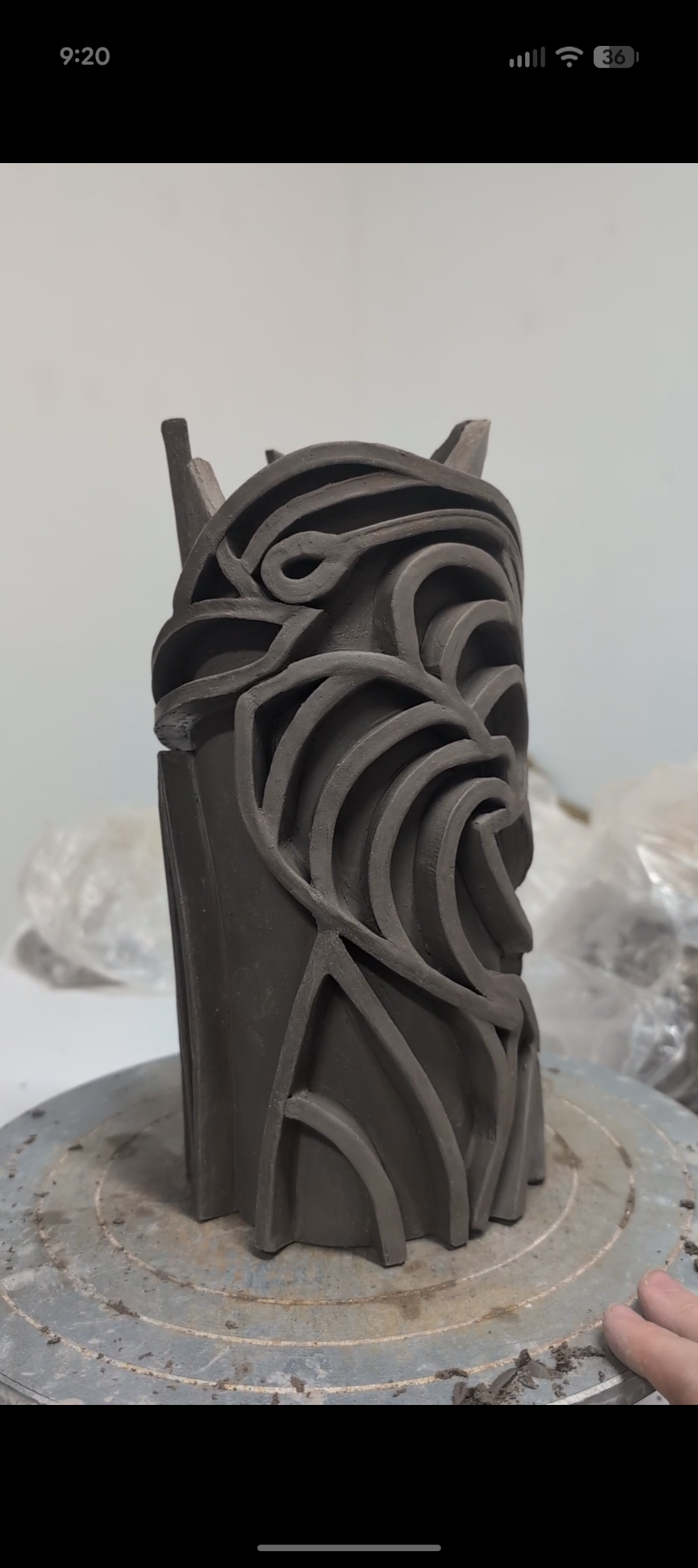
My proposal for the Wildflower Sculpture Park Residency Program, Root System, is to create a modular ceramic sculpture depicting the networks of life within South Mountain Reservation. Exploring specific species that live and keep the reservation’s ecosystem thriving. There is a very delicate balance in nature, if one or more species is removed from the equation the ecosystem at large suffers. This work will showcase that by having each individual piece that represents a species not be able to stand stably on its own. Once all the pieces are combined the entire sculpture stands solid and stable.
I have been exploring nature and specifically flora and fauna most of my artistic career; drawing and sculpting animals from all over the world. Recently I have been narrowing my focus to my own backyard. Despite New Jersey being the most densely populated U.S. State, it contains a vast number of diverse ecosystems within its borders. With South Mountain Reservation being right in my backyard it seems the perfect place to begin this new series of work. Not only do I want to highlight the diverse species living amongst us, I want to make sure everyone understands the delicate balance needed for them and their environment to thrive.
General Design of the modular sculpture, consisting of different size cylinders. That way I can add the surface decoration that will represent the different species in South Mountain Reservation.
Surface decoration options, carving clay away or adding 3-D lines to create the imagery.
Posted ingeneral|Comments Off on Networks of Life – Corrine Carr
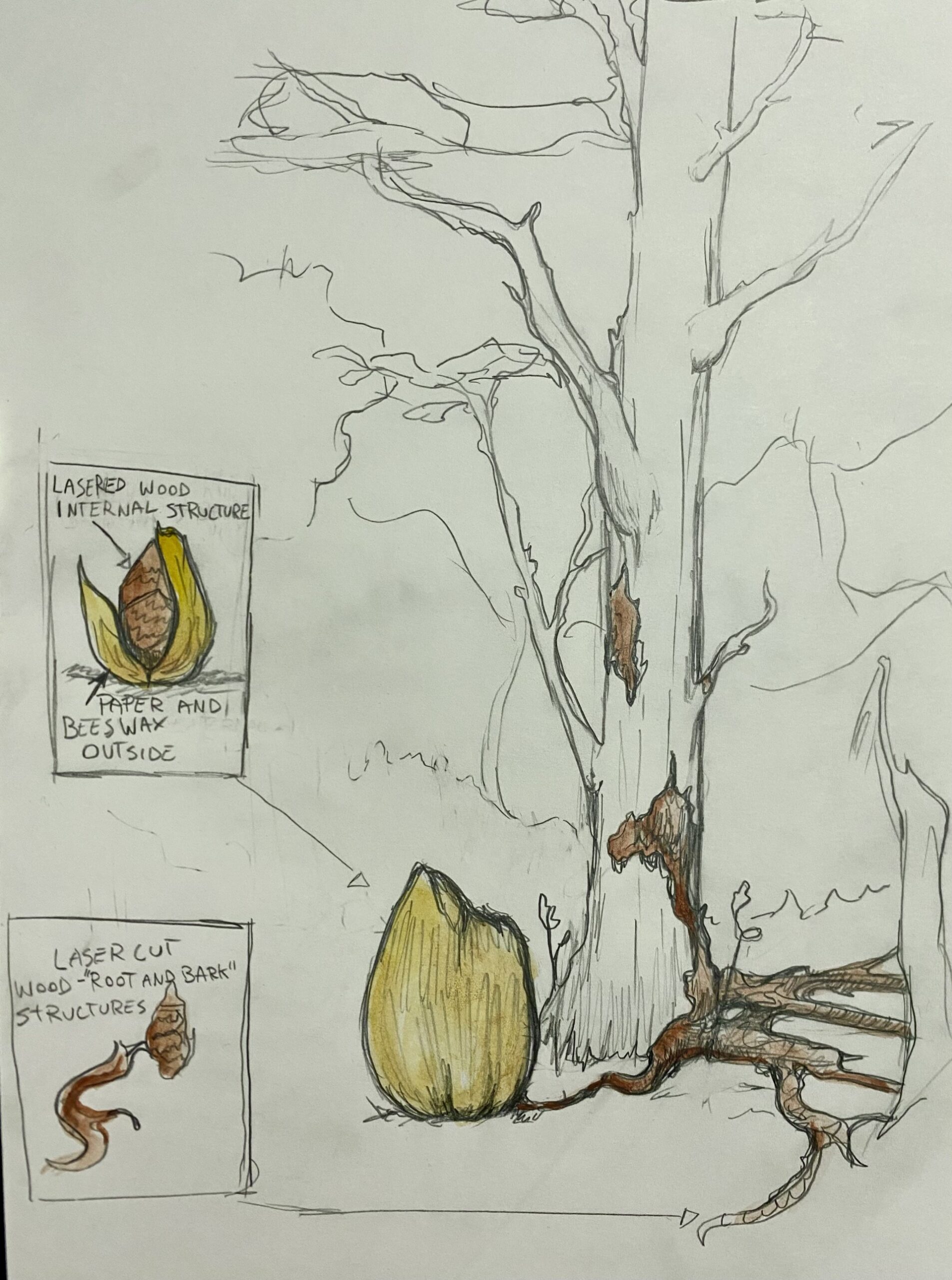
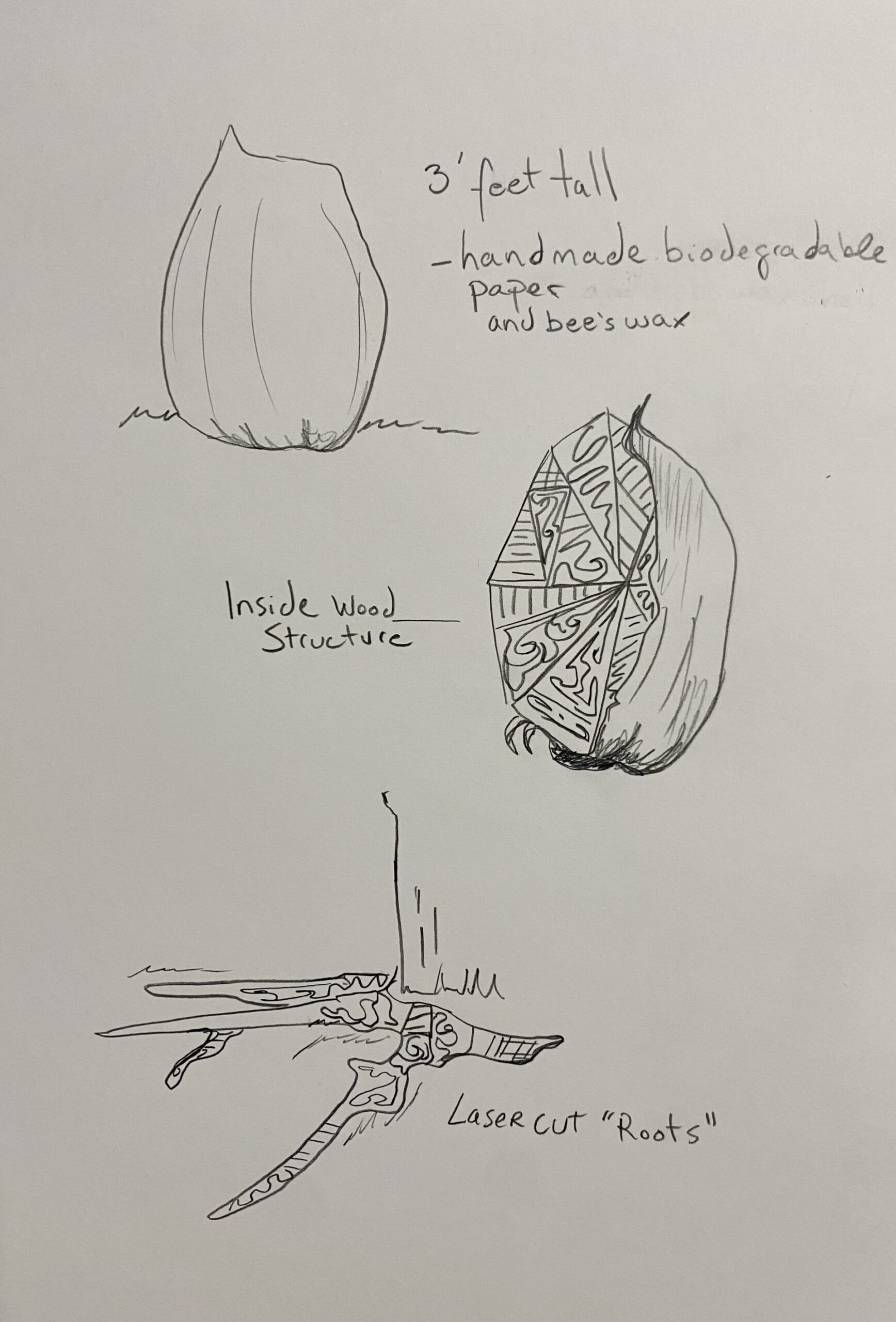
Root and Seed is a two part sculptural installation that explores root systems as both visible structures and as metaphors for evolving and unseen connections. The work will initially present as two distinct forms. The first is a vertical bark like form that climbs and wraps to the bottom of an existing tree while extending into a root like form across the ground. The second an Ovoid form that references a fruit or an egg, which rests nearby, just barely in contact with the roots.
The root and bark structure is constructed from laser cut wood with hand drawn patterns that will be etched onto the surface. The form will appear to trace an imagined network made visible above ground, mapping hidden connections within the preserve. The second form, the fruit/egg sculpture, will contain an internal laser cut armature patterned with the same hand drawn design as the root and bark. That internal structure will be encased in a temporary outer layer composed of handmade paper, seeds, suet and bees wax. This skin is designed to gradually be consumed by wildlife and weather which allows it to transform over time. As this outer layer erodes, the inner structure will be revealed, visually linking it to the root sculpture.
I would like to use this opportunity and this installation as a way to think about migration and belonging. While the two forms seem separate, they are structurally connected, suggesting the ties to a home that are fundamental even when not visible. As the outer layer of the fruit breaks down this connection becomes clearer. This transformation is meant to show how we adapt to new environments while still carrying histories within.
Posted ingeneral|Comments Off on Root and Seed (Proposal)
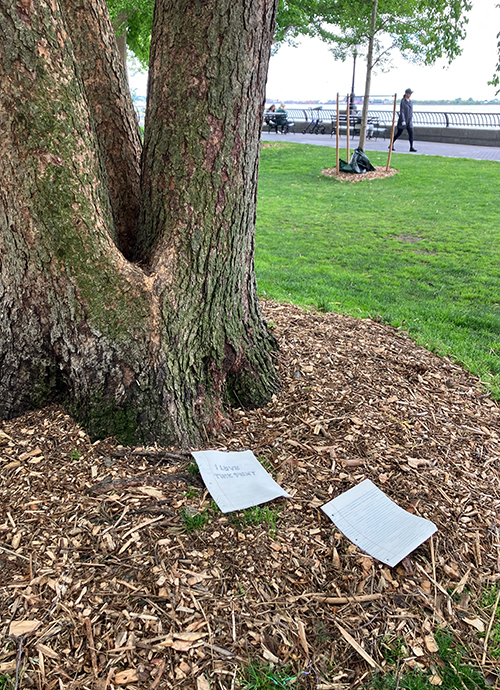
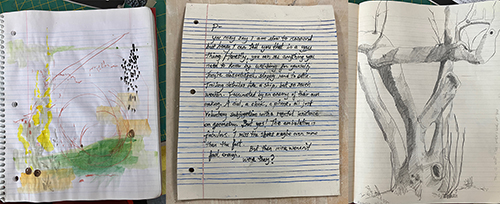
Loose leaf will be a series of “letters” on ceramic slabs resembling loose leaf paper. Sketches and writings on these pages will imagine correspondences and journal entries written by the trees in the reserve. These objects will be accompanied by a number of short videos to be accessed by a QR code on visitors personal devices. The videos will represent a combination of tree memories and social media posts on the tree experience for humans to understand. I plan to make 16-20 ceramic pieces and 4-6video shorts for the project. The ceramic pieces will be attached to stakes to hold them in place, QR codes would be placed similarly at the base of the tree on a staked sign. A map of the project would be available on either paper or online.
The inspiration for this project is twofold, driven by an interest in media and trees. My work often references out-of-date media to look at how technology shapes human interactions and sense of place. Paper and written letters are emblematic of an age society seems to want to leave behind because it is appears too unproductive, too quiet, too still. Video is sexier, more ephemeral and built for narcissists. The discovery of the tree communication system is relatively new to humans, and with it comes the suggestion that plants are social, intelligent and aware. This project would be a fictional look into translating tree language into our own, and to imagine what it is like to observe our world from a sensitive yet immovable place.
My video projects have always made character inanimate objects, but this project would be my first foray into listening to other living things. I very recently began sketching, reading and writing about trees. The text of the letters has not been written will require time with the trees in the reserve to complete. I take inspiration from literature, religious texts and pop culture references about tree sentience: from the tree of life to the tree of knowledge, from Daphne, to Ents and Birnam Wood. This project would be my first site specific one and so I am looking forward to having the landscape dictate my path.
Posted ingeneral, WW14|Comments Off on Loose Leaf- Karen Leo
My knee jerk reaction to the theme “Root System” was teeth. My newly minted teenager recently had two baby teeth pulled to make room for a palate expander (precursor to braces) to hopefully improve the function of her teeth and jaw. I couldn’t help but think about the intrusive nature of the dentist removing parts of my daughter’s body, parts that I helped grow in utero, and how these procedures are quite literally changing the future of her body and how it will function for the rest of her life (thankfully for the positive). Even as her mother, do I really know better than nature? Alterations of the natural world can have long-lasting effects, both positive and negative, that ripple through ecosystems for generations. Parallels can be made across environmental degradation versus the fight for preservation of wild land to the landscape of my daughter’s mouth.
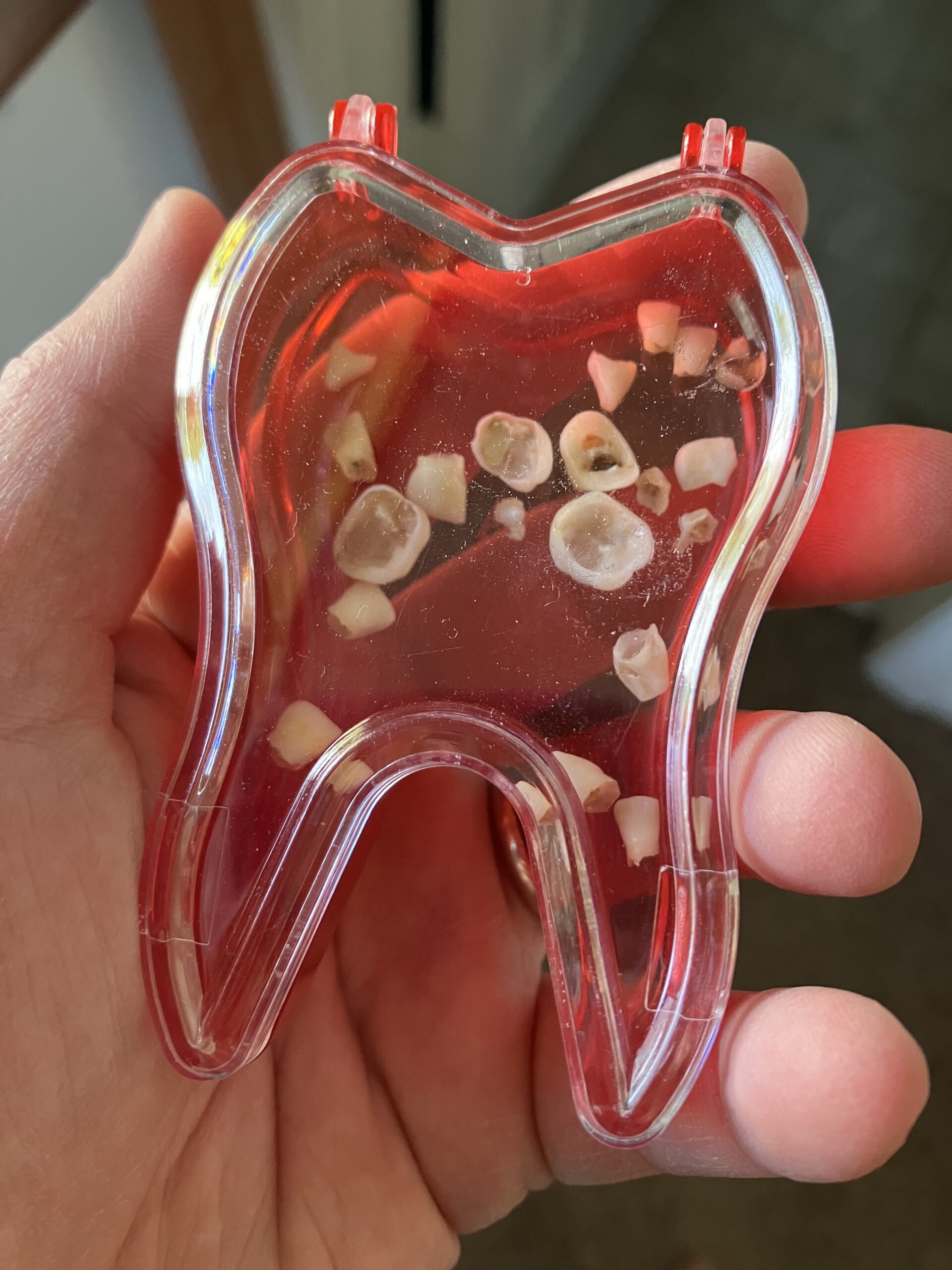
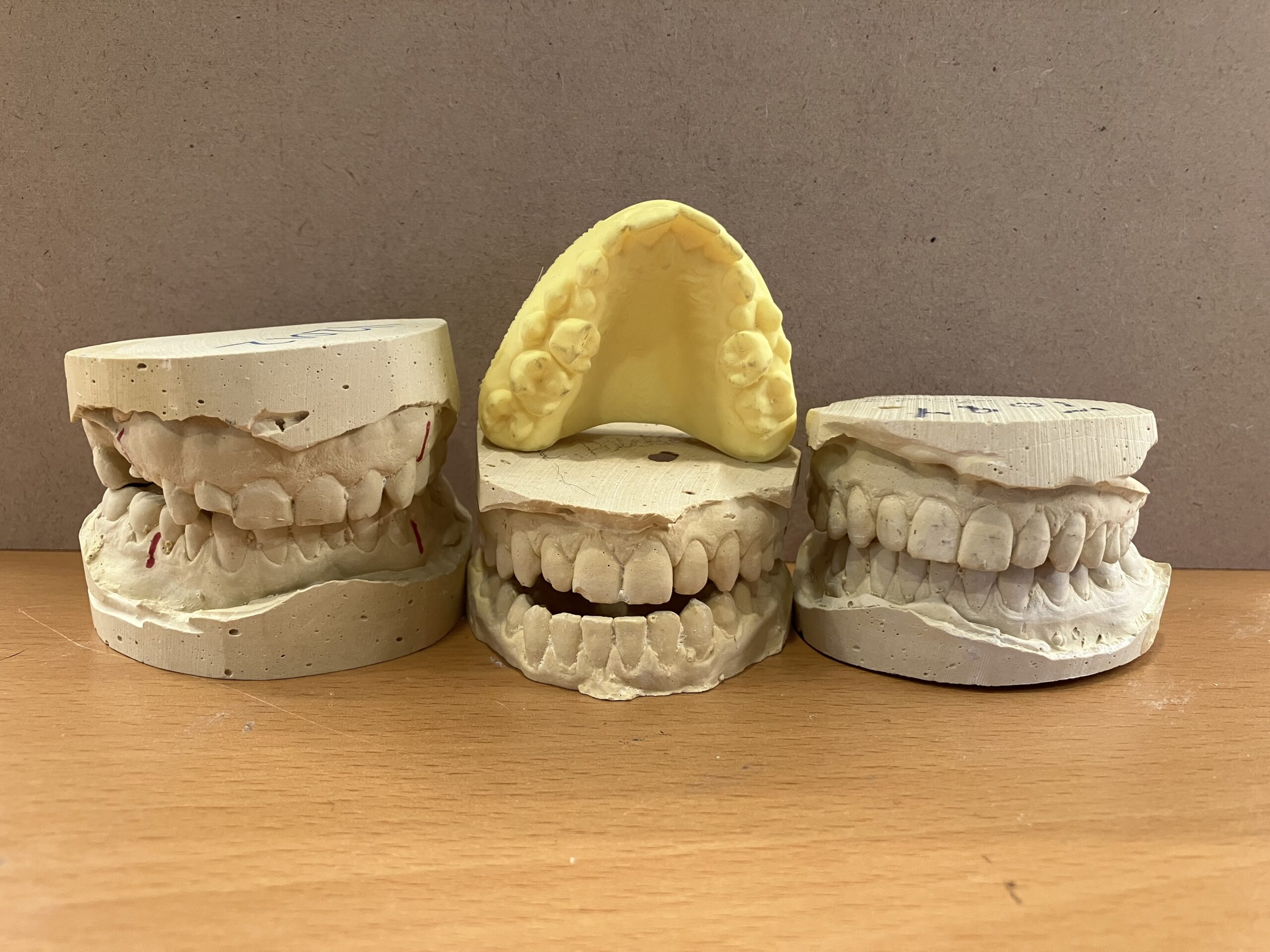
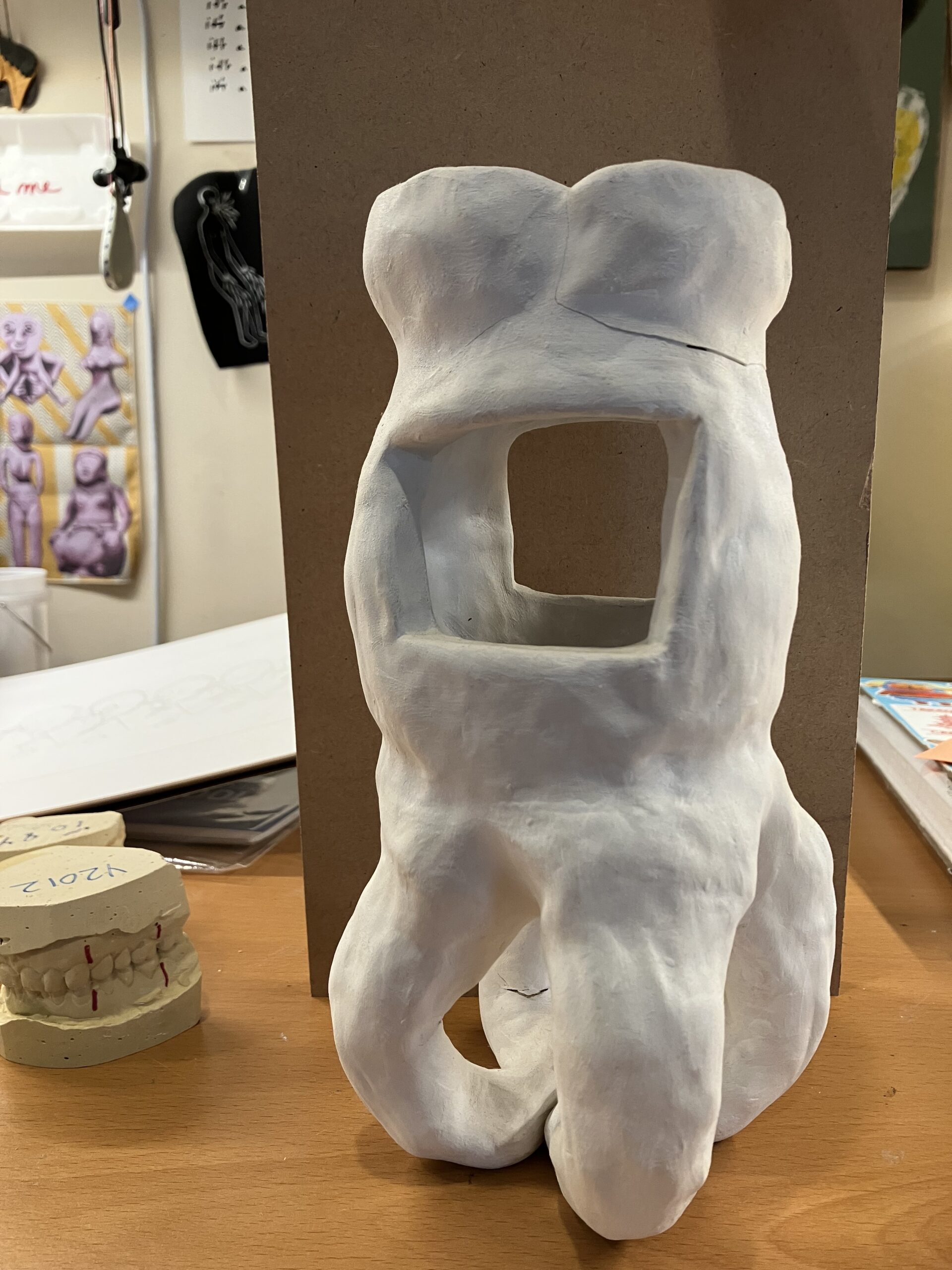
The images below are pieces are from my little collection in the studio.
My daughter’s baby teethFamily teeth casts from the dentistUnfinished tooth sculpture
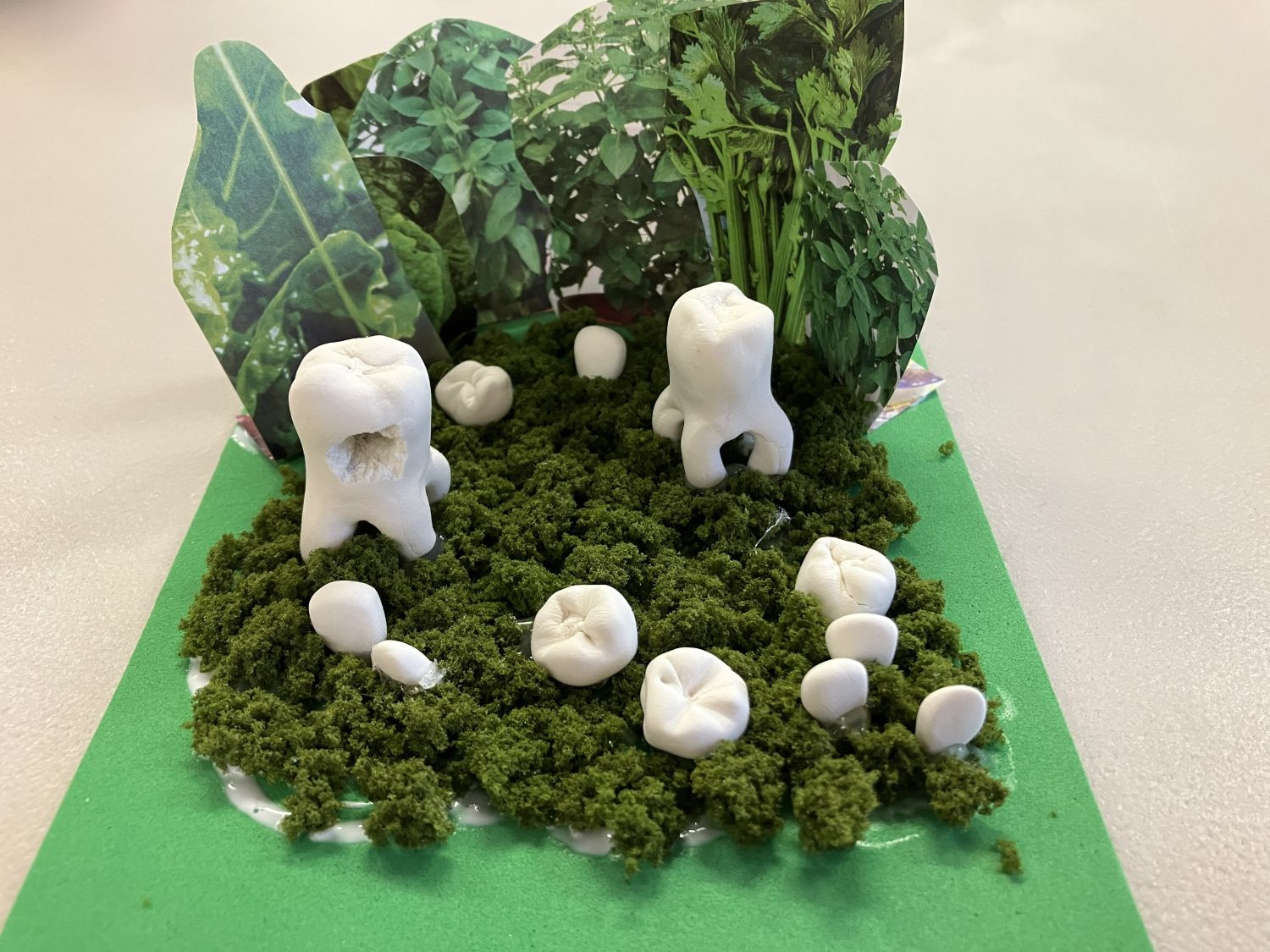
I tend to think very literally at first with a new project: large scale teeth sculptures poking out of the plants on the trail. The image of stark white monoliths poking out from (aka Stone Henge) the lush and wild summer greenery has been on my mind a lot. I enjoy the shape of a molar in general, with its roots, so I have room to push my play further with this beyond the obvious recognizable symbol. As an object it feels like a little house on stilts, much like Baba Yaga’s mobile bird-legged cottage.
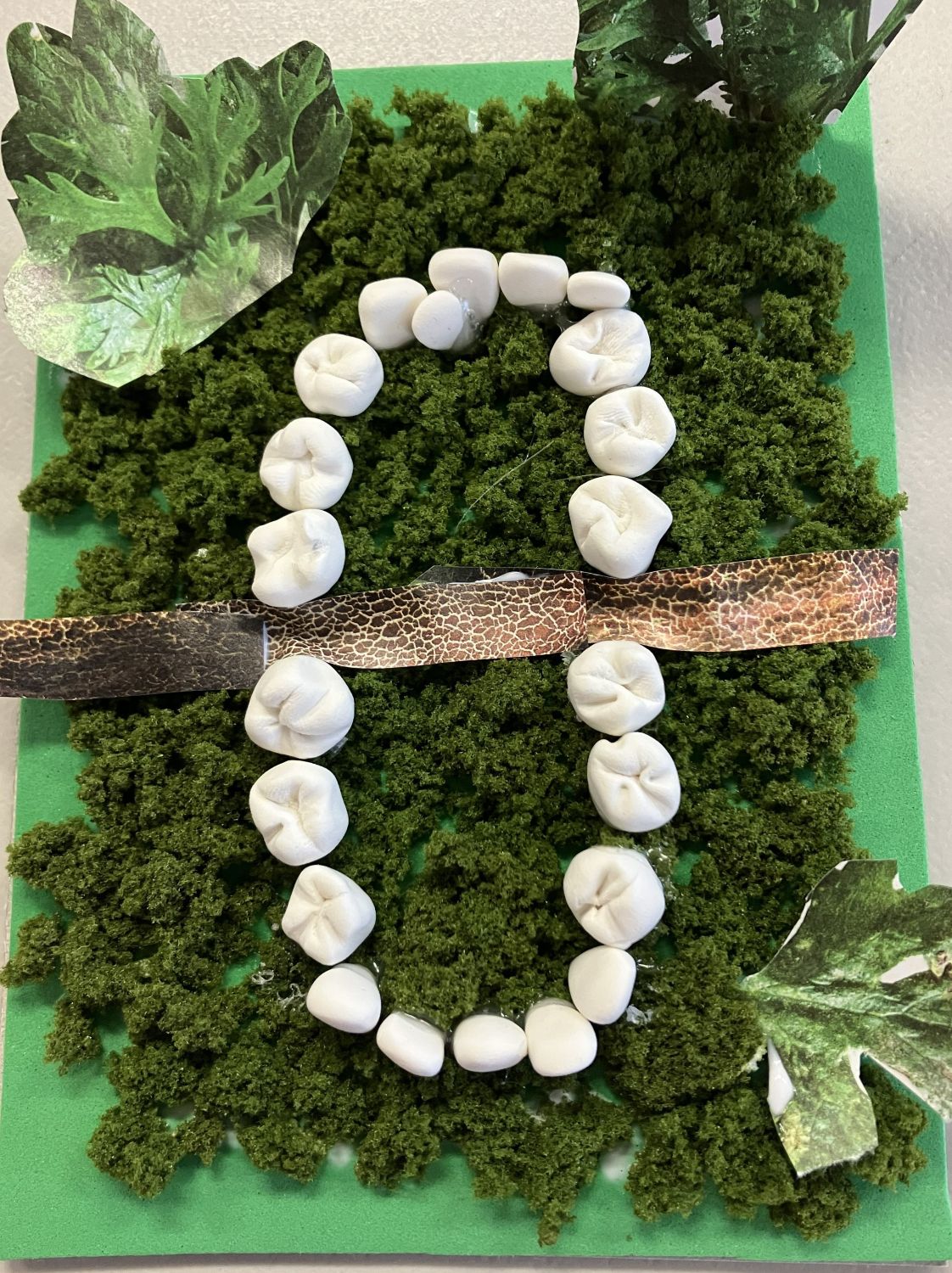
I began making models to help visualize what these sculptures could look like. Here are some samples.
Mock up #1 – teeth roaming the forestMock up #2 – “bear trap” on either side of the path
Posted ingeneral, WW14|Comments Off on The Forest Has Teeth
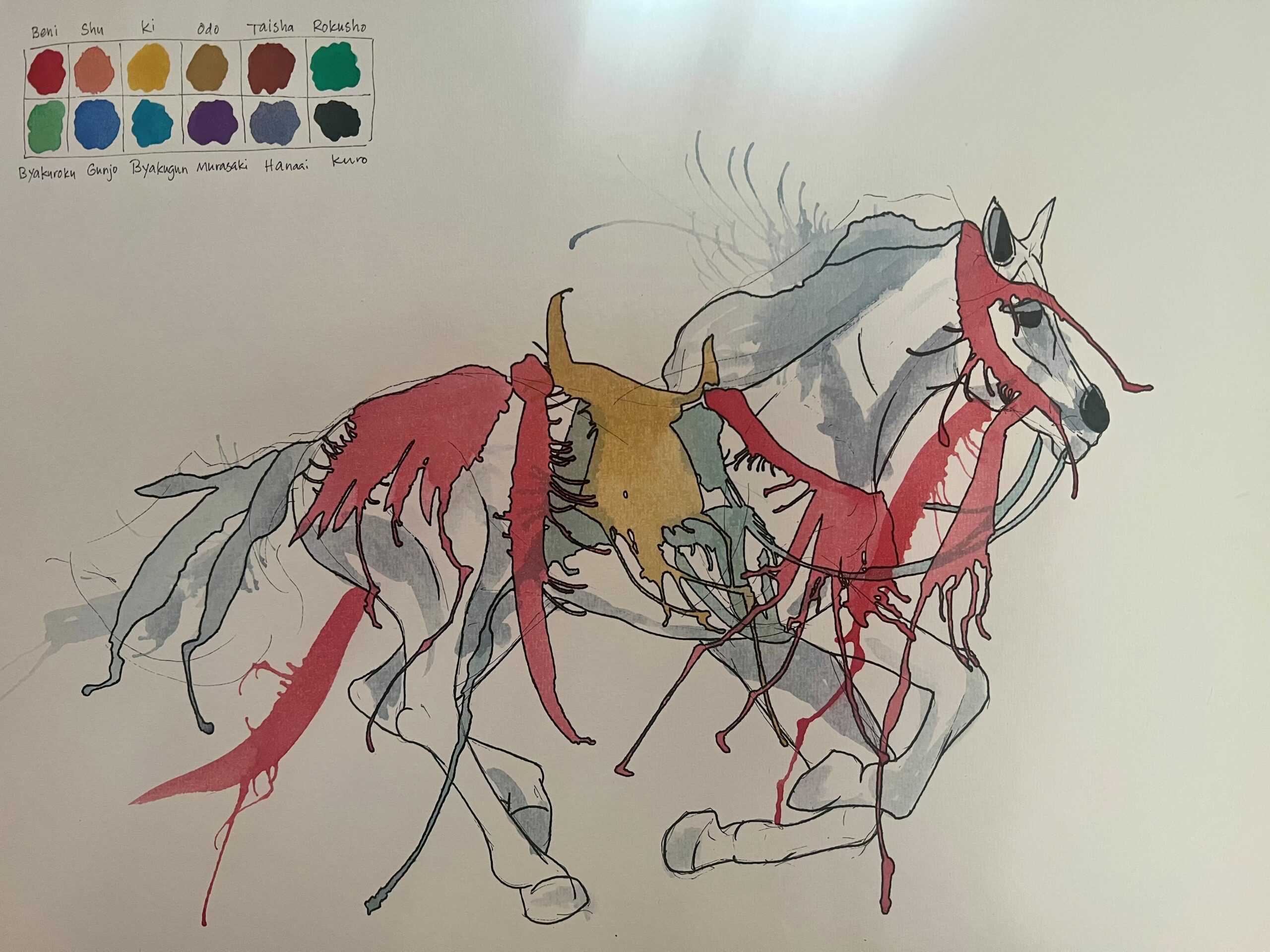
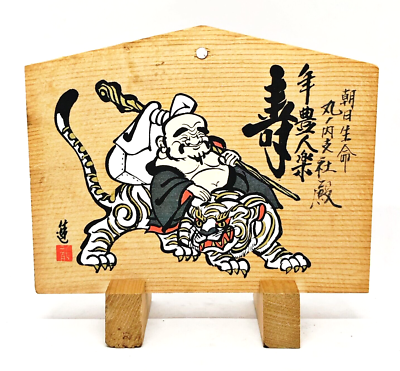
Ema are small, traditional Japanese wooden votive plaques, often decorated with images of horses, animals, or shrine-specific symbols on a plain background. Worshippers write their wishes or prayers or wishes using markers or pens on the backs of ema boards, which are then hung on designated racks (ema kake) at Shinto shrines and Buddhist temples. The name ema, meaning “picture horse,” stems from the ancient custom of donating actual horses for favorable prayers. Horses are also considered messengers to the kami (gods).
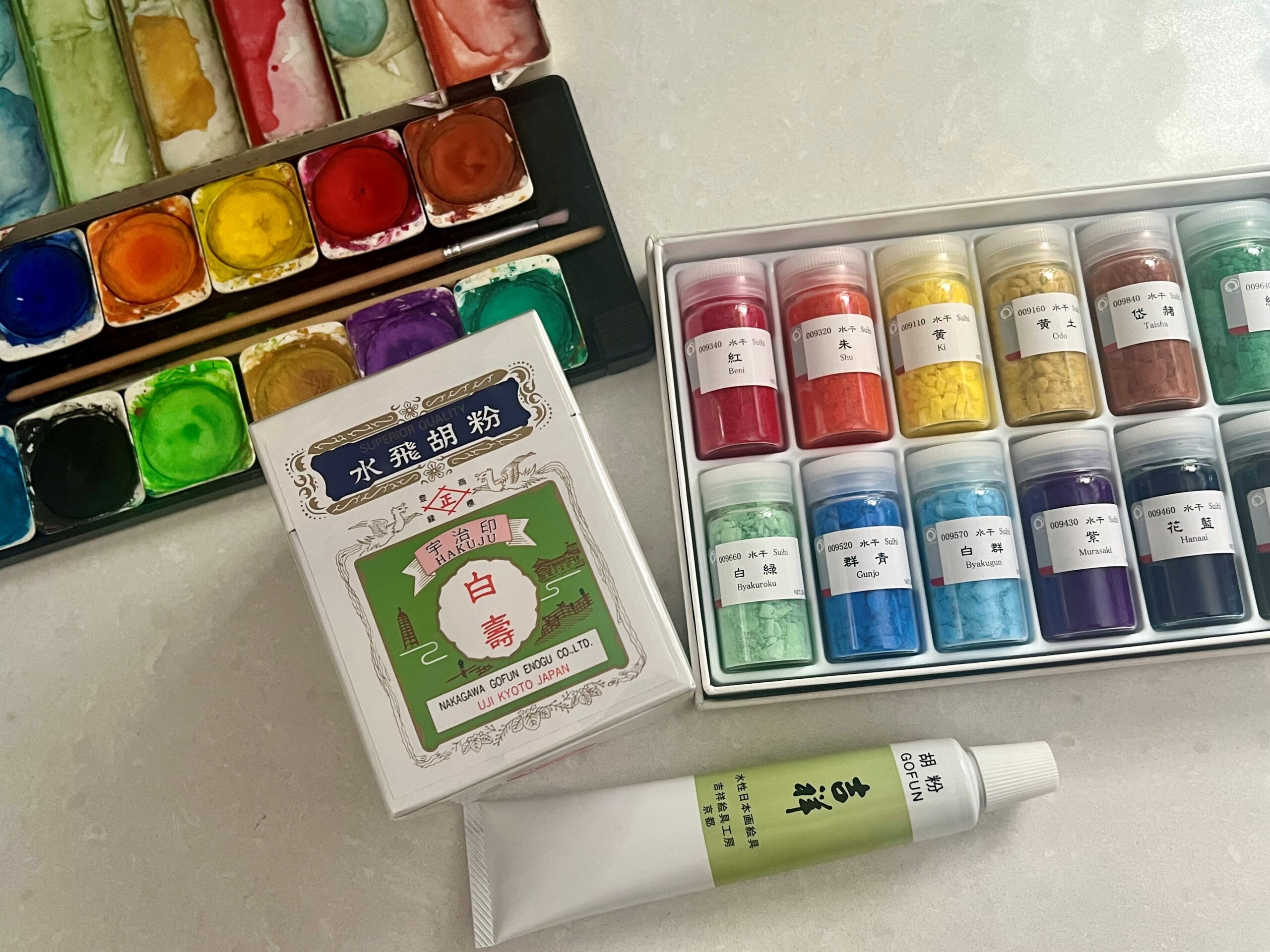
I intend to create a large-scale hand painted version of an ema that will sit amongst the trees in the Wildflower Sculpture Park preserve in South Mountain Reservation for a period of time. I plan to use gofun and Japanese mineral pigments to paint on pine wood. Traditionally, ema are most commonly made from cypress (hinoki), cedar, or pine, chosen for their durability and resistance to weather. I will also seal the painting with shellac and then a water-based polyurethane.
Gofun is a traditional Japanese white pigment derived from crushed, calcined, and refined (primarily oyster, clam, or scallop) seashells. Its main component is calcium carbonate, which produces a fine, matte, and opaque white powder. Historically and currently, it is utilized as a primer (similar to gesso) to create a smooth, bright white base, as well as for painting directly or mixing with mineral pigments and nikawa, animal glue, (to act as a binder) in Nihonga paintings and on traditional objects like ema or for coloring the skin of traditional dolls and Noh masks.
Older Japanese ema often featured a white background symbolizing the spiritual purity required to present wishes on a clean slate directly to the gods, with white horses historically being used to pray for clear skies (and black for rain). White is considered the primordial color of the sacred, purity, and holiness in Shinto tradition. Larger votive paintings from the Edo period often used painted backgrounds to make the central subject (the horse) stand out, a practice that evolved into the standard, simplified plaques.
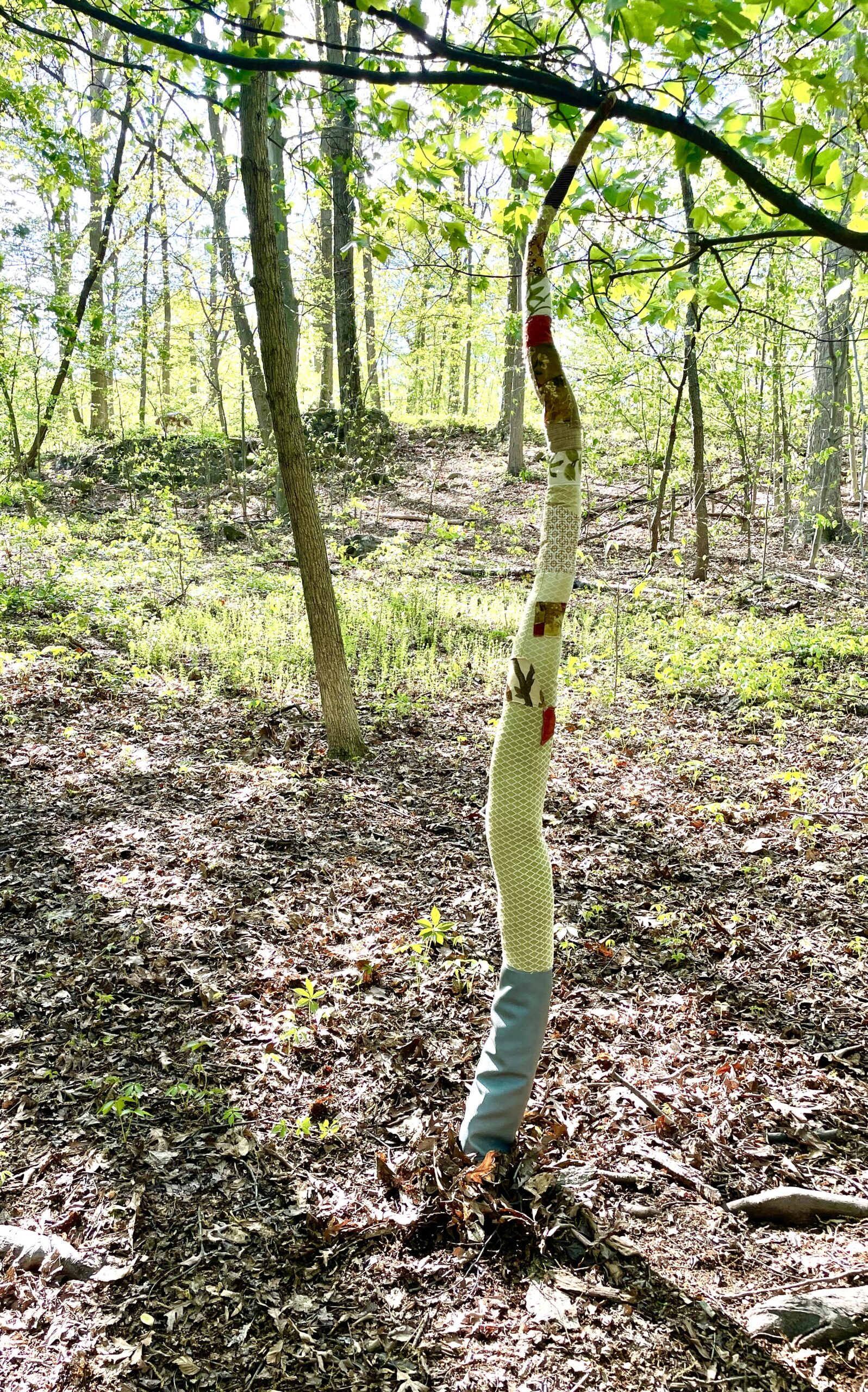
I work in textiles and also in movement. The theme of roots and connectedness particularly calls for this – to build something that viewers can touch. I’m also thinking about the desperate need for care at this time in the world, and how wrapping ourselves (with something soft, arms, etc) might provide a feeling of support and comfort. On a personal note, the mention of ancestry in the call is touching. I’d like to create a visceral feeling of connection to those who have passed by pulling their energy up from the earth through a conglomerate of quilted, stuffed, very long root forms (up to 6’), that would be partially buried and come upward from the ground. I’m often interested in ways viewers can directly interact with my work, so they will be touchable and a viewer might go into the middle and wrap different roots around themselves, or at least stand within them. I’m also preparing a dance event for the opening that will interact with the sculptures. Below is a first prototype!
The fourteenth edition of the Wonder Women Residency Project called Root System asks artists to propose and create artworks as part of a thematic project developed through weekly group meetings over two months. The cohort of ten artists will discuss their ongoing projects, philosophies and processes surrounding the projects and planning for installation and performance. The residency will culminate in an outdoor exhibition at Wildflower Sculpture Park in South Mountain Reservation in September 2026.