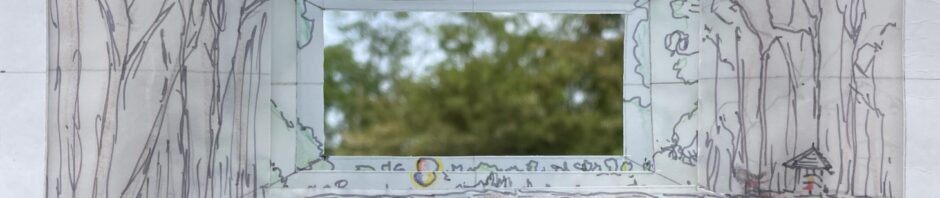
![uprintingmailing_guide [Converted]](http://gaiastudio.org/wonderwomen/wp-content/uploads/2018/03/WW11postcard4x6_FRONTcropped.jpg)
 Uploading the postcard front in progress because my printer sucks!
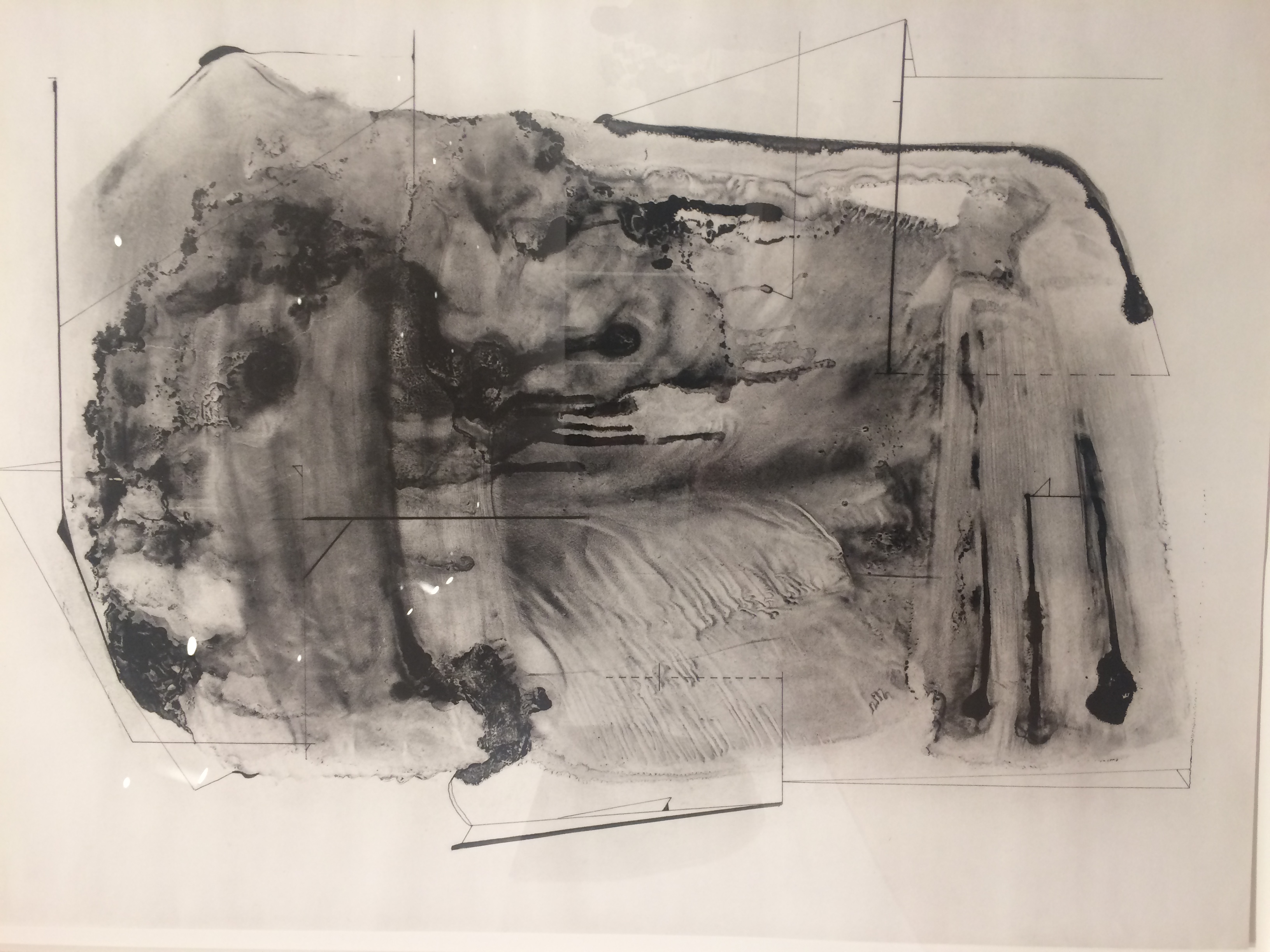
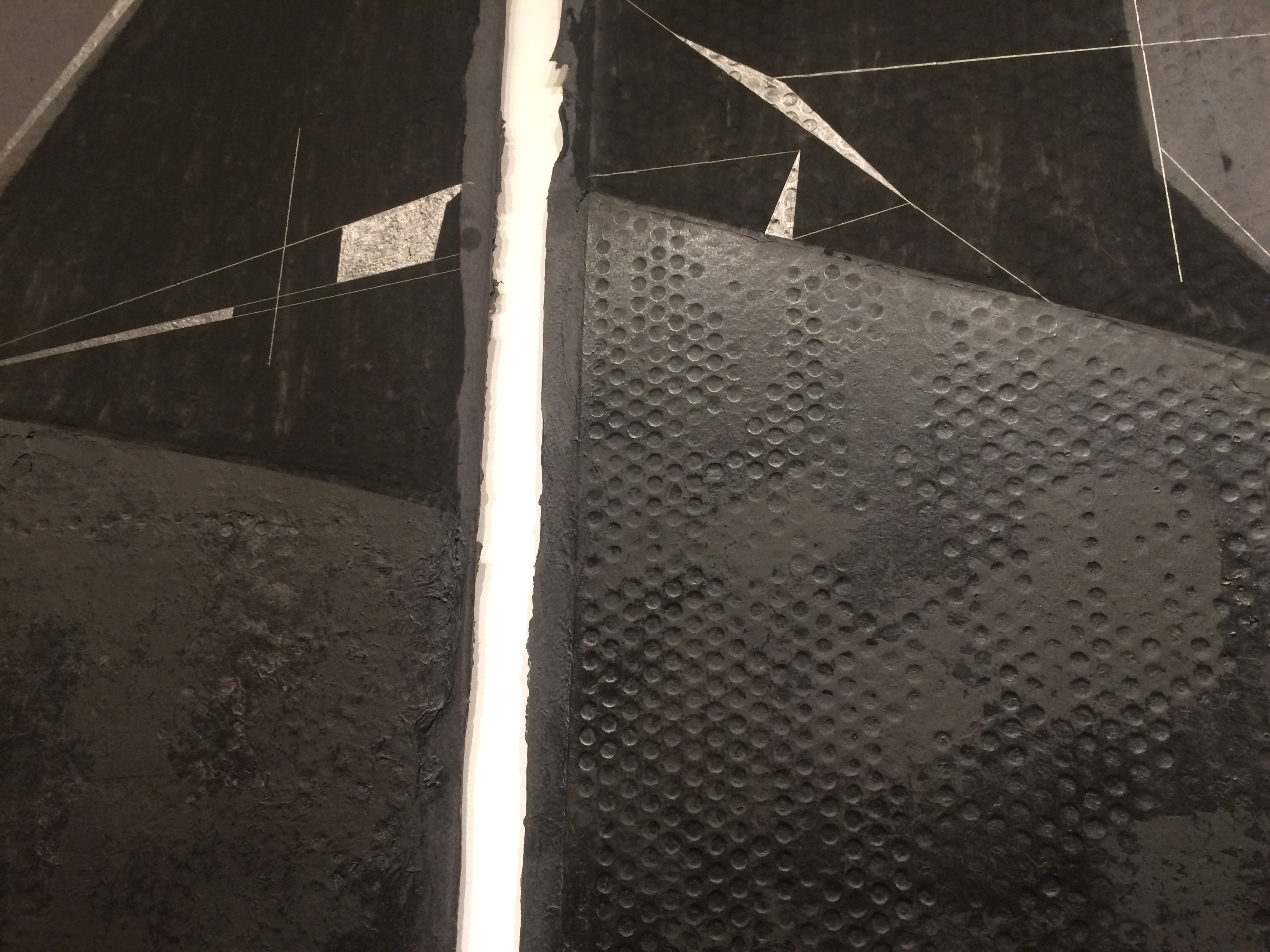
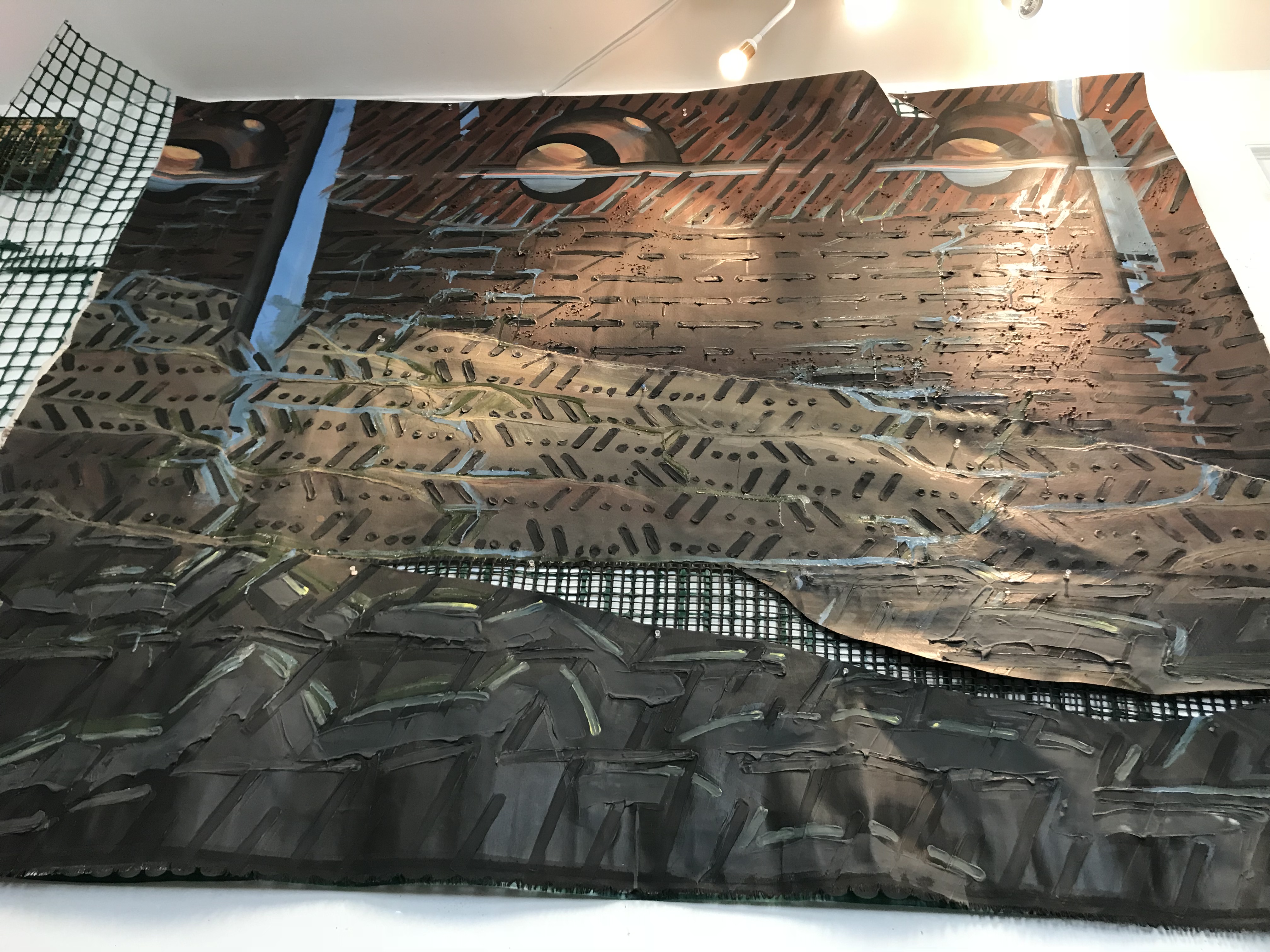
And some images from the Drawing Center’s show Torkwase Dyson
Uploading the postcard front in progress because my printer sucks!
And some images from the Drawing Center’s show Torkwase Dyson
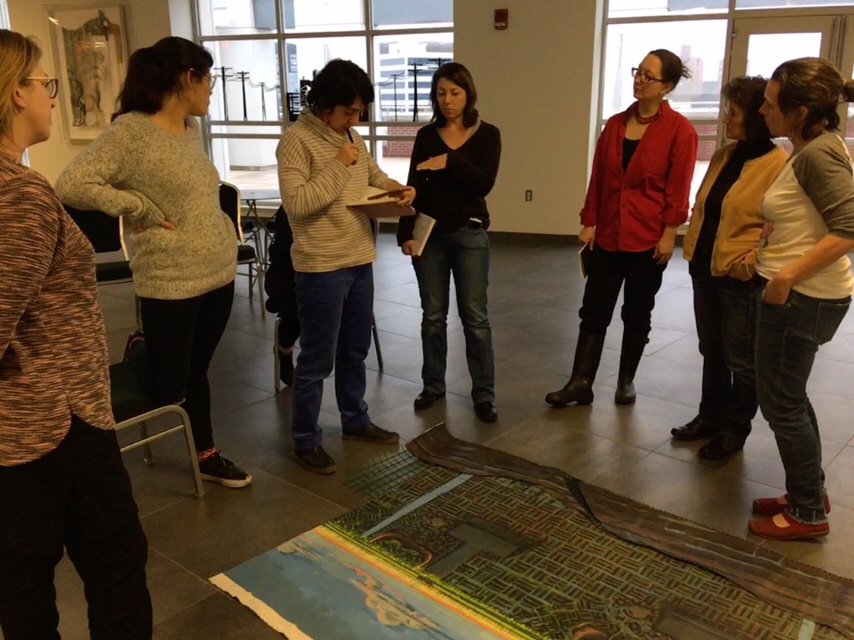
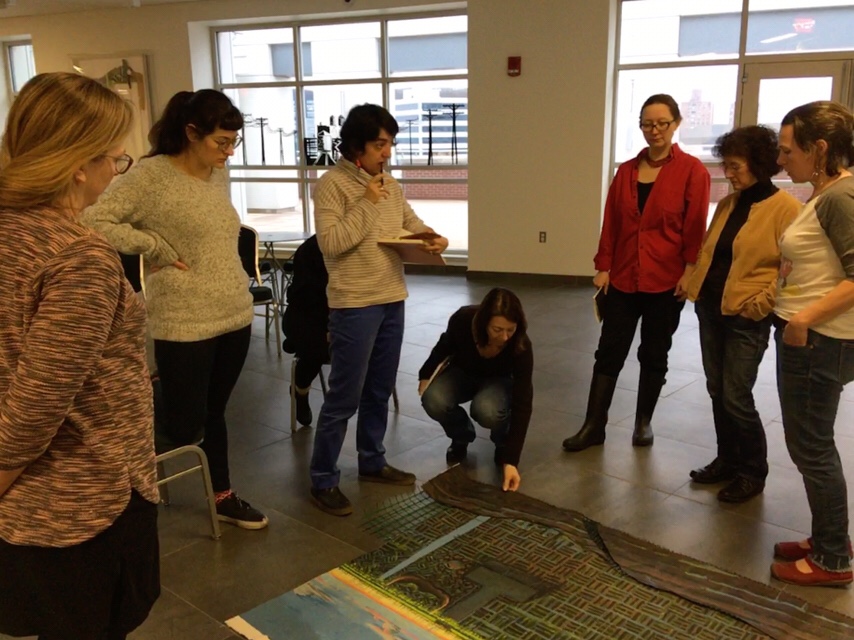
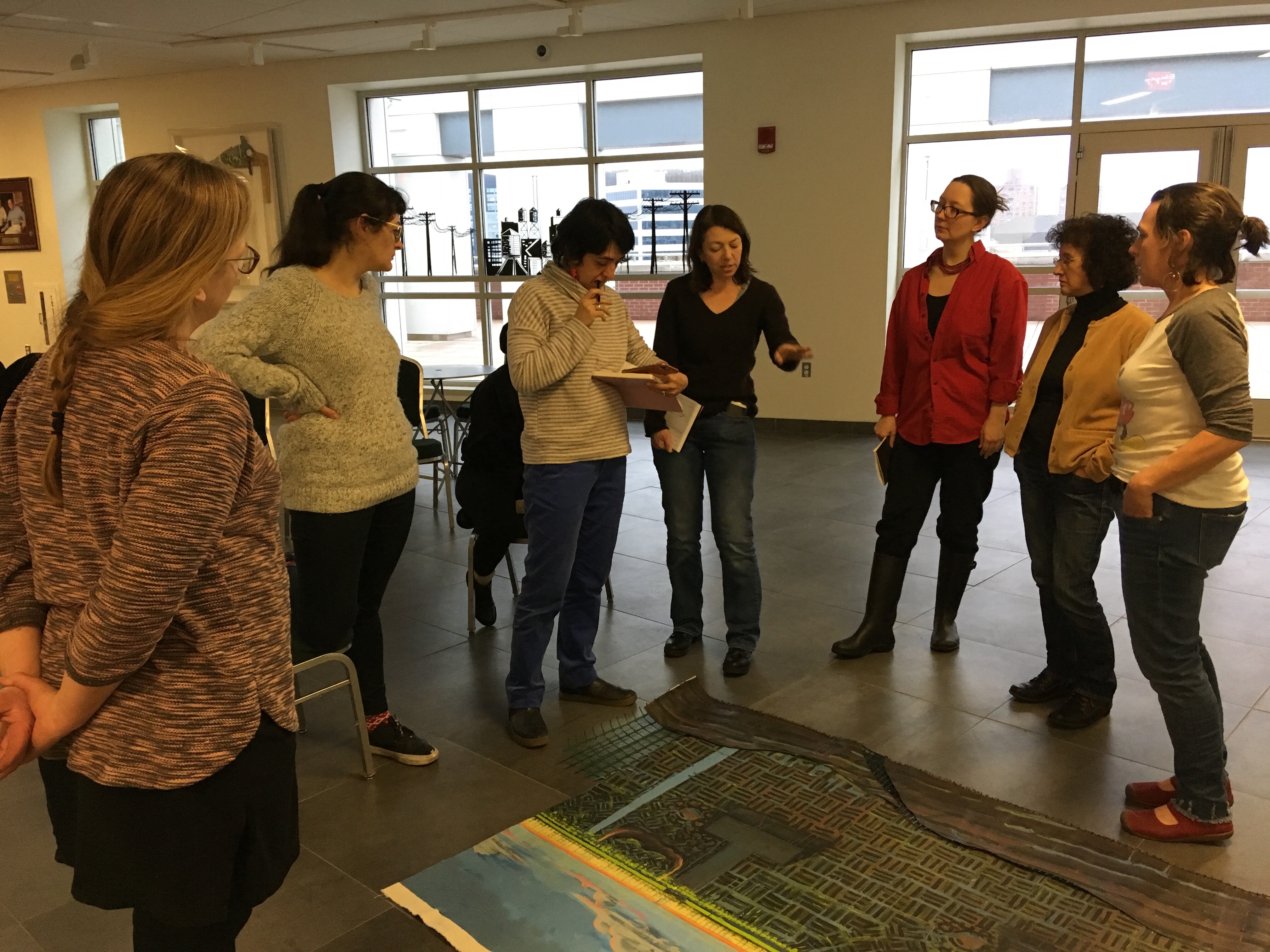
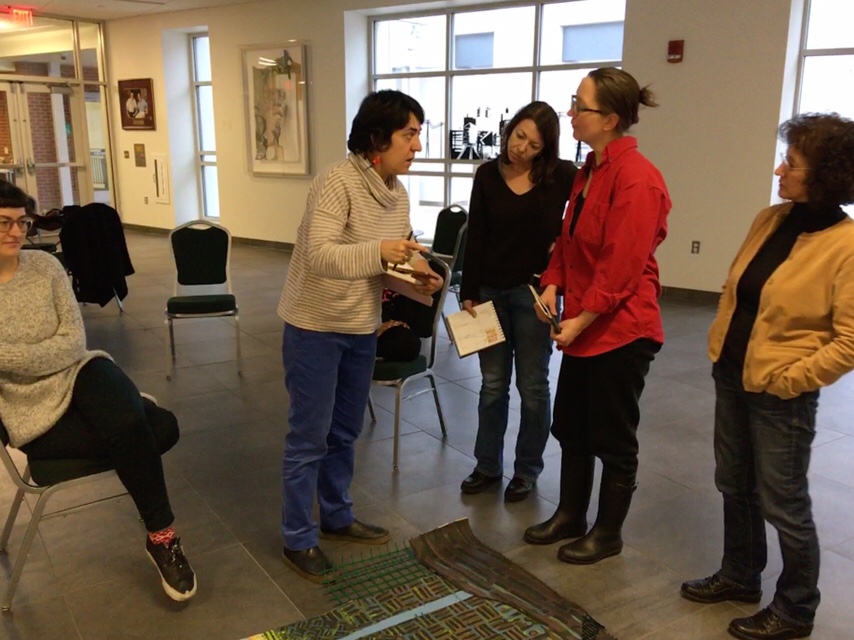
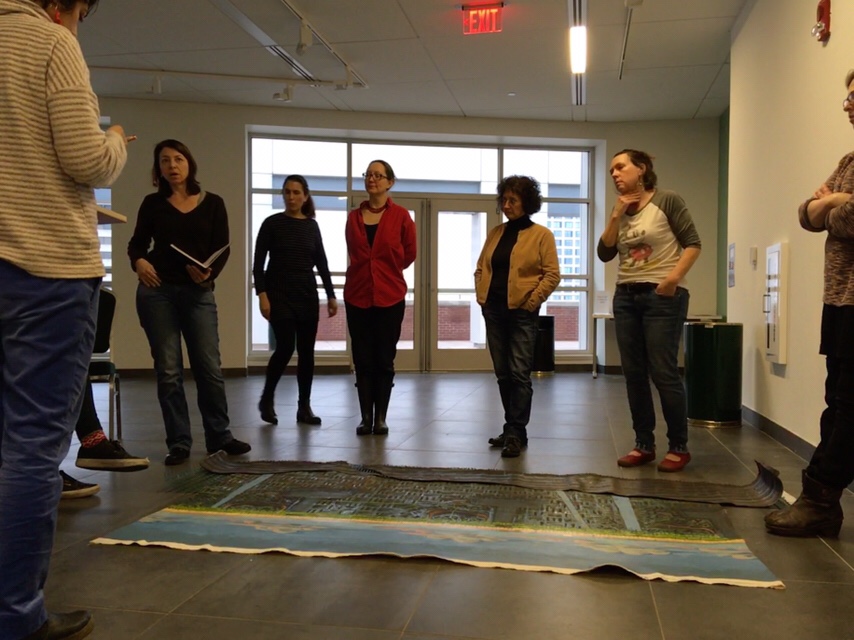
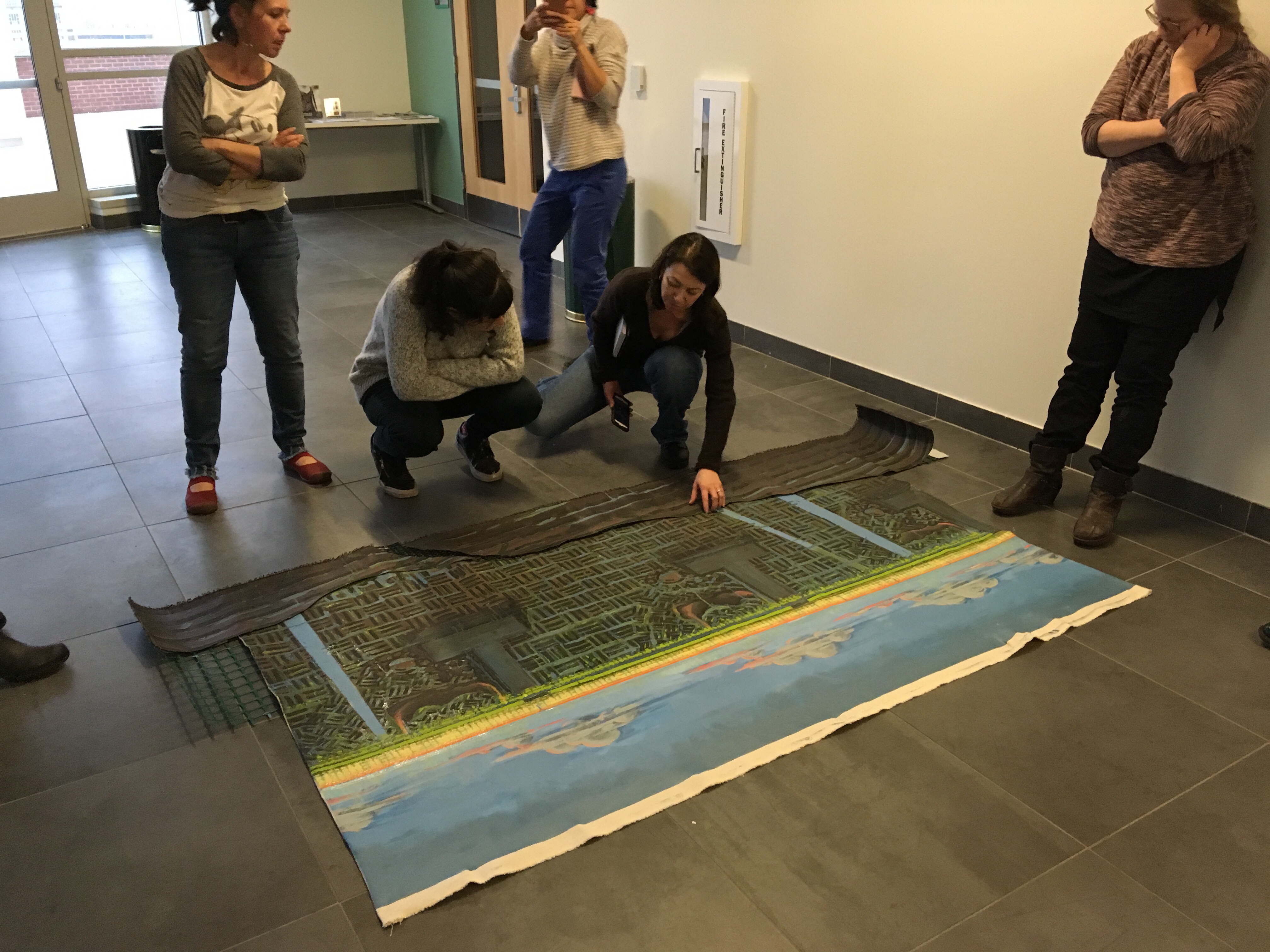
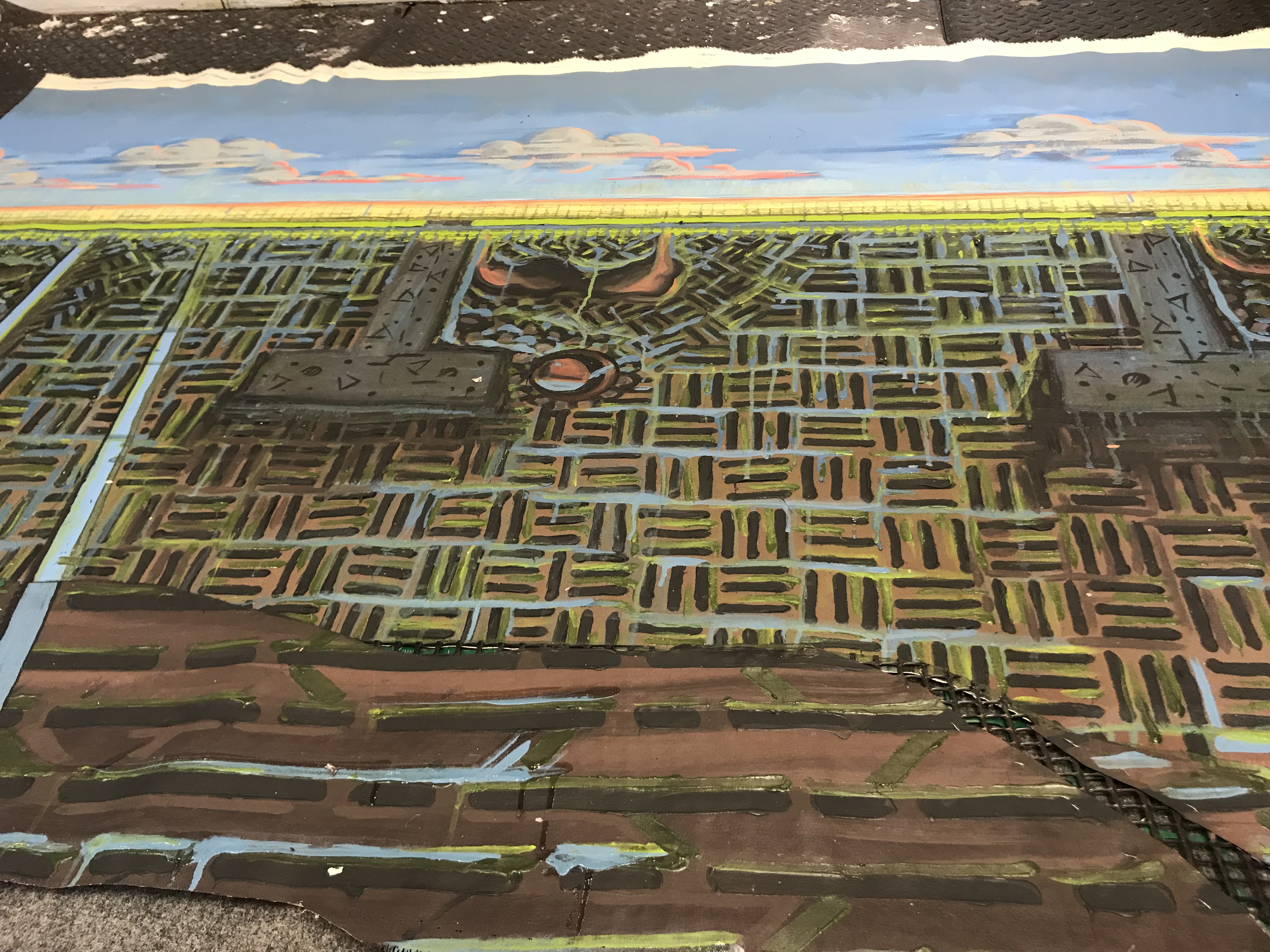
This past week I’ve tried to evoke the sense of the weightiness of the earth and added heaviness and textures to the bottom segments. The clay and shale segments have added particles (soil enhancements), which drip with the water, and the granite segment has linear elements separating its coarse grains. I wanted each layer to feel representative of both the material itself and express how the water and what it carries might flow through it. The subsoil clay is softer and wet throughout; the shale is more horizontal with places for the water to rest; the granite is composed of mixed and lighter colored rock; and lastly, the gneiss is hard and foliated containing dark and light bands.
I’m surprised at how much I’ve leaned on the incorporation of architectural drafting standards to propel the painting. This incorporation has tapped into a 2D/3D representation quest of how to convey as much information two-dimensionally using generally accepted architectural standards and the more evocative nature of painting.
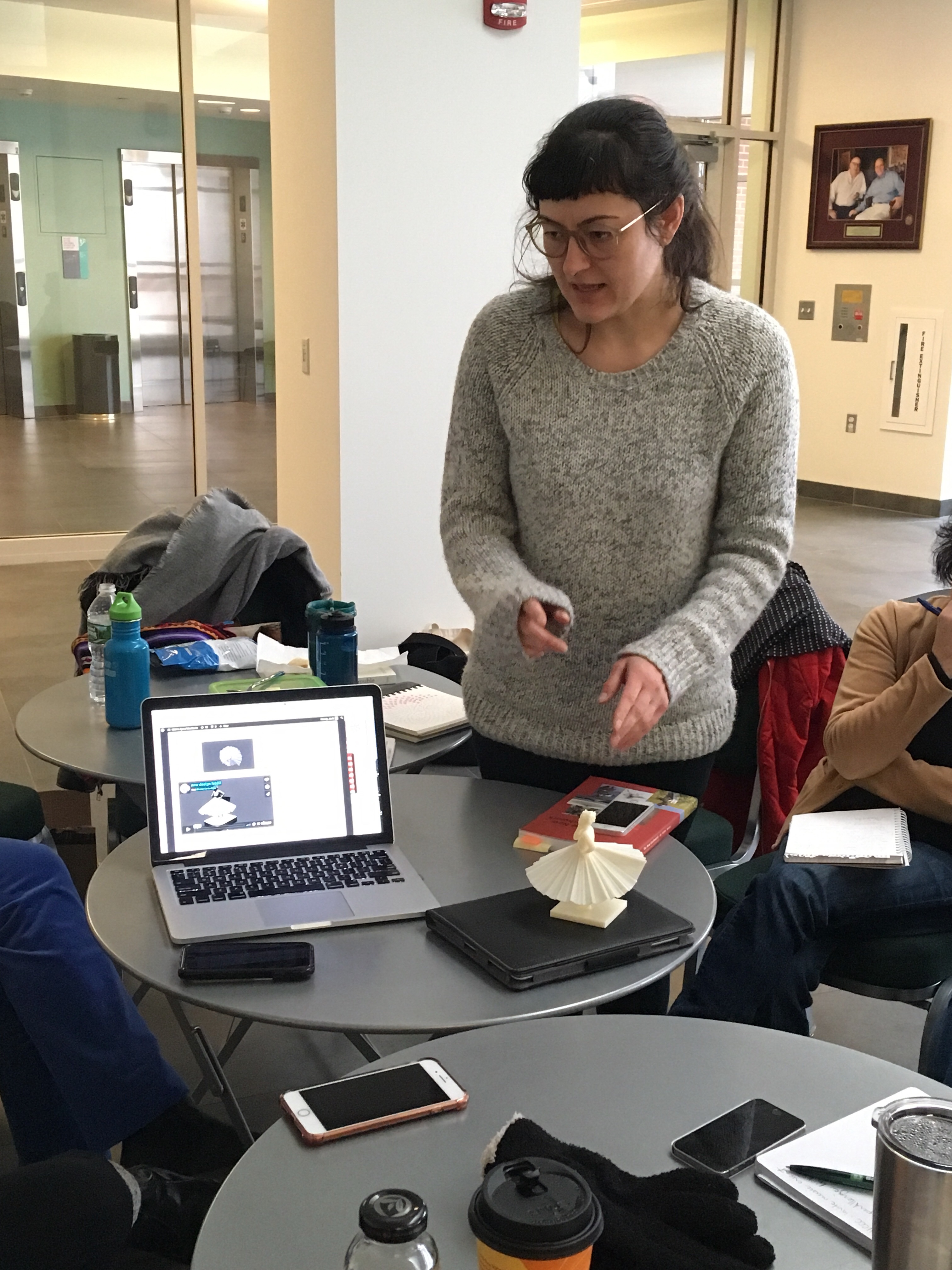
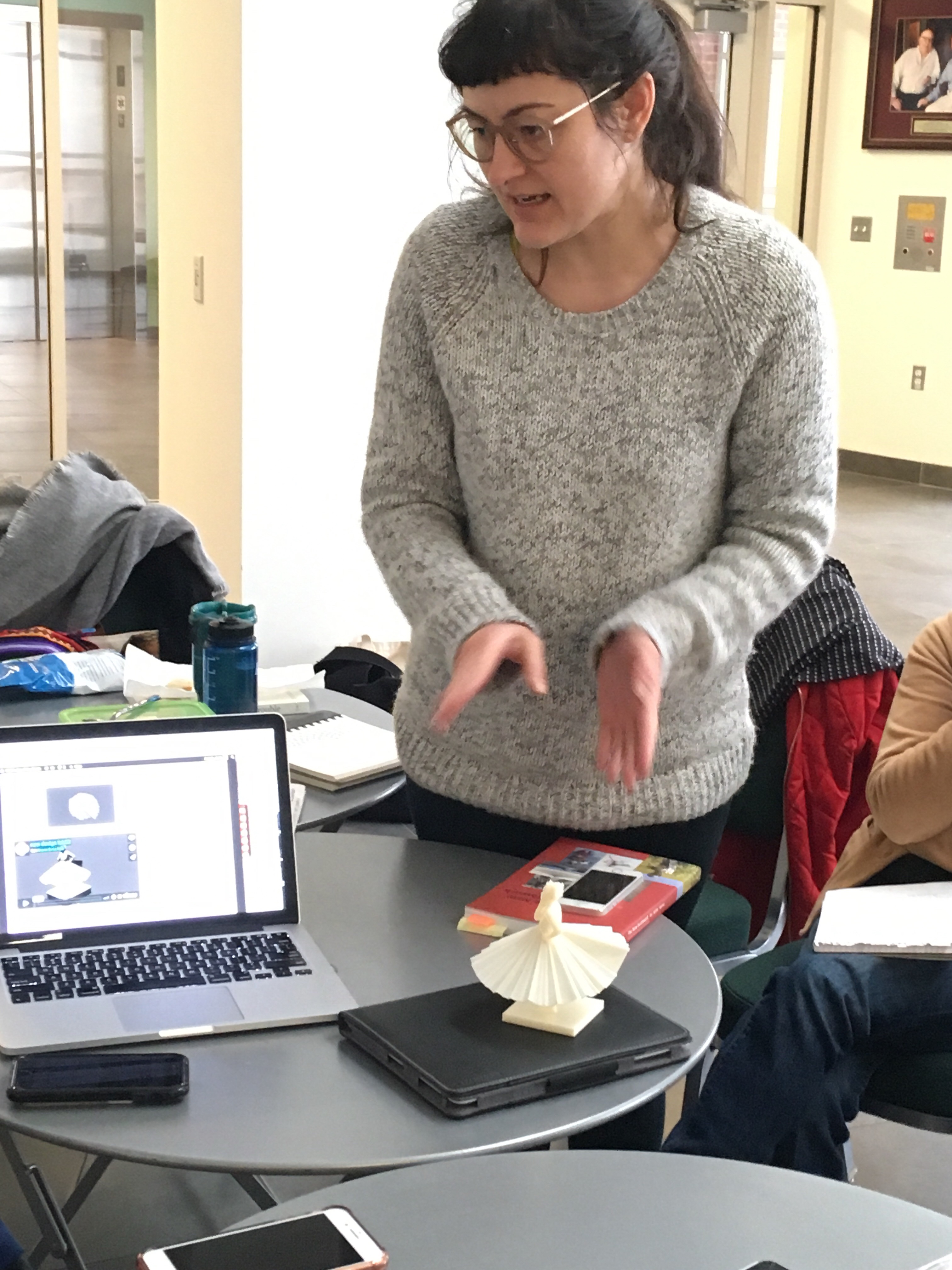
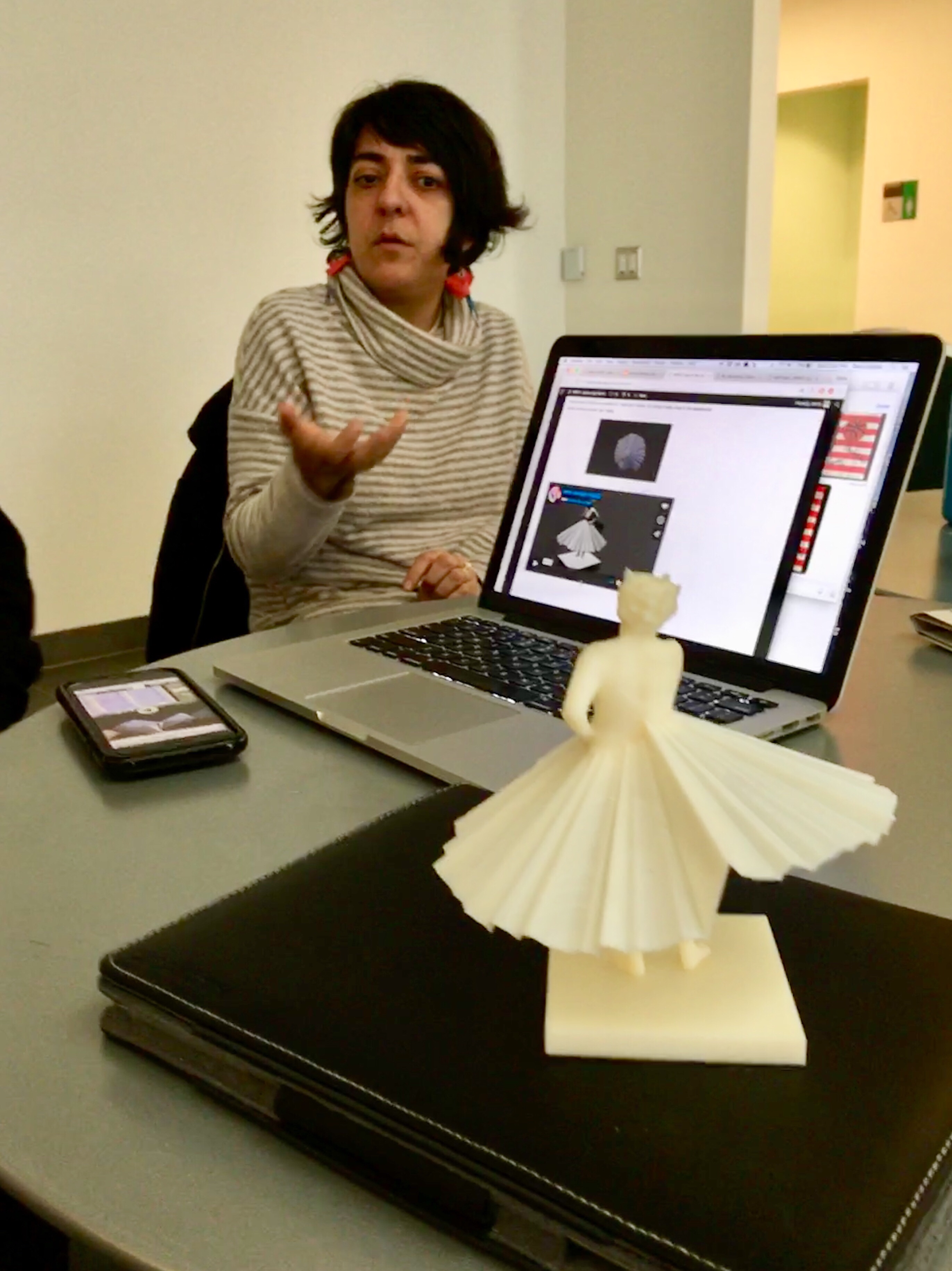
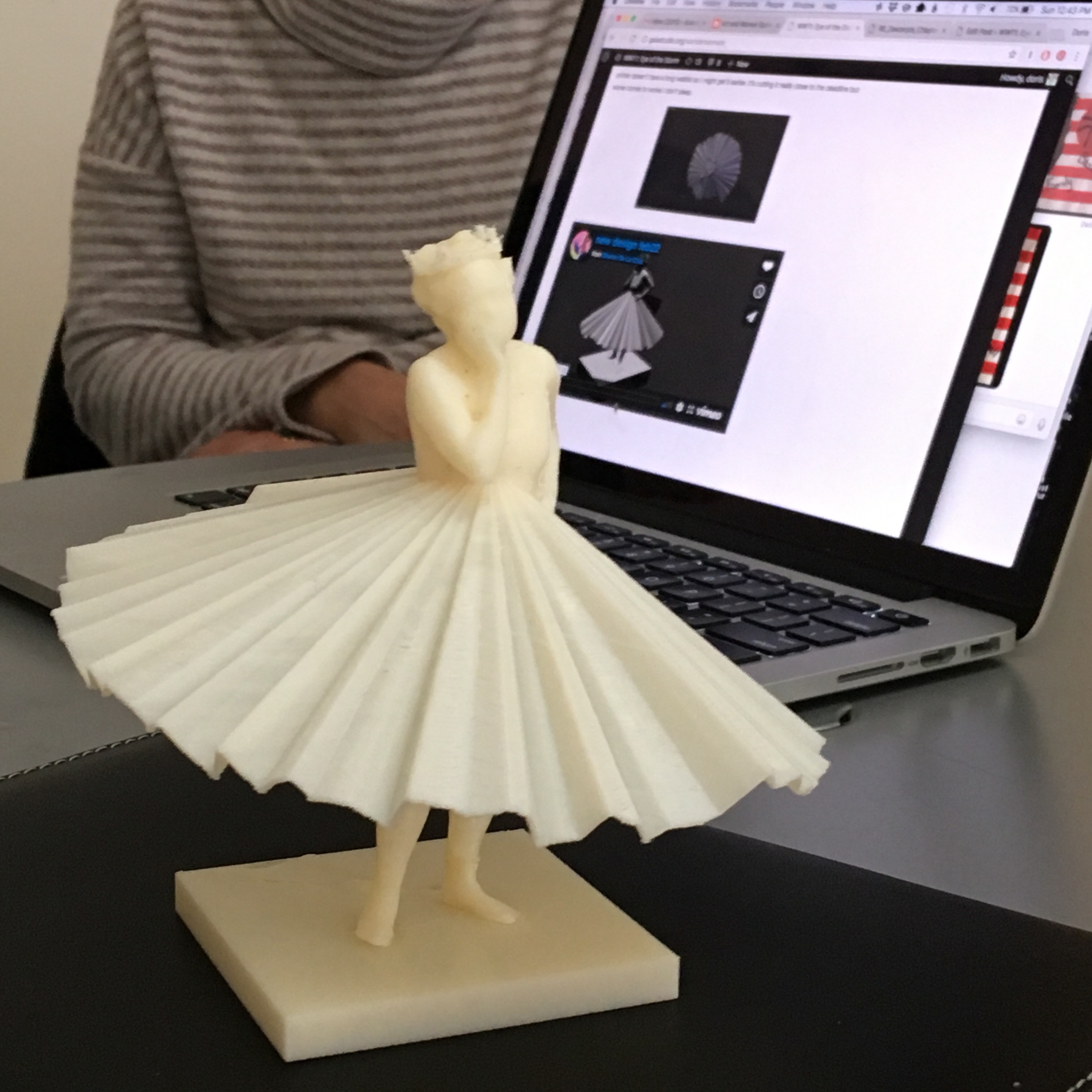
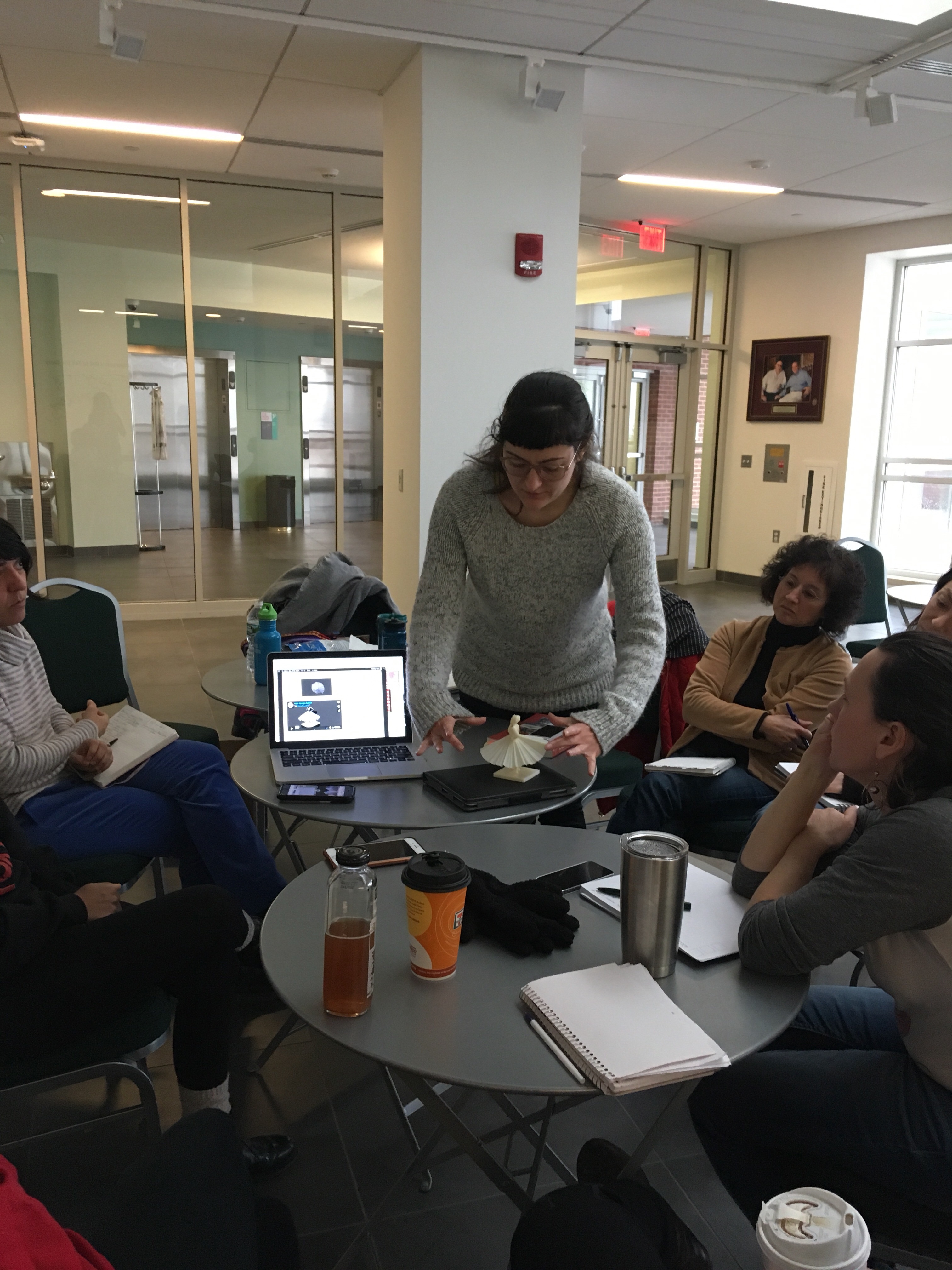
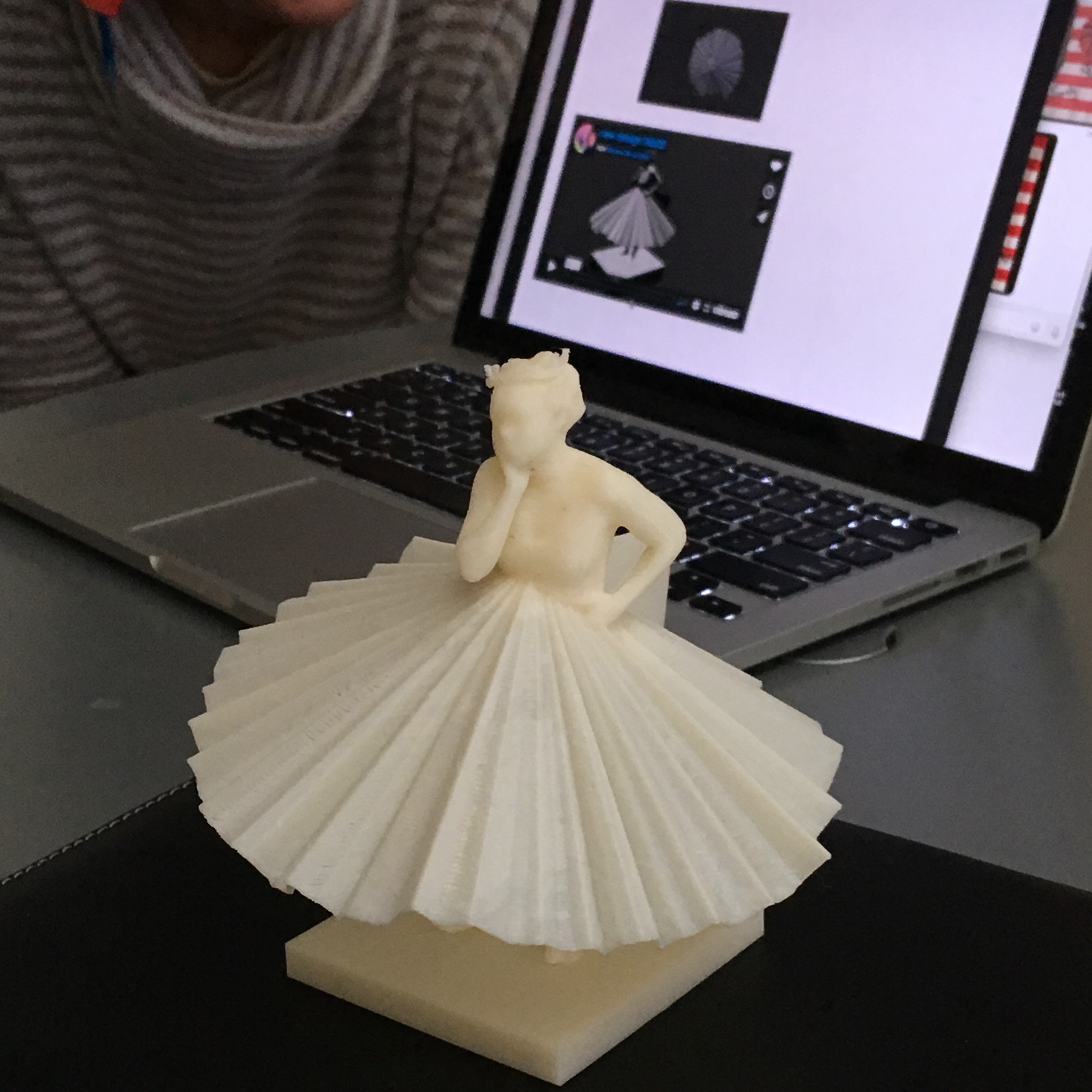
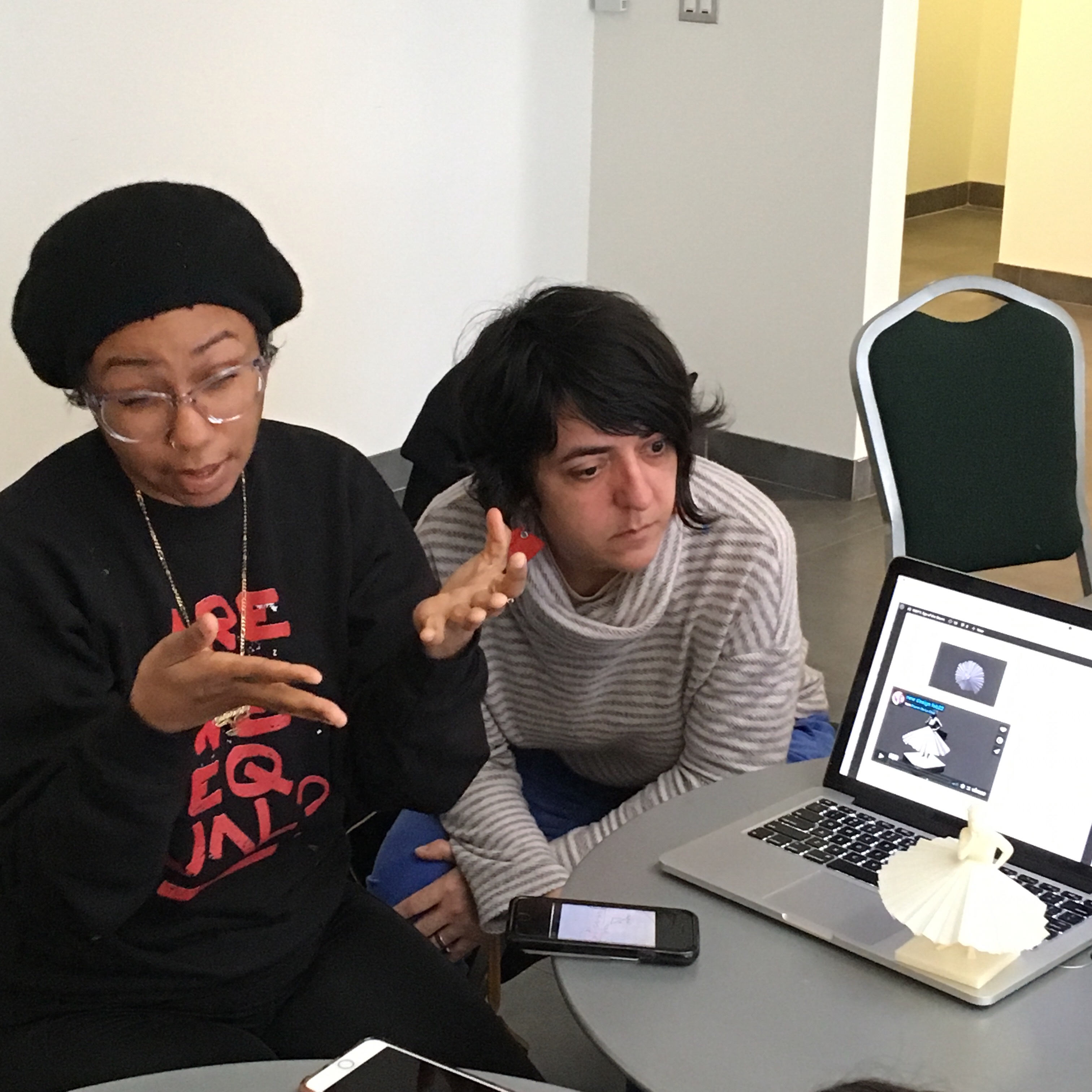
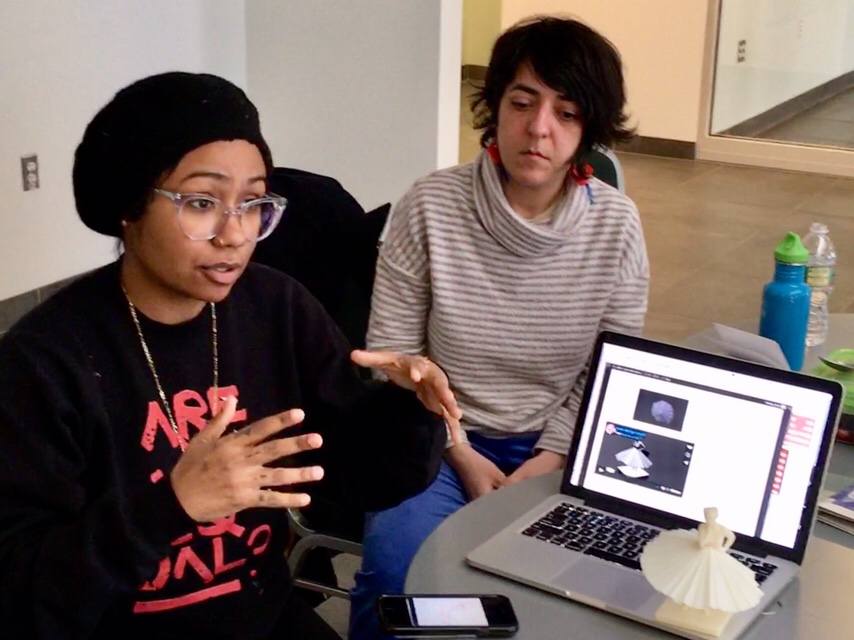
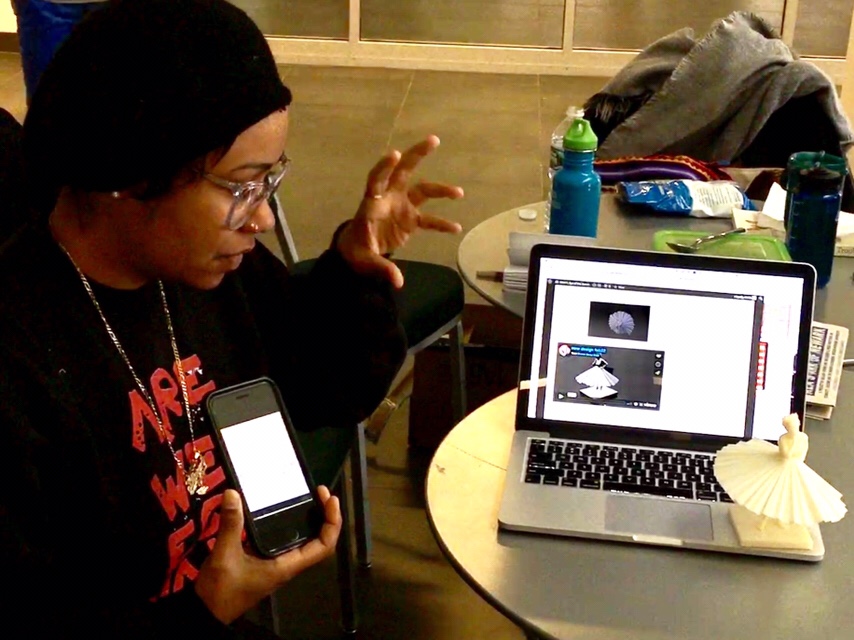
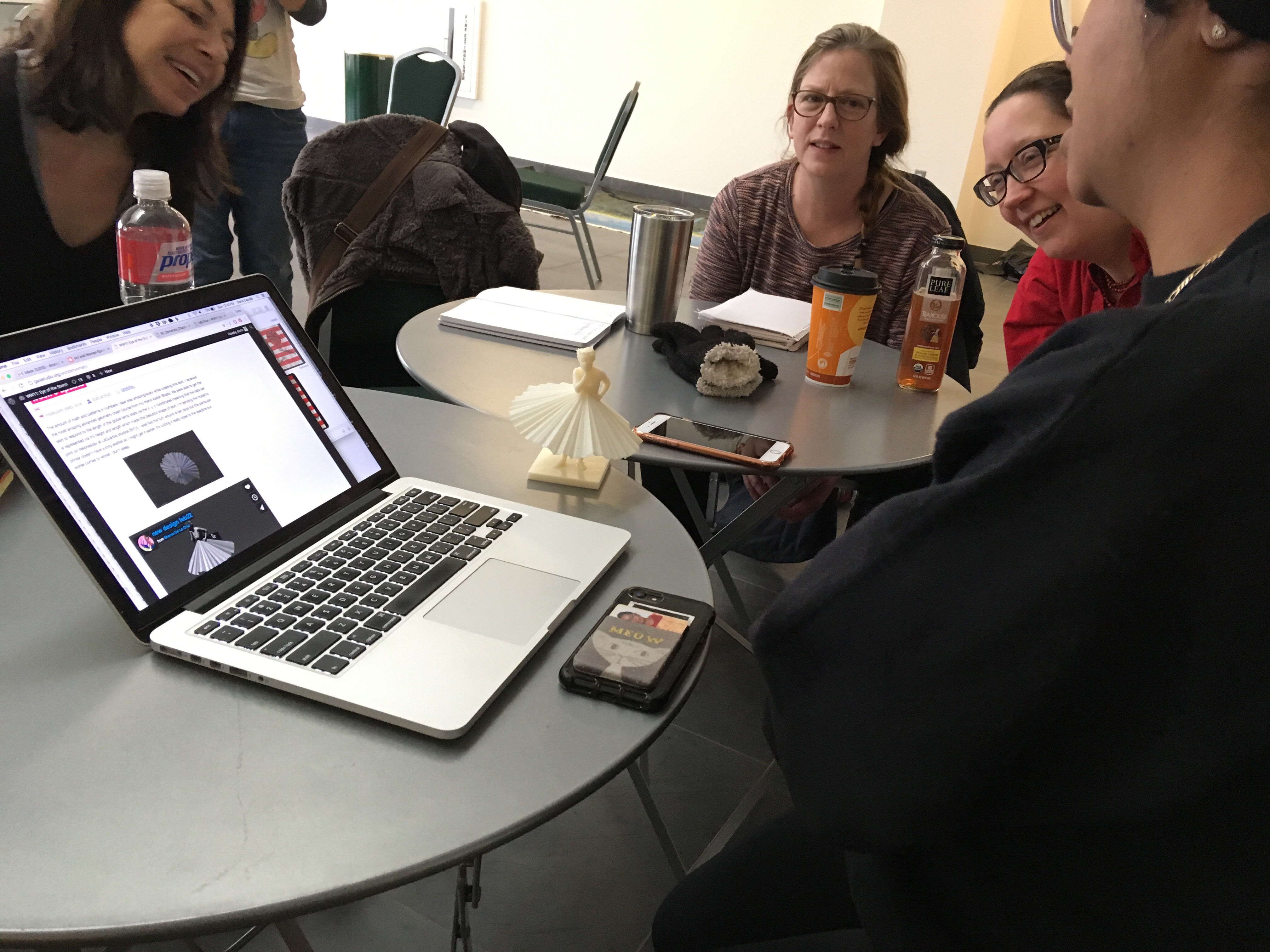
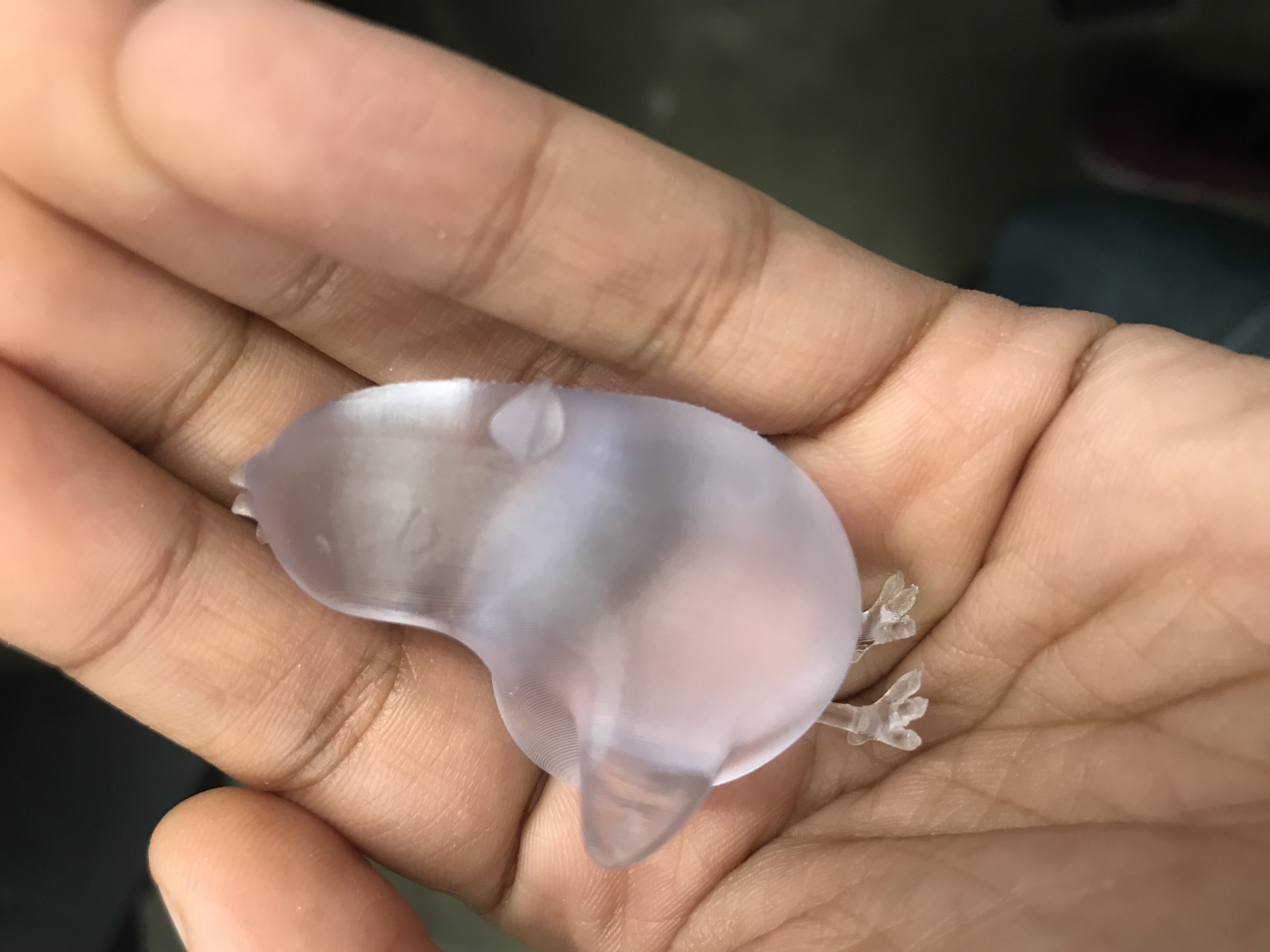
On Wednesday, I finally sent my model to be printed! I visited NYU’s LaGuardia studio and it was amazing. I’ve done 2D printing there but never 3D so it was great to see their facilitates. The model in total is about 10 1/4 tall in it’s final state. After looking at materials and my budget I settled on resin (see material example below) as the material choice, it’s going to be smoother than I previously imagined but I think it’s ok.
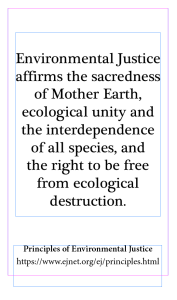
I also started designing/imagining my “tak-a-ways”. I’m going to print the “Principals of Environmental Justice” on what will essentially be playing cards. One side will be a drawing of Yemaya and the other side will be one principal.
I don’t know if this will happen but I really want my friend to bless the altar by performing a Yemaya dance. This is ideal but I might not have the time or resources. I also decided on a name for this series, which is “Climate Altars”. This specific piece will be called “Climate Altars- Yemaya”.
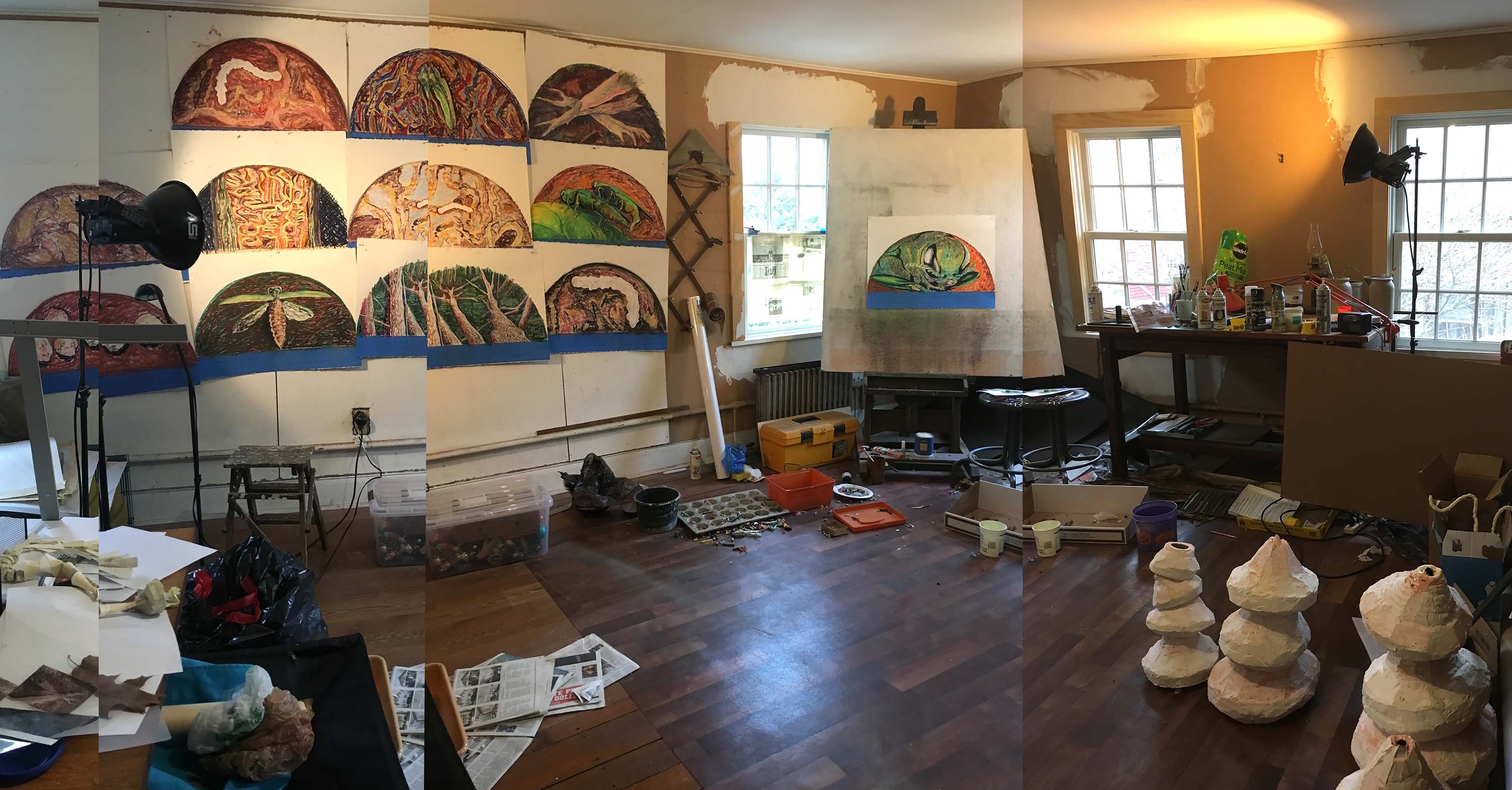
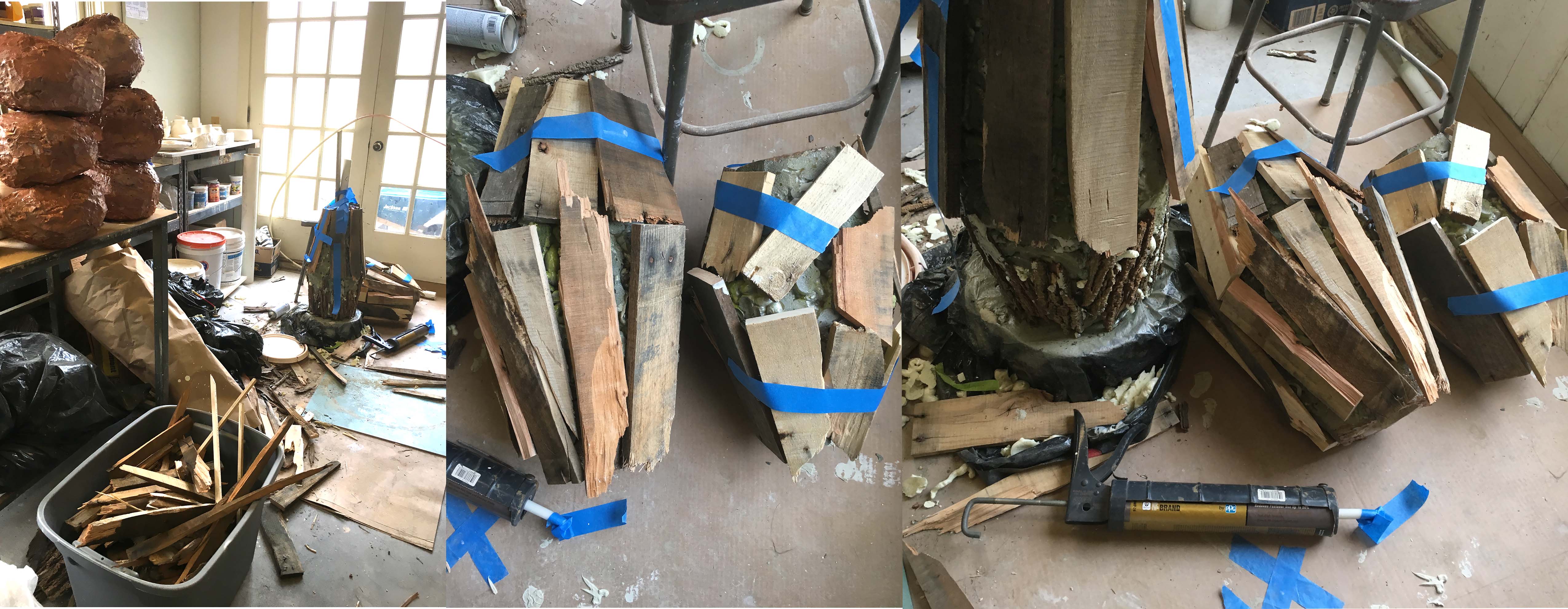
Gosh. Almost done with drawing. Taking a break to make food for our last meeting. More work to be done on the sculpture. Maybe can hand sanding for palm sander, then ready for opalescent surfaces. I’m trying to use materials on hand to avoid having to buy more stuff. In the drawing, applying colors I usually don’t use and working aggressively as the topic demands
Here’s the video intro:
I’ve continued revising the text:
In My Backyard
The magnolia has been in my backyard since before I can remember.
We grew up together over the years.
It was an early bloomer, showing some the first signs of spring each year with it’s fuzzy little buds.
It’s twisted branches were brittle and seemed to form little hands.
The magnolia started to die off slowly.
Some branches broke off in a late spring ice storm a few years back.
Maybe the open wound made it susceptible to fungus or disease.
First some branches on one side dried up, then two thirds of the tree canopy.
We called an arborist to do a house call and give a diagnosis to see if the magnolia could be saved.
It was unlikely to make it after cutting back the parts that were already dying off.
Plus the tree’s advanced age made a successful recovery even less likely.
It was a difficult decision, made over a number of family meetings, but ultimately we realized the magnolia needed to be cut down.
I arranged to be there when the crew came to take down the tree.
It was really like loosing an old friend.
The crew was very skilled and respectful, but it was still a violent process and a very sad day.
I asked to keep a couple of slices of the trunk; one for my brother and one for me.
Ever an optimist, I tried to look at the bright side of loosing the tree.
I had always wanted to plant garden but was limited by the shade of the giant magnolia, which created an embracing umbrella of privacy but also excessive dampness and a haven for mosquitos.
Our neighbor from the church behind the house confessed that she never liked the tree and was happy it was gone – she said it gave her allergies in the spring.
Without the magnolia, I needed to reacquaint myself with the backyard.
Even with the tree cut and the stump ground down, I could still feel its aura occupying the giant canopy. That Thanksgiving we gathered all of the extended family from around the country and took a family photo where the tree once stood.
Anticipating an intense feeling of loss without the magnolia the following spring I planted 150 tulips. Digging holes for the bulbs I came across hundreds of smaller bulbs clustered around a larger one in soil that had otherwise been undisturbed for years.
I wasn’t quite sure what they were so I left them alone.
Some lily of the valley leaves came loose too so I could observe how they grow underground, sending shoots below the soil to launch the next generation.
A friend suggested testing the soil before starting on the other gardening experiments I had in mind for the spring.
I collected samples in plastic bags and sent them to the Brooklyn College Soil lab.
When the results came back, I was completely shocked!
The level of lead was 783 parts per million, almost two times the levels the EPA deems to be safe.
There were also high levels of heavy metals including arsenic.
As I planned for the backyard vegetable garden I had always dreamed of, I was suddenly confronted by the harsh reality that the soil is toxic.
In the spring, the tulips bloomed beautifully along with some daffodils that were already there as well as the Star of Bethlehem (the clustering bulbs that I couldn’t identify in the fall.)
(It turns out they are an invasive species that are often spread through other bulbs like tulips or daffodils). Right around this time there were a number of environmental initiatives in Greenpoint, the result of winning the lawsuit against Exxon for a giant underground oil spill that has been slowly leaking into the aquifer under the community for decades.
So what to do now?
It was already late May, time to get things in the ground especially with the short growing season in the North East.
My boyfriend built three large planter boxes to place above the existing soil in the yard.
It would take a lot of dirt to fill these boxes before I could even start to grow anything, and how do I know that any other dirt I bring in isn’t toxic as well?
Luckily, a woman at one of the environmental workshops, did a course in permaculture and told me about lasagna gardening.
She gave me a list of local places to source materials, including horse poop, dirt, compost, cardboard, etc.. and quite exact instructions for how to combine the ingredients to start to build up clean, healthy soil in my boxes.
So armed with a box of garbage bags, gloves, and a shovel, I set out to the horse stables near Prospect Park.
It turns out horse poop is mostly straw, since this is what they eat and then it’s mixed with more straw, so it really doesn’t smell all that bad.
I covered the wire bottom of my elevated boxes with a cotton fabric to help keep the new clean soil contained.
I laid down cardboard and then started layering the horse poop and was on my way to filling the boxes and creating healthy soil.
Then there was the garden soil from Home Depot – what’s to say that this purchased soil is any better than what’s in my backyard to begin with?
It’s not tested or certified or regulated in any way.
Then finally there was the trip to Build It Green for buckets of worm castings – or “black gold” as it’s also known.
After sourcing all of the materials and mixing together the right proportions it took quite a while but I was finally ready to plant.
I planted two types of tomatoes, cucumber, pepper, butternut squash, and a number of herbs: thyme, oregano, and basil.
I really had no idea how to plant and grow things so each step involved researching online, learning about companion planting, the importance of thinning seedlings, etc…
Throughout this learning process there was still the question of what to do about the toxic soil in the rest of the backyard…
I researched about hyper-accumulators that concentrate and absorb the existing lead from the soil and planted sunflowers along with my brother and his friend for this purpose.
I felt like Jack and the beanstalk checking on them as they continued to grow.
The sunflowers grew to be taller than all of us.
Further research revealed that in order to use sunflowers for remediation, every last part of the sunflower, stalk and roots need to be removed from the ground and technically should be disposed of as toxic waste.
In fact, letting these sunflowers dry and discompose in place could actually be even more dangerous since it pulls up lead that may be sitting dormant below closer to the surface where it is more accessible.
So what exactly are the risks of lead exposure? Is it dangerous to touch, breath, eat?
It seems lead is most dangerous to young kids who are always touching everything and then putting their hands into their mouths, especially since their brains are still developing.
I came across an article from the 80’s in the local paper about elevated levels of lead found in community gardens in Greenpoint. I am the kid in the photo.
I learned there are precautions we can take when handling lead, washing hands after being outside (especially before eating), and taking off shoes in the house to keep from spreading the lead inside onto floors, rugs, etc…
One of the community workshops helped to put the lead contamination issues in perspective for me.
Lead is a naturally occurring element.
It becomes dangerous only after humans extract and consolidate it, adding it into common materials such as houseplant (until to was banned in 1978) or even water pipes (until the Safe Drinking Water Act Amendments of 1986).
At the end of the summer, I dug up all of the soil around the roots of the sunflowers.
Still not quite sure how to properly dispose of toxic waste, I throw it in the regular trash rationalizing to myself that it can’t be that much worse than everything else that ends up in the landfill.
And how did the soil in my backyard get to be so contaminated anyway?
Greenpoint has some of the highest levels of lead in the whole city.
As a mixed used neighborhood, Greenpoint always had homes right next to factories.
It;s also considered to be one of the birthplaces of the industrial revolution.
Without environmental regulations, waste and toxins were dumped directly into the ground and waterways and spewed into the air.
We are now faced with the legacy of these decades of pollution and degradation of the natural environment.
Next phase (I may need to hold off on this section for now, leaving it as another episode of the project for next time?):
2017
The second year in the garden.
Some of last year’s tomatoes fell outside of the boxes and started growing new tomato seedlings. What to do with them? Kill them, move them, leave them? (Articles)
Compost explosion. Cantaloupes start growing in the center of the garden. I can’t find any articles about lead and cantaloupes.
This week I have been focusing on my papermaking. Currently I have the last of 100 sheets drying in the studio. Once they are dried I add external size, and will start marbling the papers using the suminagashi process. I am also working on my stencils. Once the stencils are all cut out, I will buff them with gum arabic and watercolor them. I plan on spending Saturday at the Newark Print Shop to make progress on the prints.
I am still working through my plans for install. Still working with the tyvek idea. I am unsure if I should use velcro, as it would be the easiest but is not archival. Other options might take a lot more time and be more permanent.
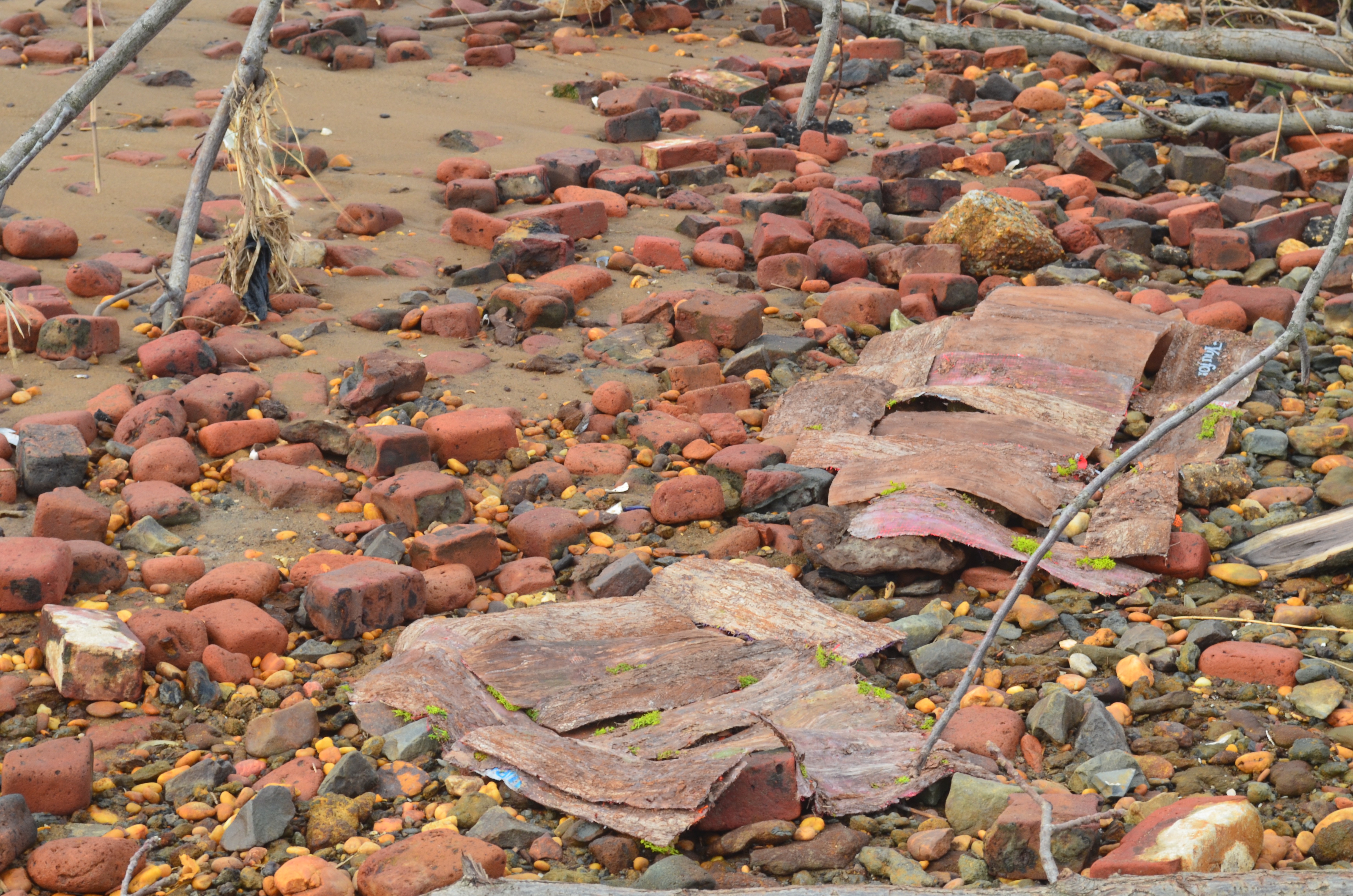
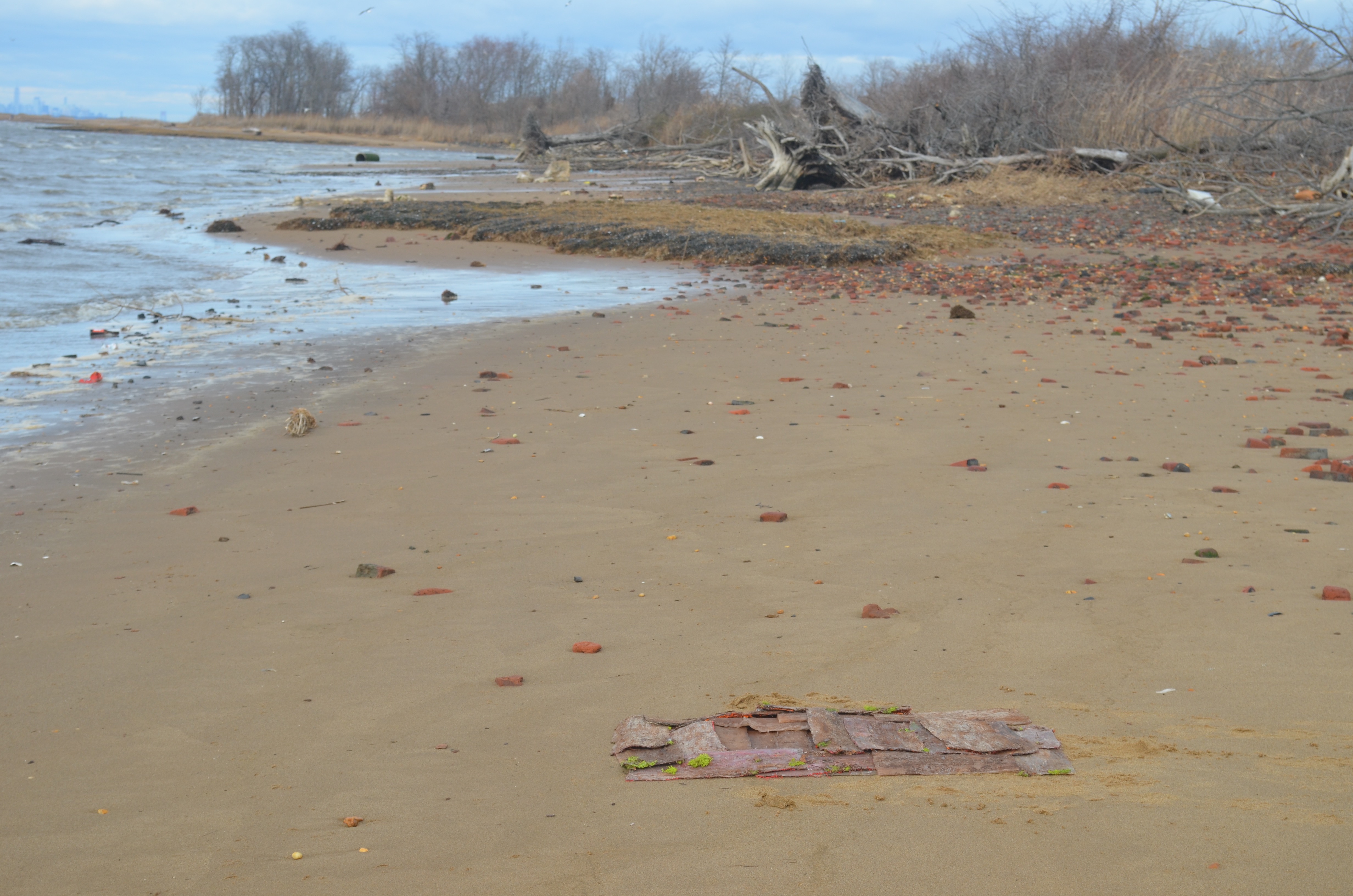
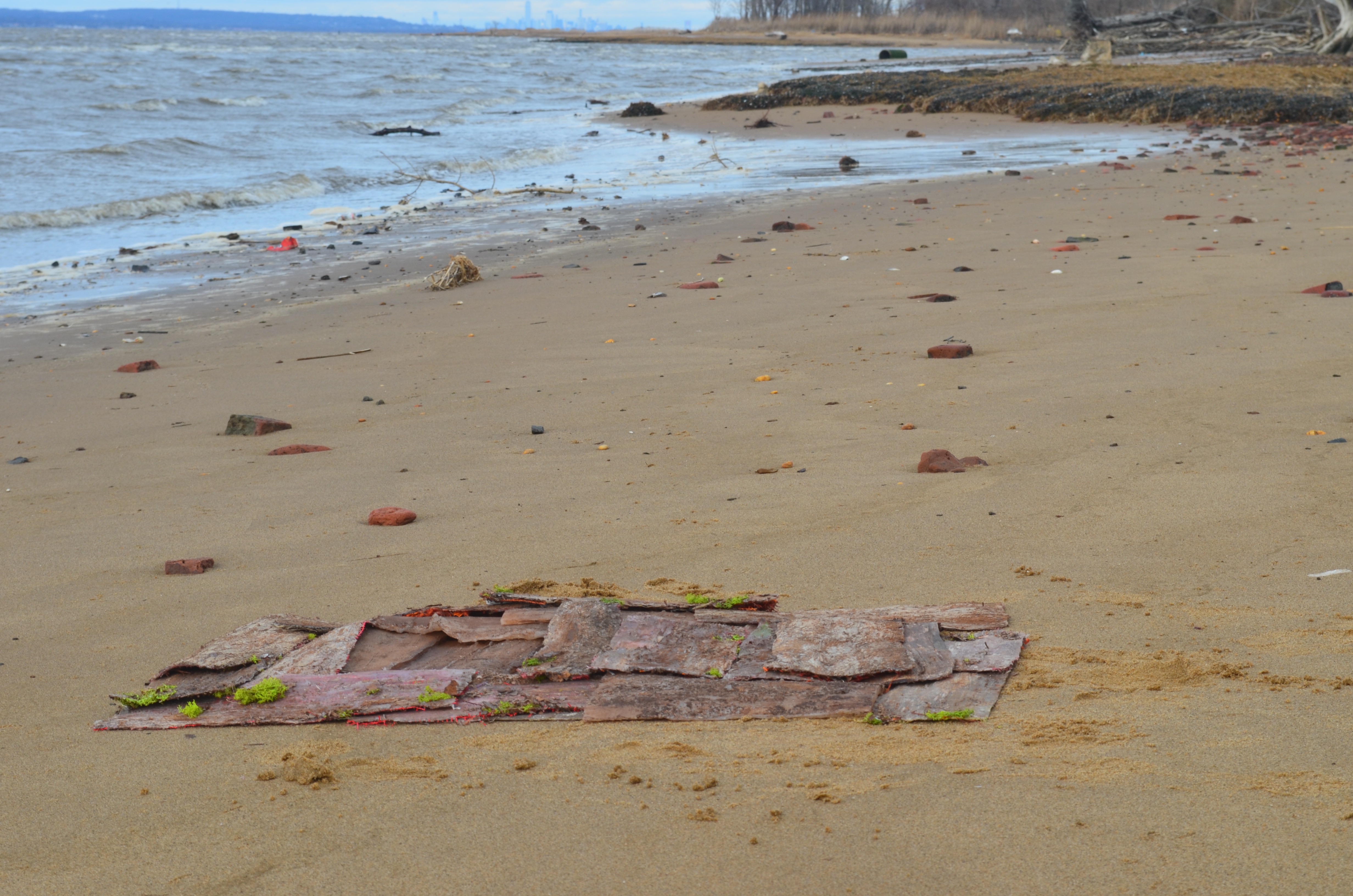
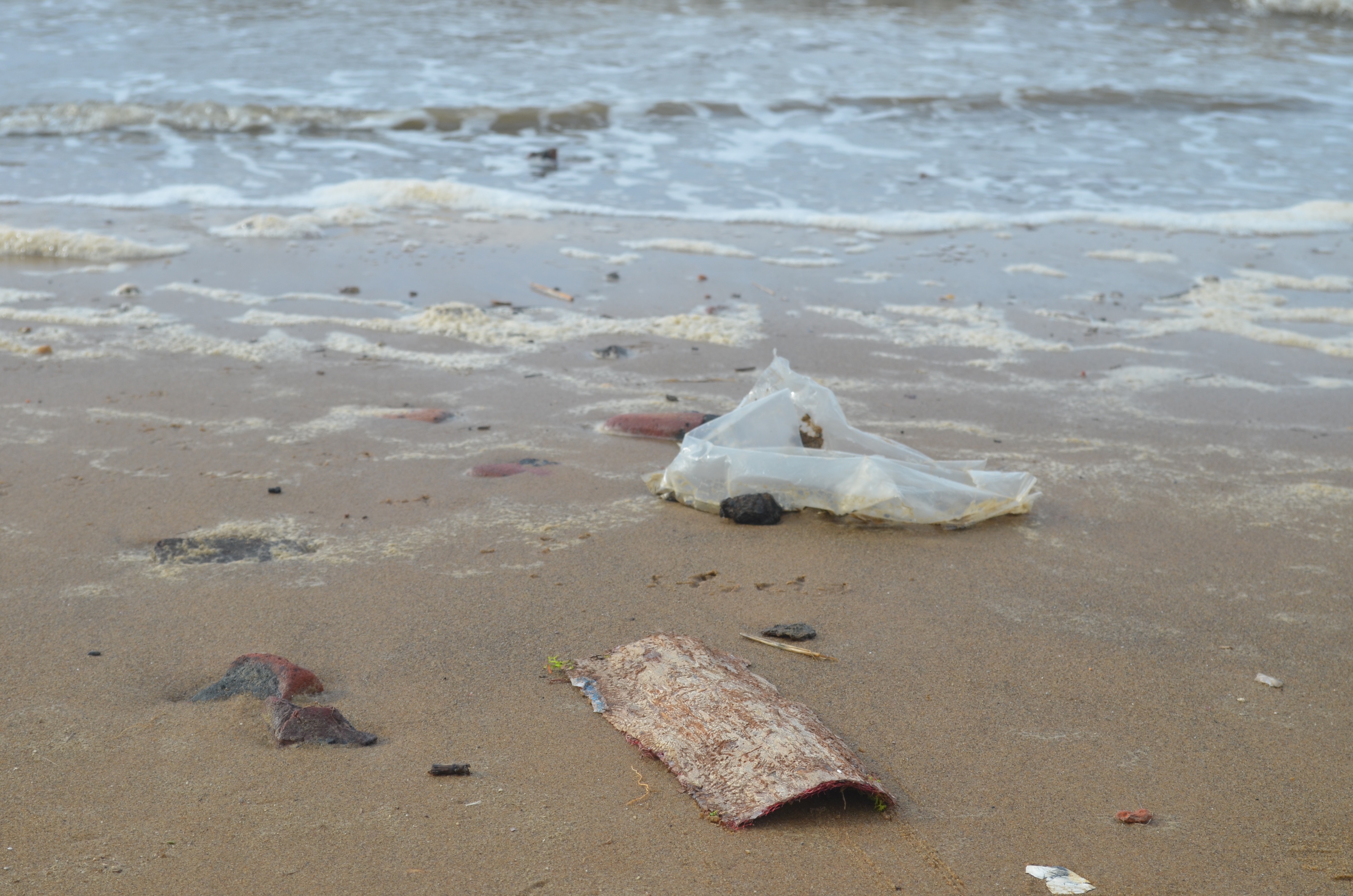
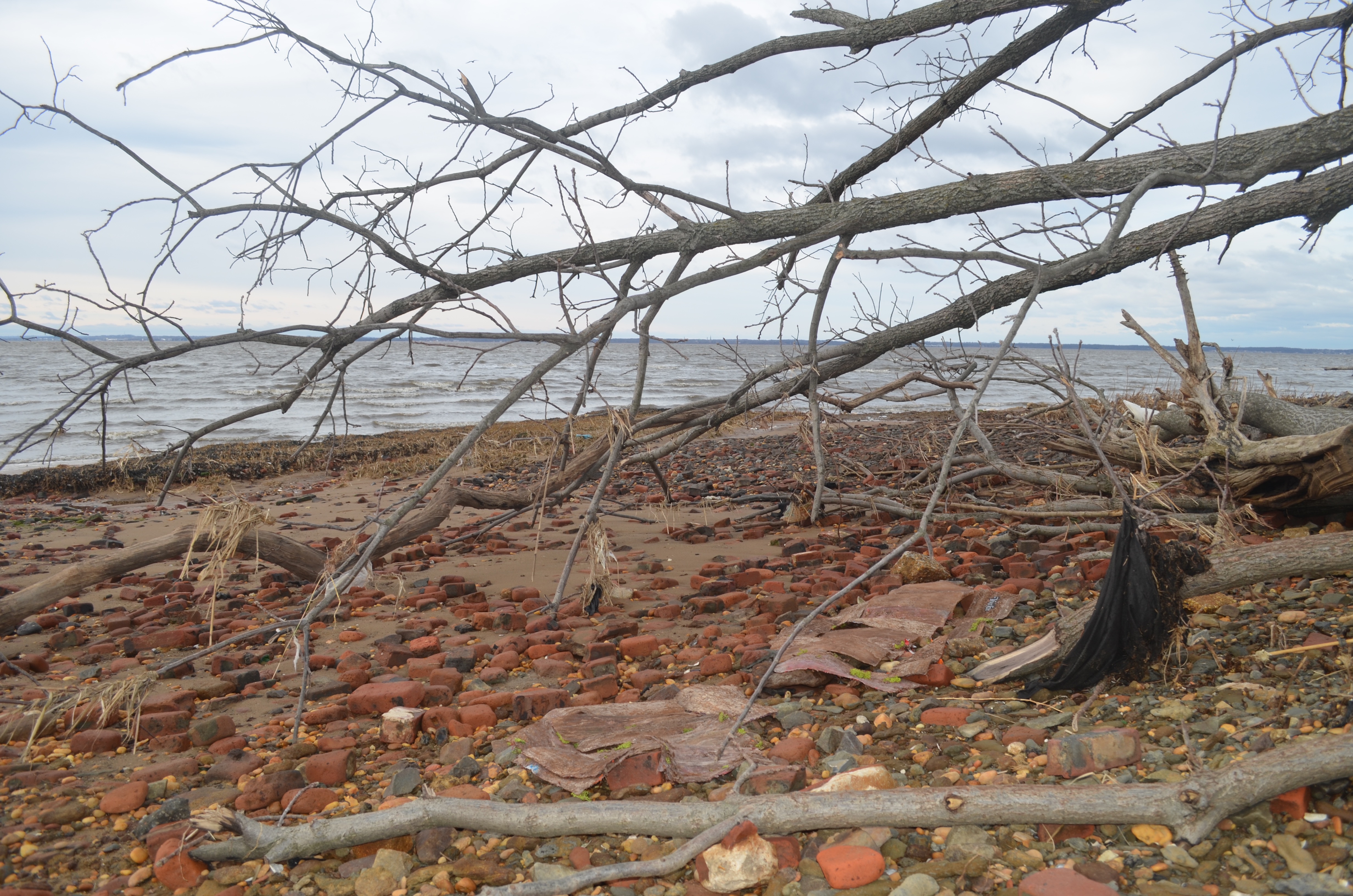
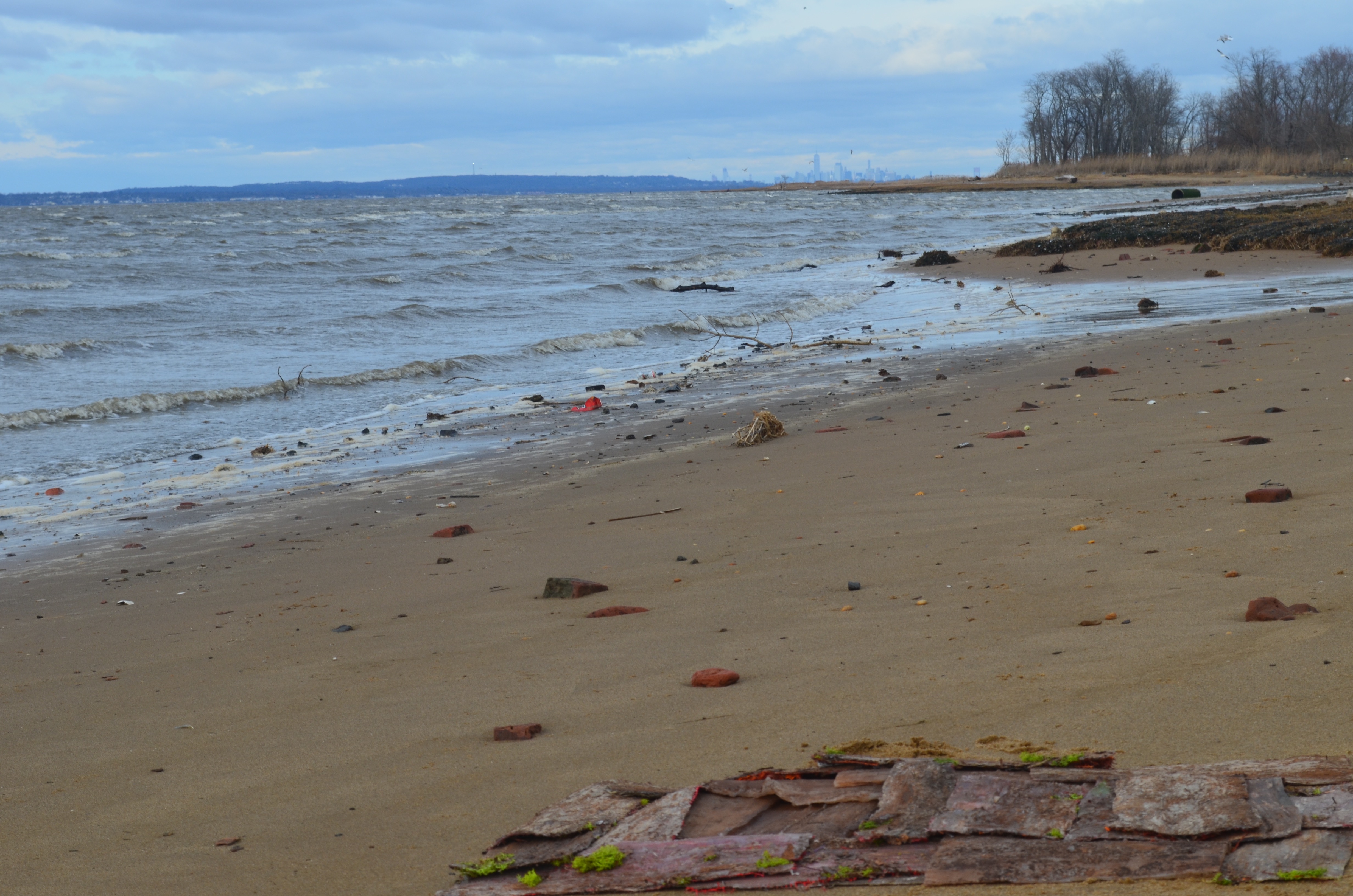
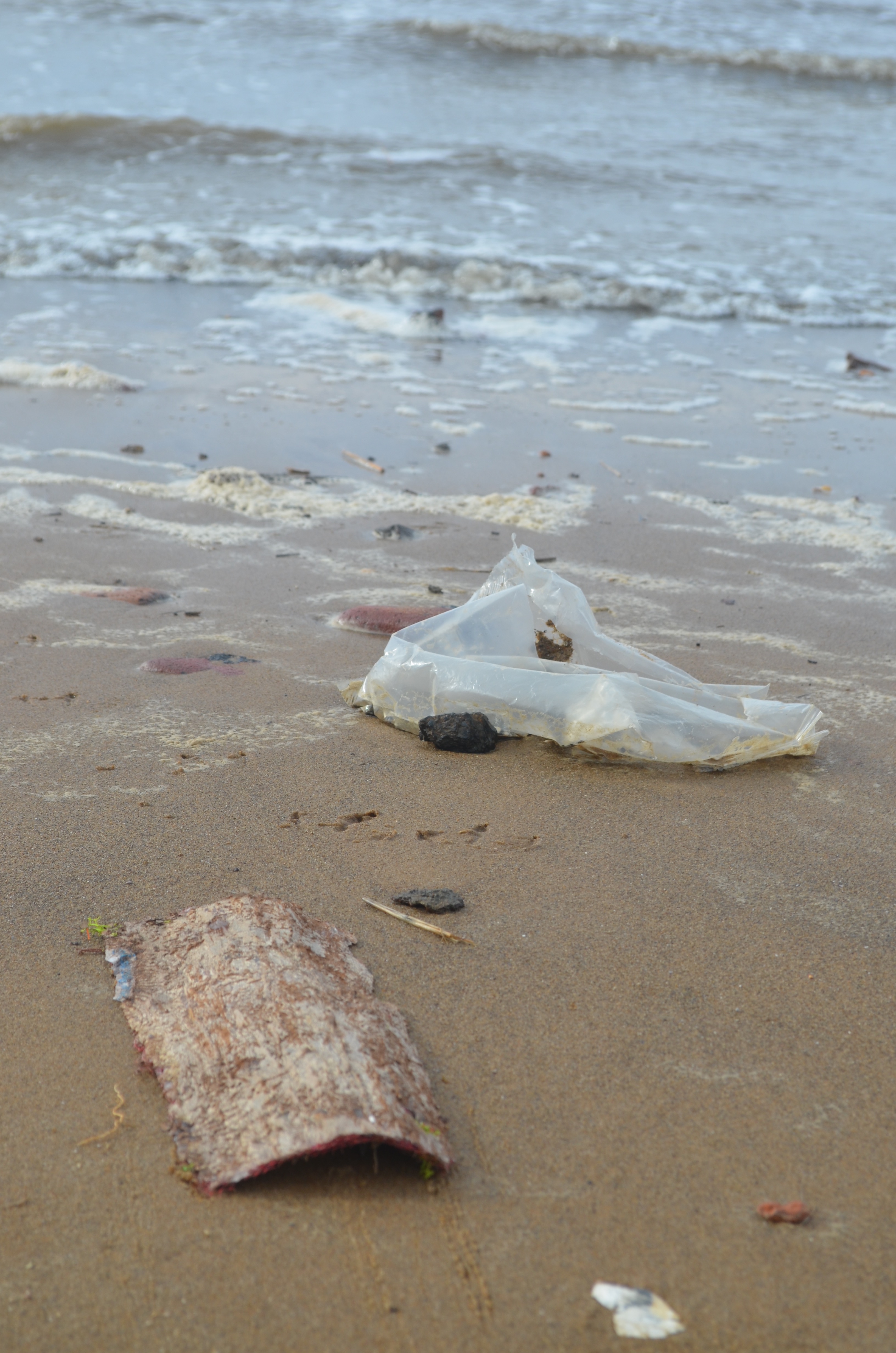
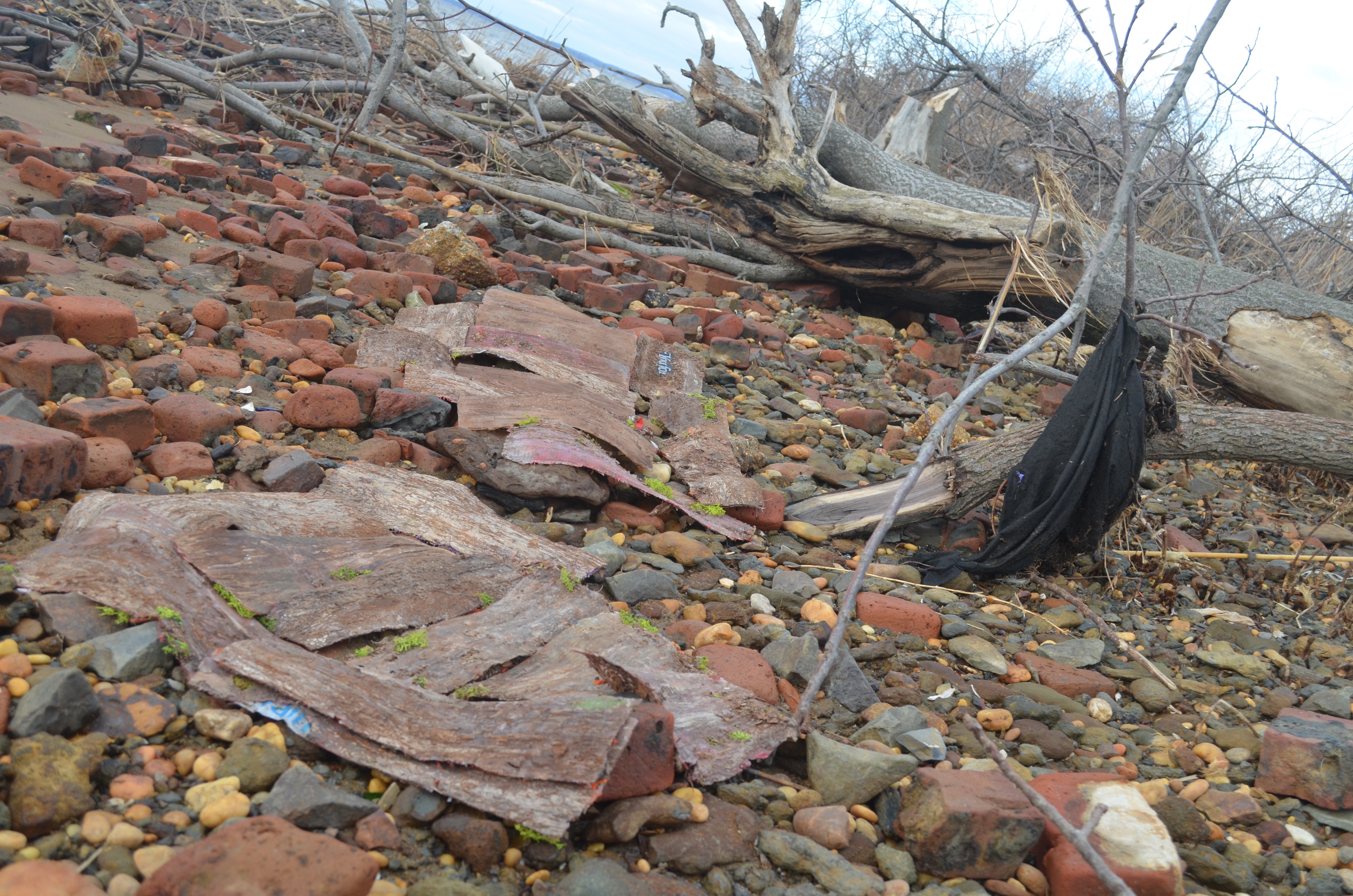
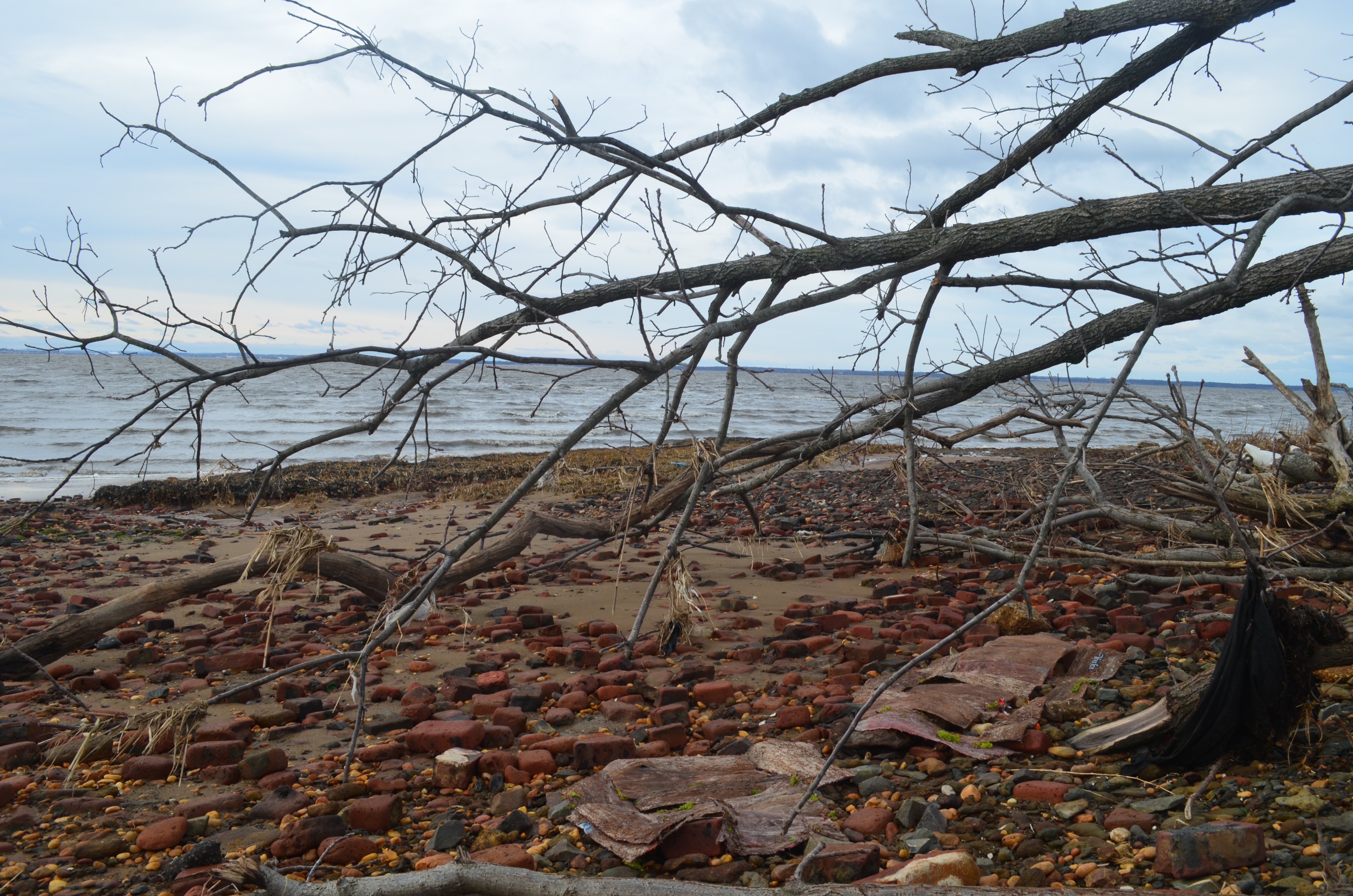
The effects of ecological interventions. a new presence become an expression of culture
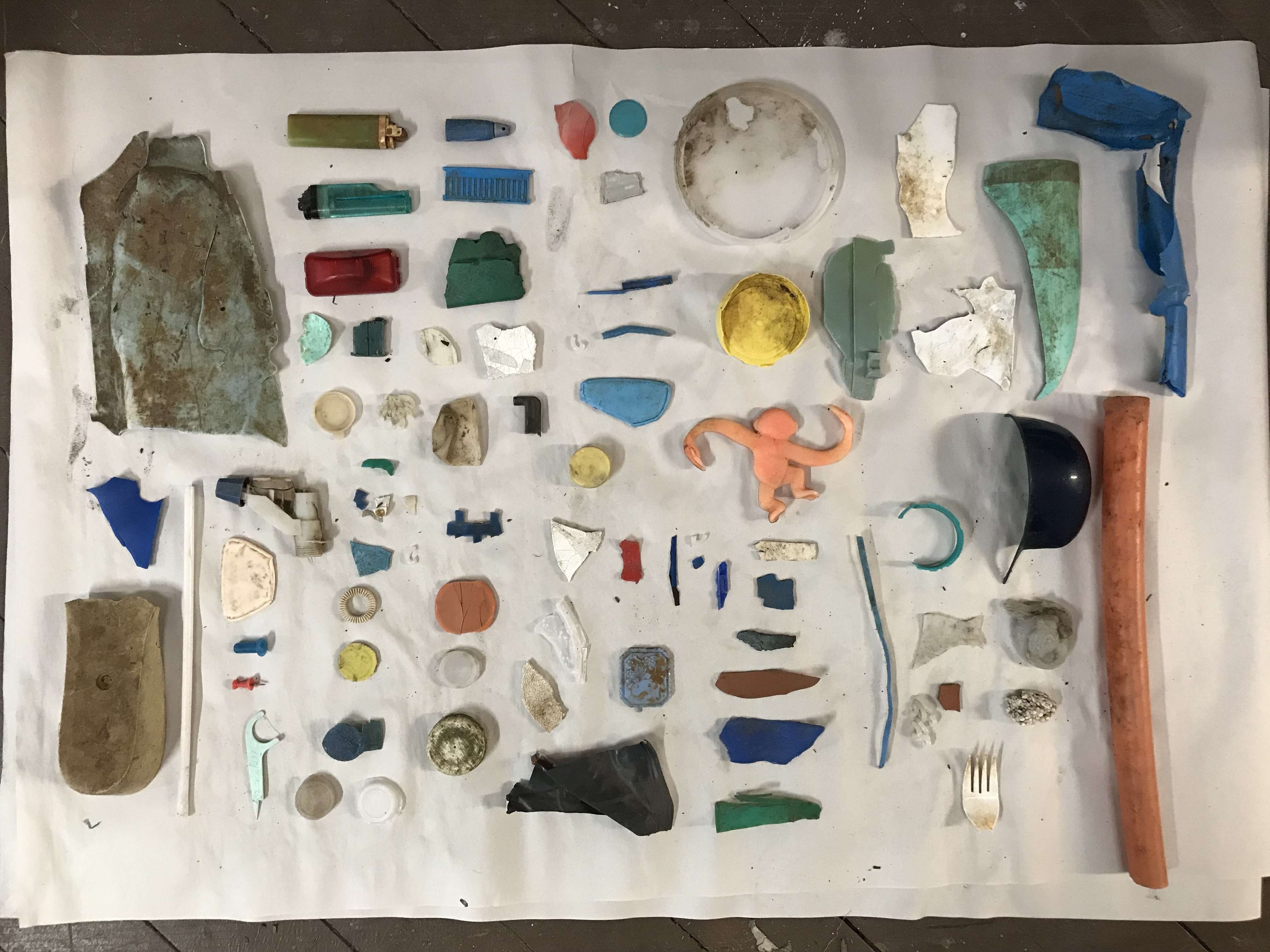
I introduced leaves, tree barks made with plastic material. I treated both in the same way that natural plants host plastic in contaminated areas. The new created form is represented by the conversion of natural ecosystems and an increasing overexploitation of biological and natural resources. The effects of intervention is produced by placing plastic tree barks on a contaminated area which is similar to the intervention between a handmade and the natural. The intervention of a plastic element into a natural environment.There is a a connection between a fallen tree and plastic elements, they are closely connected into a new sculptural form. A new presence become an expression of culture. I wonder how viewers will react when they see the plastic element in a photograph.
This week I was able to work with some of my new footage from last week. Although my plan was to continue to work on the silver mylar melting icebergs piece, I also took videos with the pink & gold (because I was sent the silver mylar with pink and gold reversible sides. who knows why they make them referable with colors? ) Reading recent science articles directed me to an article about plasma shield around the earth that “ripples like an ocean” to protect it from the harsh solar wind. I was fascinated and clicked on every link I could find about the satellite that had saw these “invisible air oceans.” Because it is blocking the solar wind, I imagined the plasma shield as a gold emergency blanket around the earth. Just read the language in these since article! so poetic! using adhesives that describe the ocean, energy and lights.
“The sphere shields our planet from the sun’s harsh winds while letting through its light. Like an ocean, its plasma flows and ripples in a solar breeze. But also like an ocean, it is prone to storms — solar disruptions so violent they can knock out satellites and even power grids on Earth“
NASA lost contact with a satellite 12 years ago. An amateur just found its signal. – The Washington Post
https://apple.news/AdRdMUGgJSA6jE6e-M4xKHw
To see the invisible – ProQuest – search.proquest.com
This is my first draft of a work inspired by these articles and thoughts. https://photos.app.goo.gl/pssja5glofGzcfBV2
My video shoot with the dancer and the professional videographer went well on Friday. 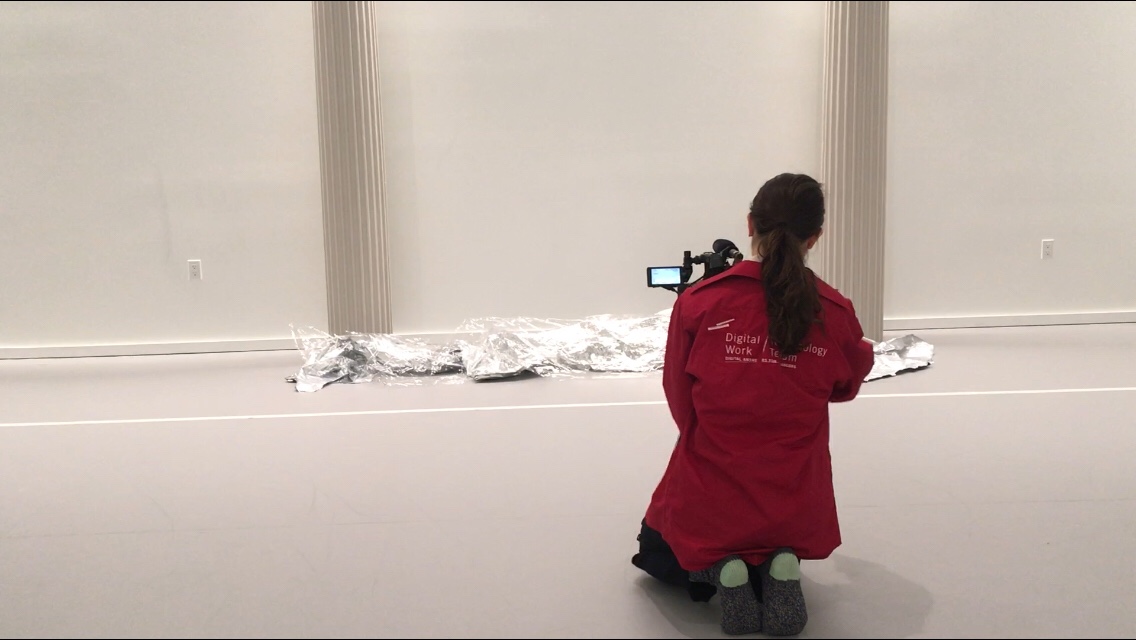
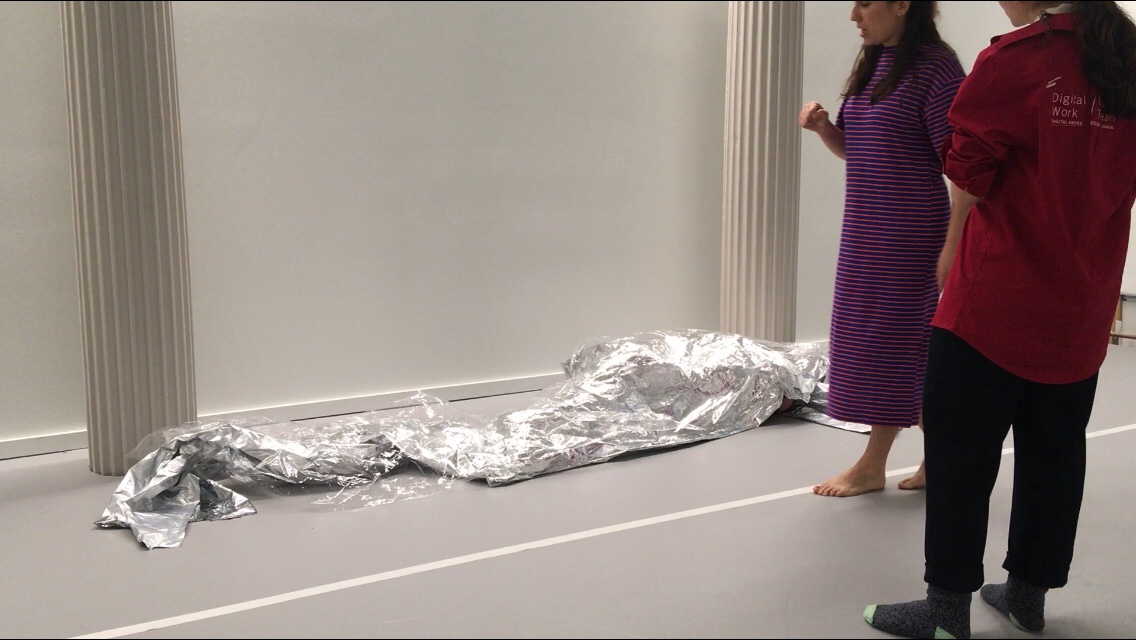
we shot footage with the silver mylar and the LED lights. In addition to the lying down mylar waves, we also shot a melting iceberg upright. (video)
my computer refused to turn on after Wednesday afternoon. I think it died. I was left using my phone and borrowing other peoples computers to edit photos and videos. Looks like Apple cannot repair it, they recommended dropping it off at mikes tech shop. I will need to make a different plan to edit the final video for the exhibition.
so I do not have a final video edit to show you today. But it will be similar to what I showed you last week: darker, richer tones. Video
Also, I want to reshoot the Pink mylar jumping and running in a larger studio with a white backdrop. I was not able to complete that this week but hoping I can have access soon to a cyclorama studio in Newark to finish that work as well this season.
to complete this series, there will be a tryptic of pink, gold and silver Mylar foil video works inspired by the changing environments of the snow, solar wind and melting icebergs.
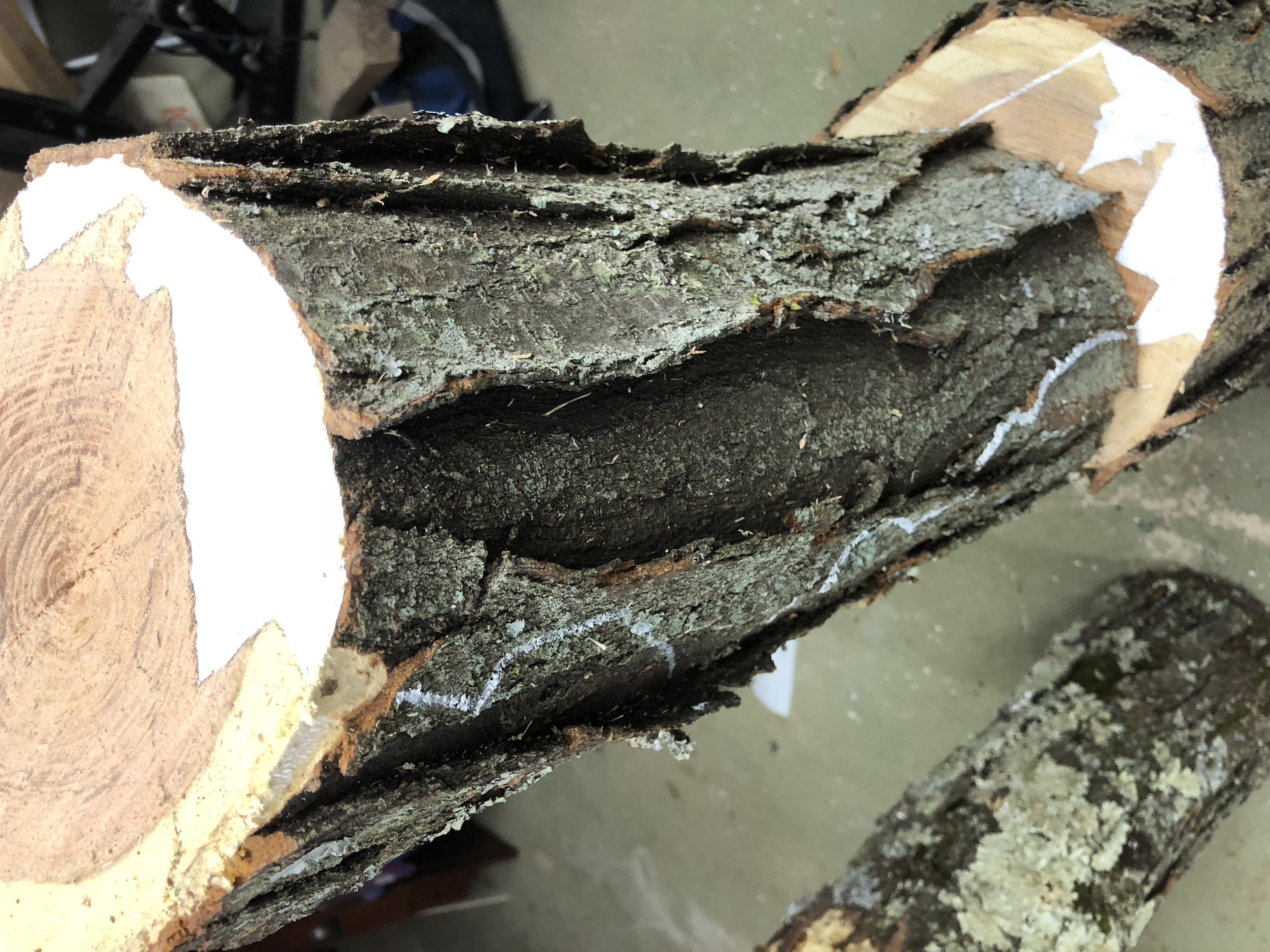
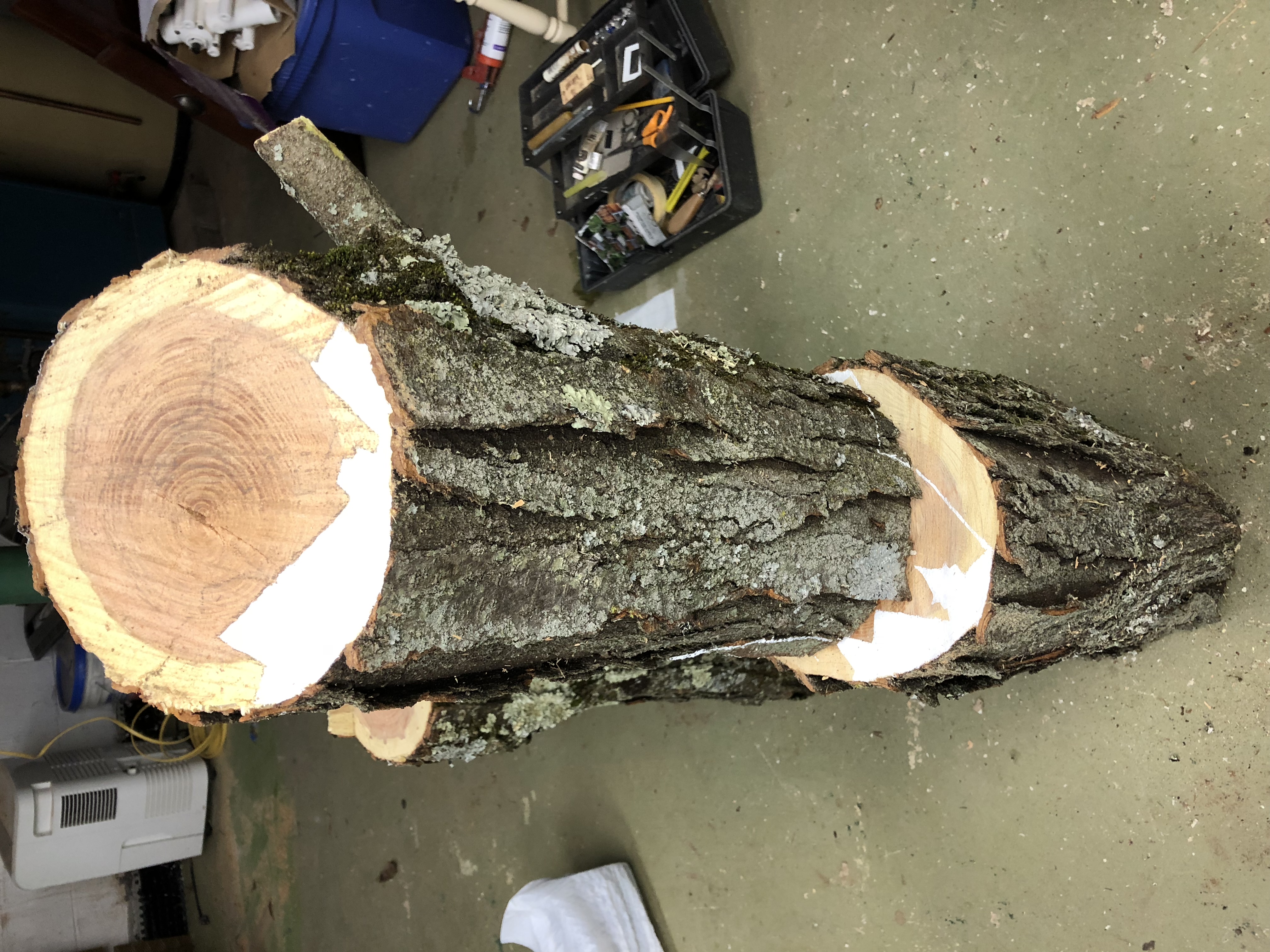
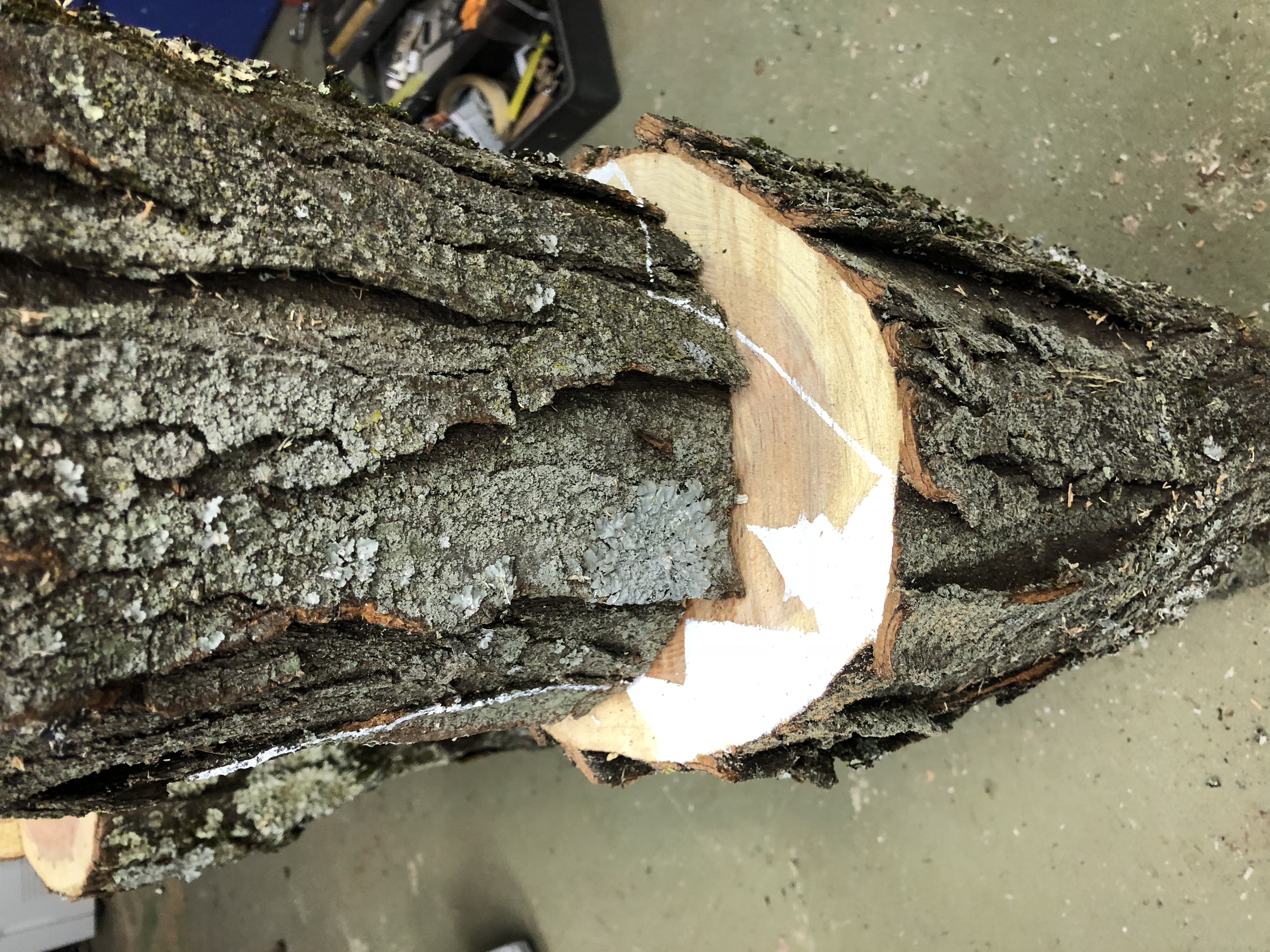
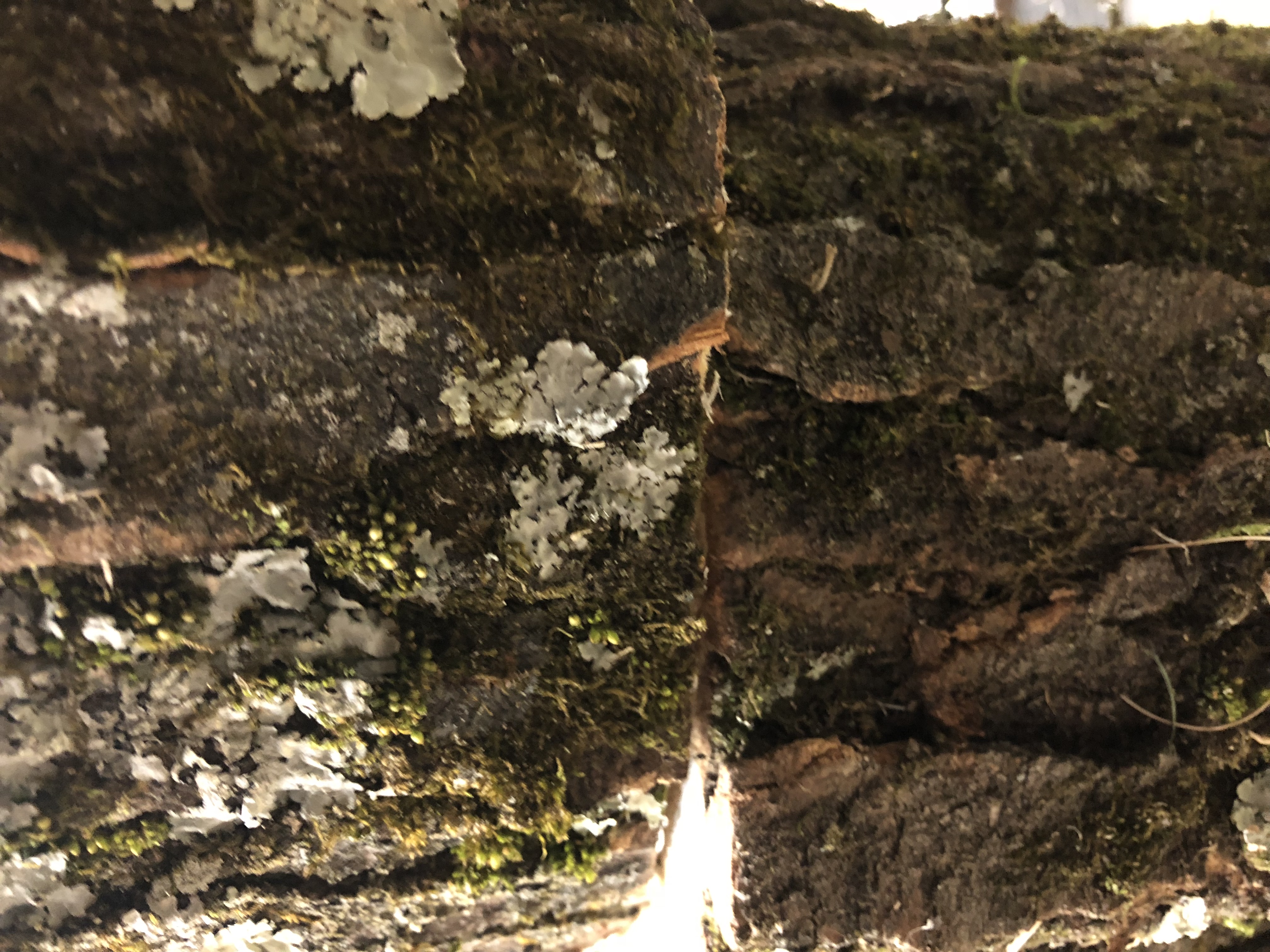
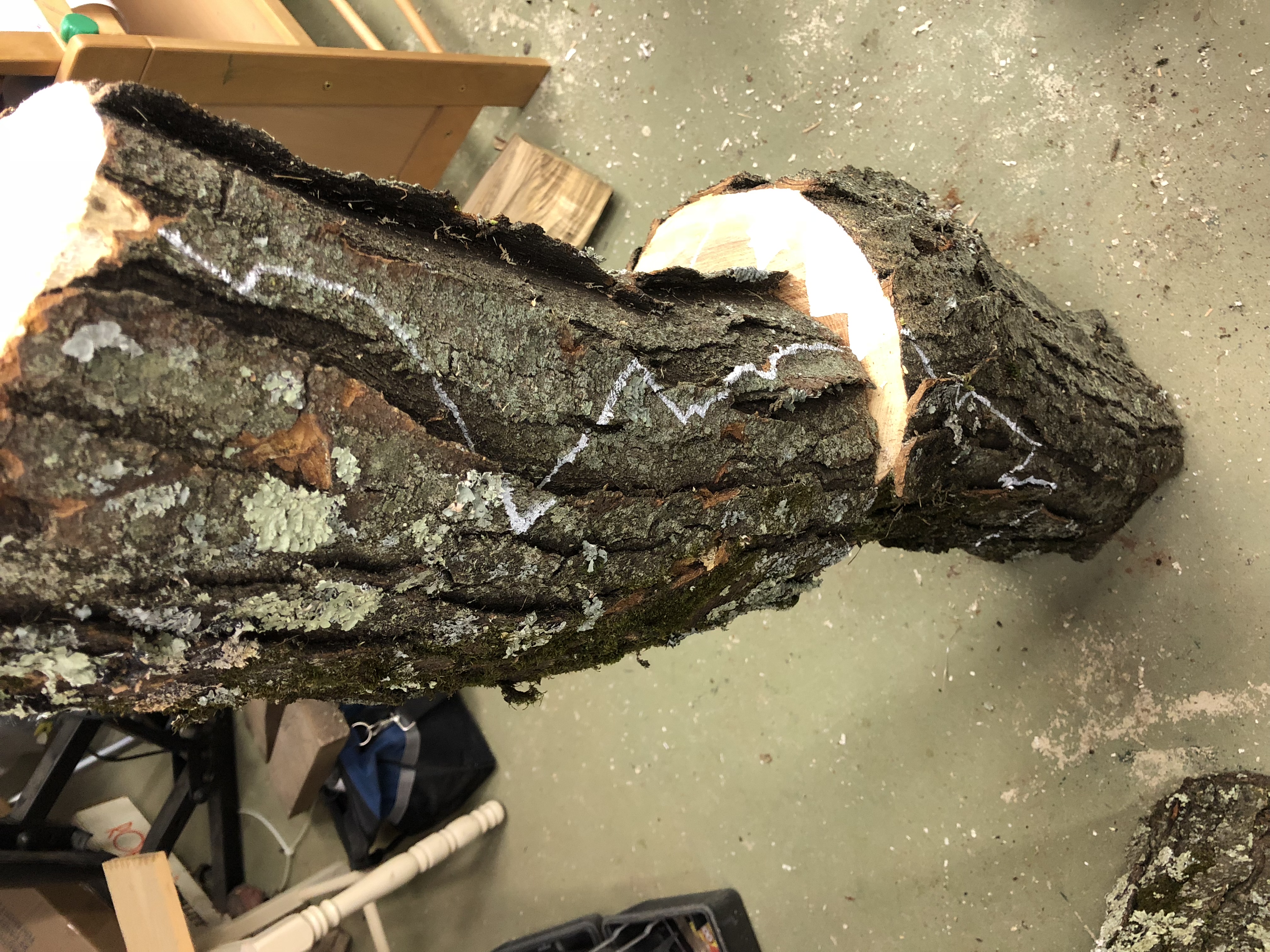
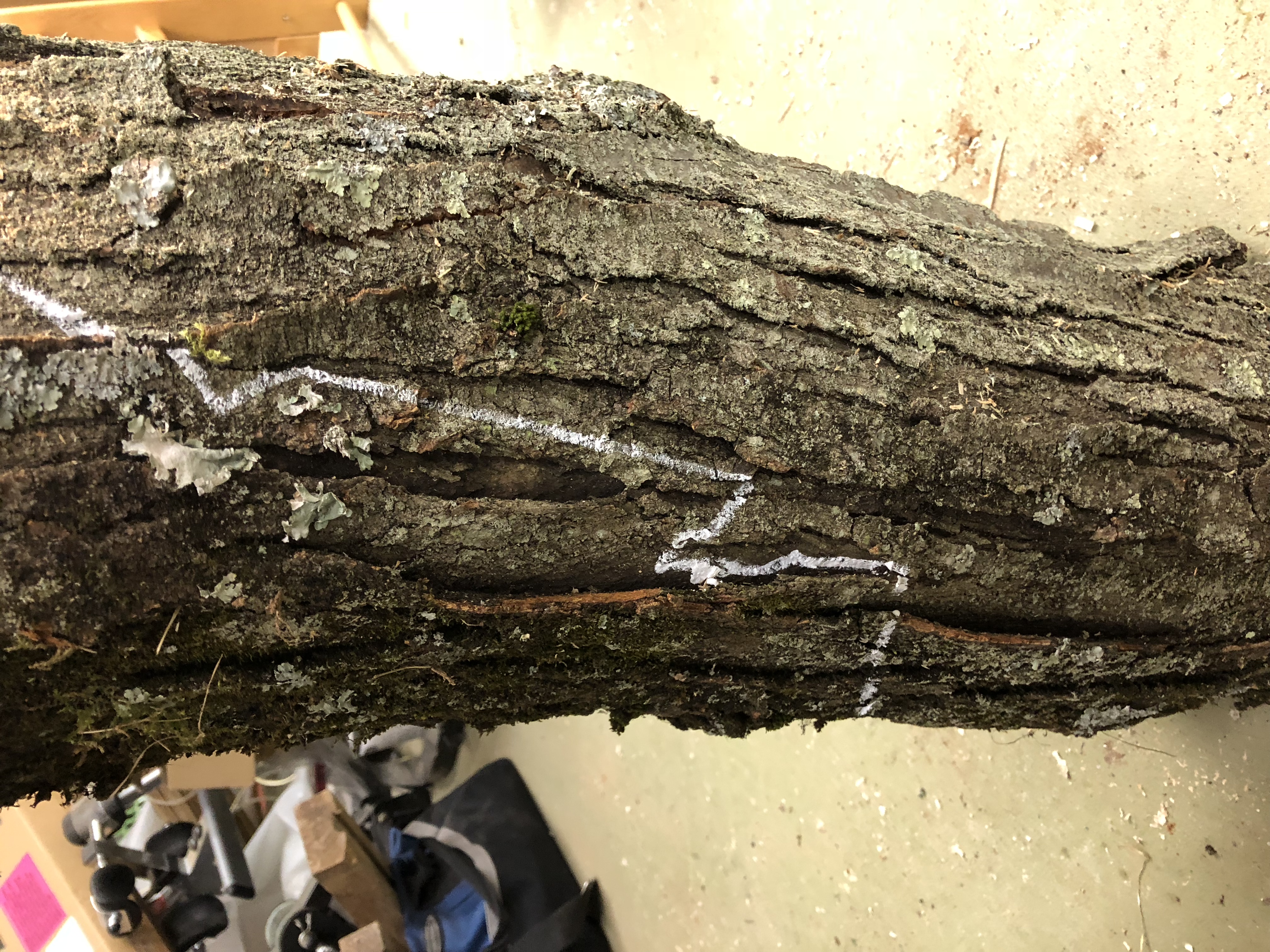
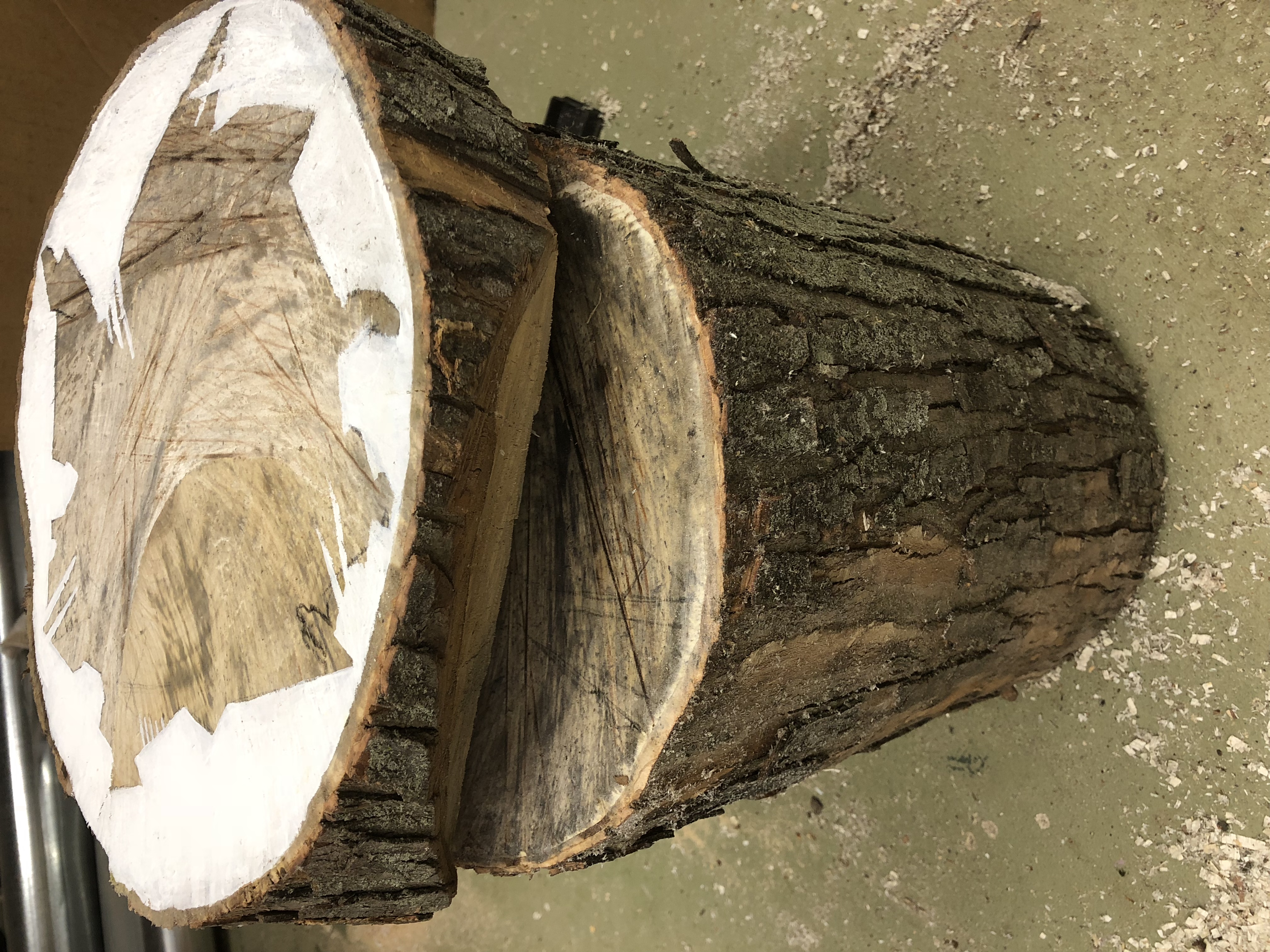
PHere is some latest work- feeling like these new stumps don’t take paint as easy as the last because of their extra rough texture. I would like to add in some sort of white line besides paint…thread?
Continuing to think of the ghosts of the buildings/ houses that have been destroyed by storms. My main concern is the set up and which to include space wise. Also need to think about drilling a rod in to secure from falling.