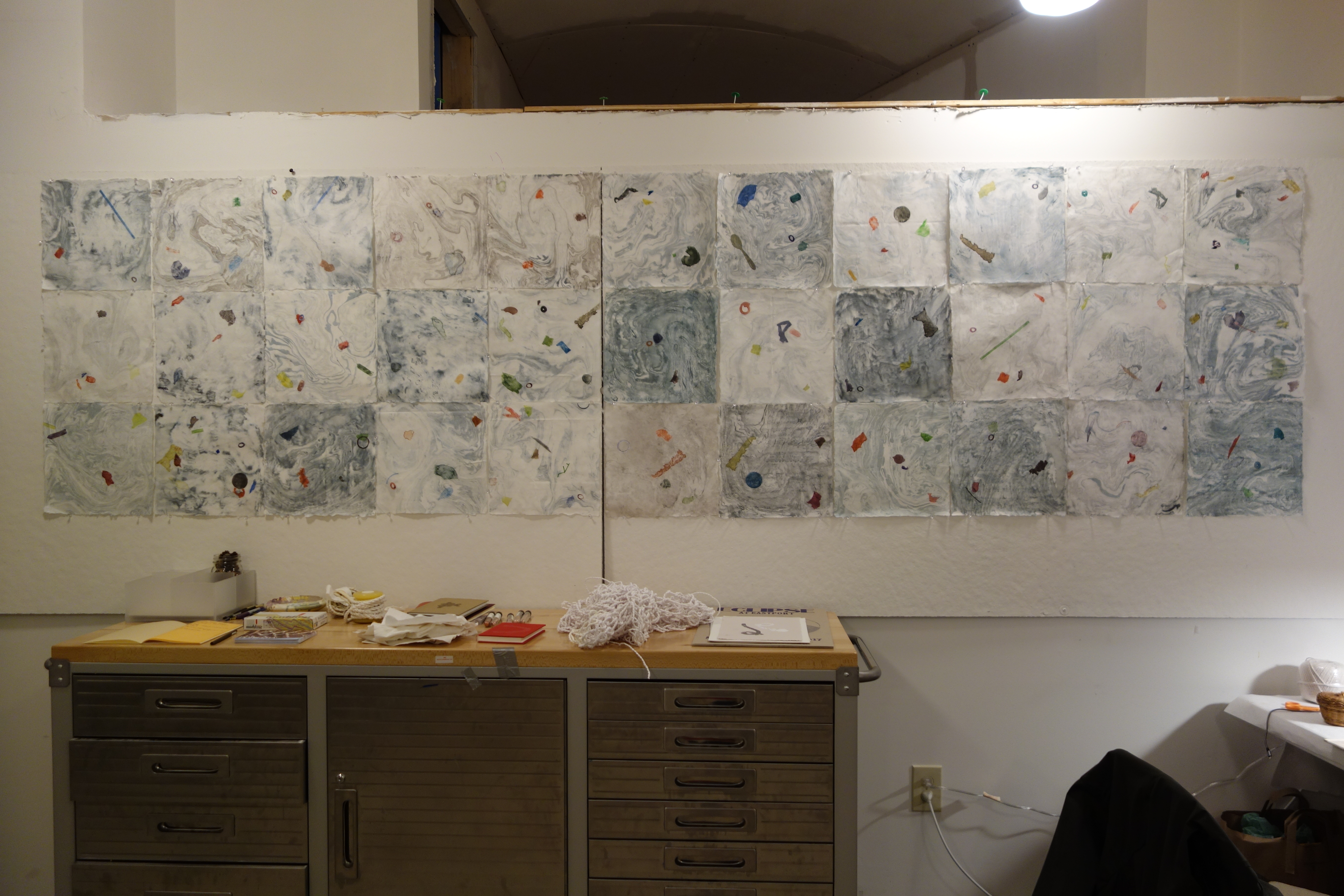
I would like to spend my time during this residency continuing a project that I started during a residency at the Tides Institute in Eastport, Maine. The end result of the project will be 1,000 print-based images based on the Great Pacific Garbage Patch. While I do not expect to complete 1,ooo prints during the residency, this is the first stage in a much large project dedicated to bringing awareness to the issue of garbage in our oceans.
Much of my recent work has been inspired, either directly or tangentially, through my experience working as an artist onboard ships. In 2013 I sailed through the High Arctic aboard the Antigua with The Arctic Circle residency program. In 2014, I sailed on the last remaining wooden whaleship in the world, in residence as part of the The 38th Voyage program. Throughout both residencies, and on other shipboard cruises, I have come to be more aware of shoreline pollution washed up in the tide. Particularly in the Arctic, while hiking daily on the archipelago of Svalbard, we were shocked to discover the enormous amount of garbage washed ashore in a remote, largely uninhabited place.
In response to these residencies, I have been co-authoring a collaborative writing derived from years of engagement in worlds of life on water by both myself, blending art and science through multiple artist residencies on sailing ships, and my writing collaborator Stephanie Steinhardt, a Ph.D. candidate who has ethnographically studied scientists’ work with the Ocean Observatories Initiative (OOI). Our writing joins a growing global body of work that seeks insight from artistic expression for understanding concerns central to science and technology studies. The work seeks to engage communities of minorities and promote the visibility of women in science, artists in science, and women at sea, all areas that are surprisingly underrepresented to this day.
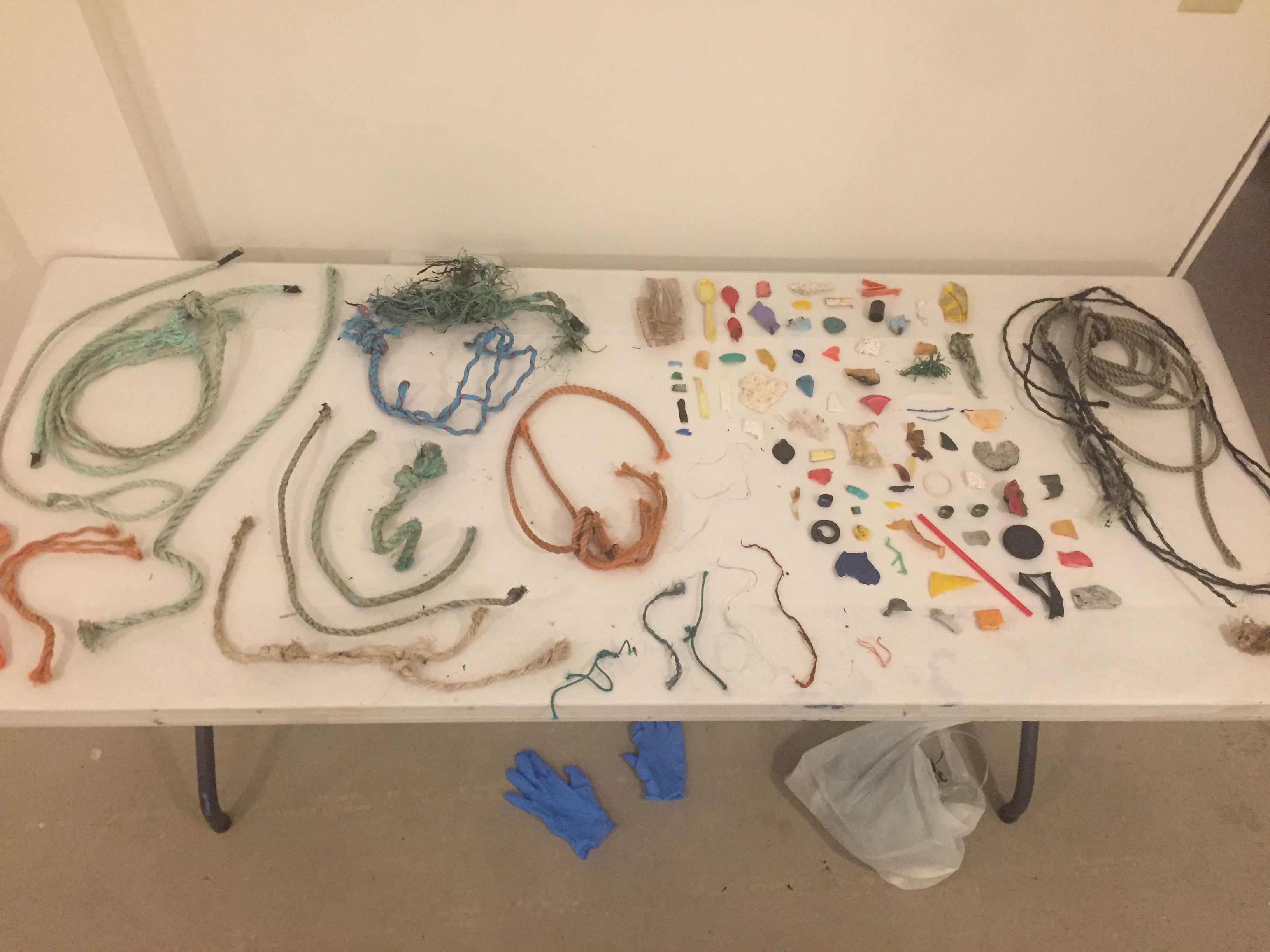
It is these experiences and this collaborative writing that has partly inspired me to begin this project to document the Great Pacific Garbage Patch from afar. Working at the Tides Institute, specifically the waterfront of Eastport, was greatly inspiring to this new body of work. Being near the ocean feels like being near all of the oceans. The way that water is connected throughout our planet makes me feel the connection of this project to the water off the coast of Eastport and back to the waterline in Newark, NJ. Pieces of plastic trash were collected on walks along the coastline in Shackford Head State Park, specifically looking for marine trash to use as source material for my Eastport images. I will walk the Newark waterline to look for similar bits of plastic trash – from these bits I will cobble together a fiction of the garbage patch.
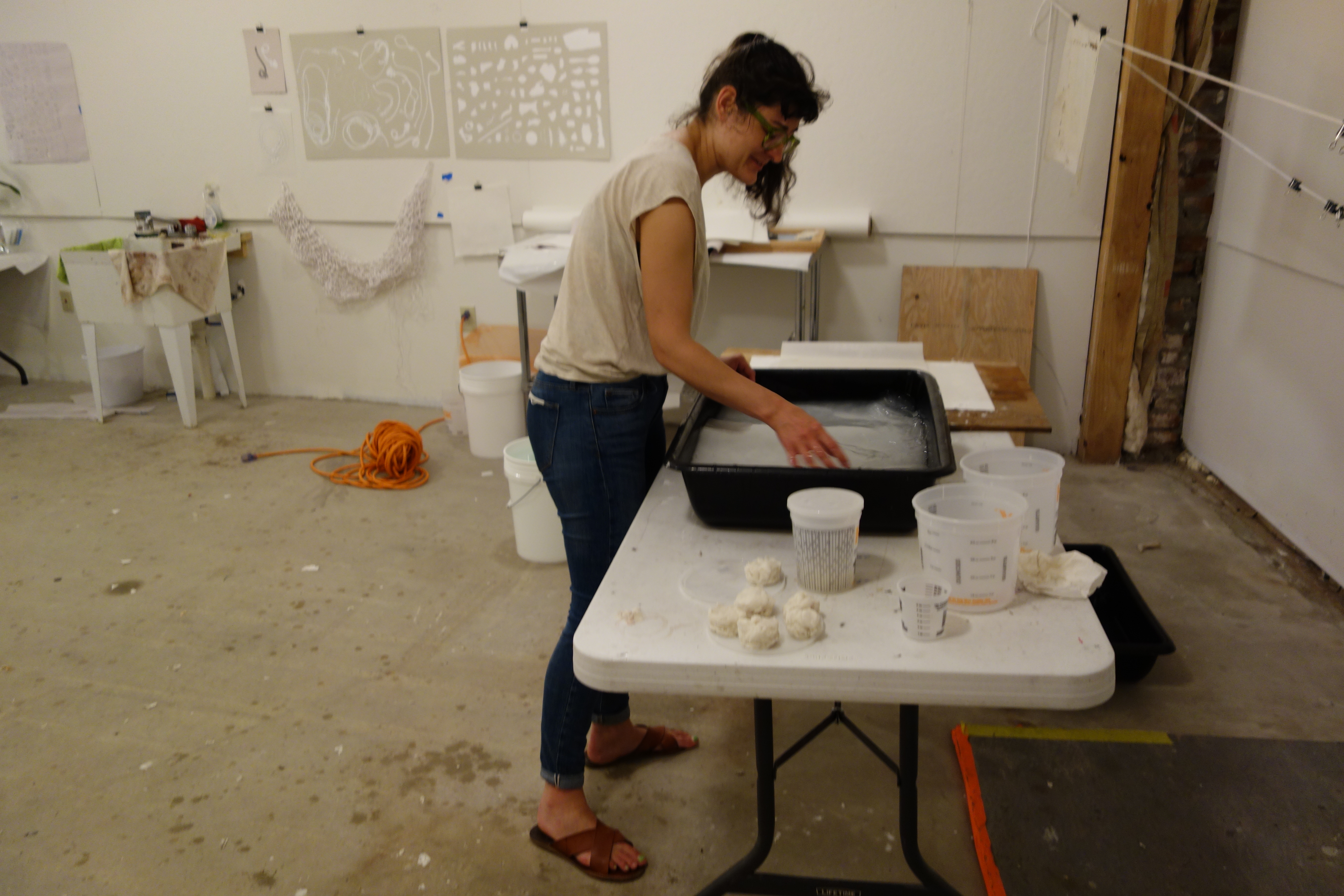
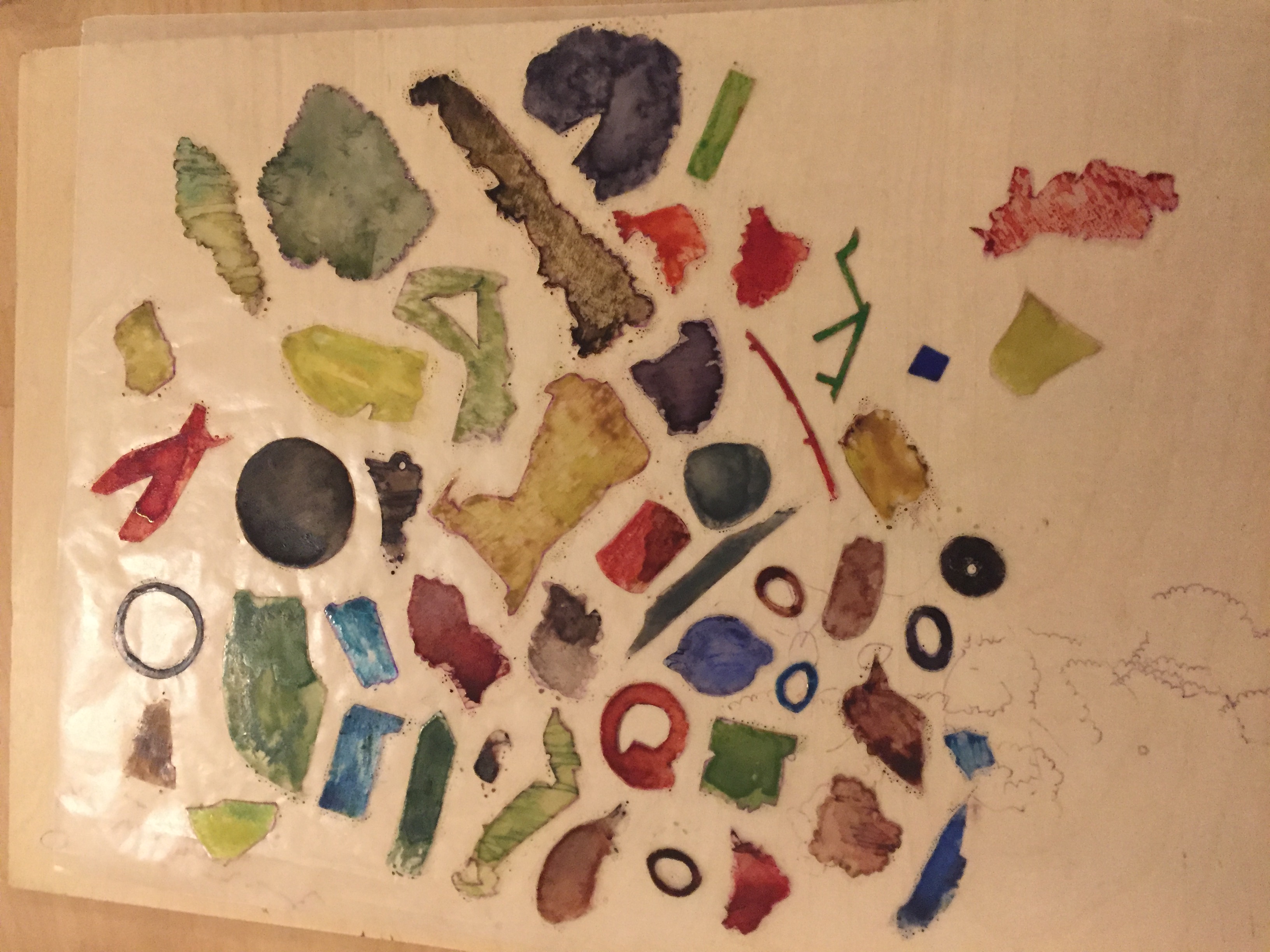
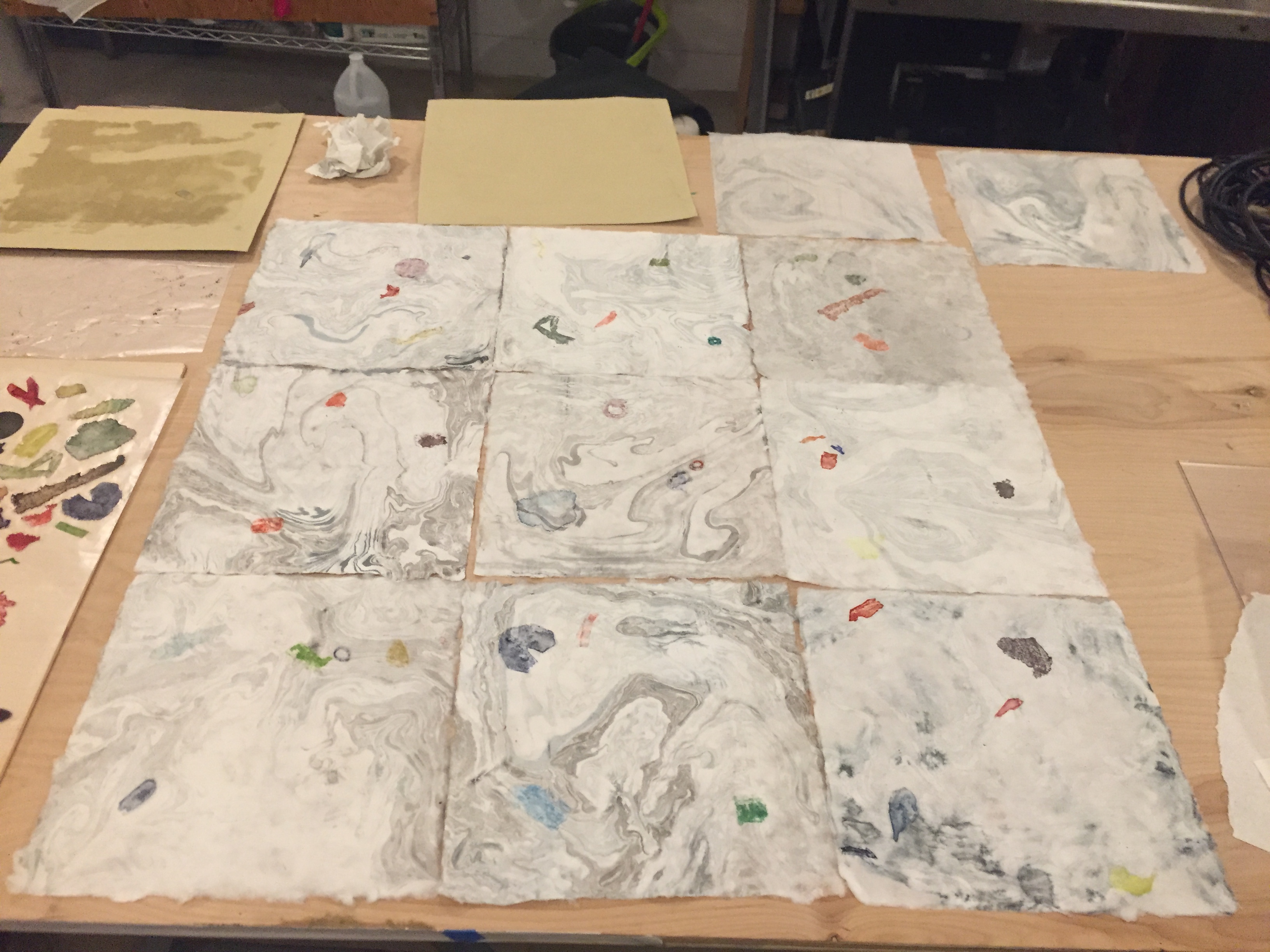
Creating handmade paper from local waters, and using suminagashi and watercolor monoprint, I am creating images of a repetition of shapes throughout the series of work, symbolizing the role of consumerist goods and mass-market culture in the garbage patch. 100 images were made in Eastport, Maine. During the WW11 residency, I will make another 100 images, based on the waterfront of the Passaic River and Newark Bay. Each one of the images will be a modest 1 foot by 1 foot in dimension. These will eventually be followed by 8 other site-specific collections of 100 prints, totaling 1,000 prints at 1,000 square feet, the equivalent of 0.00701459% of the actual garbage patch. But for now, at the end of the WW11 residency, I intend to hang 200 pieces to create a immersive corner installation.