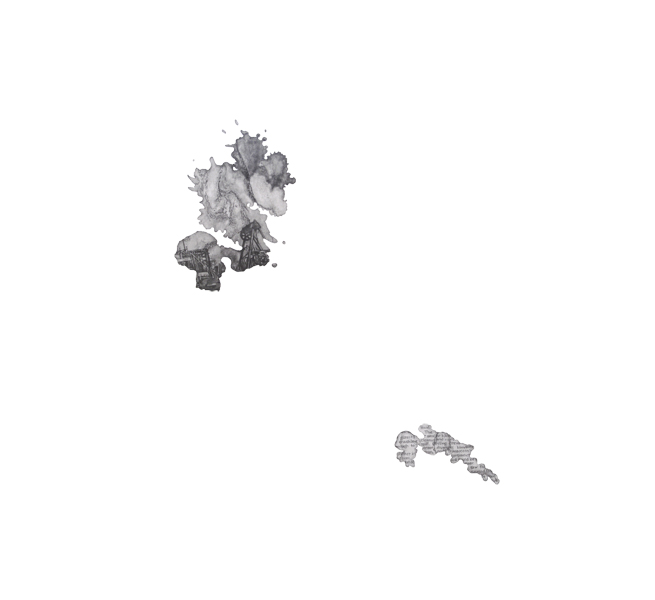
"blowouts," Spills on The New York Times, #6 © Lindsey Muscato, graphite on paper, 22 x 24 inches, 2011
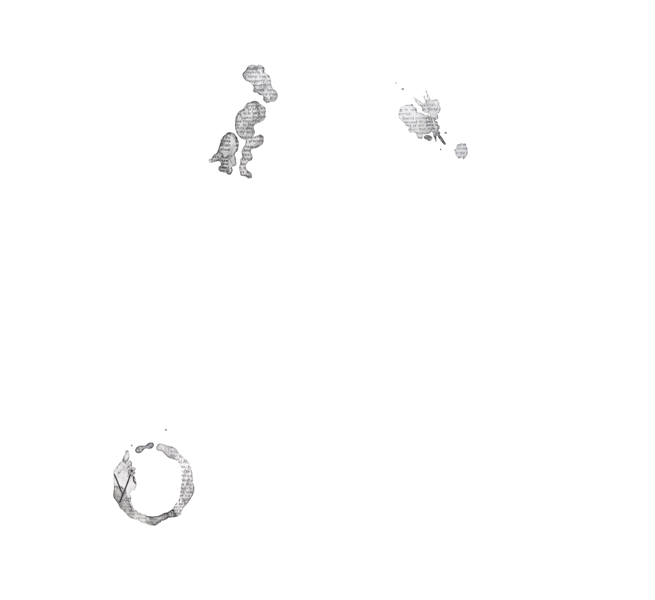
"grapple," Spills on The New York Times, #5 © Lindsey Muscato, graphite on paper, 22 x 24 inches, 2011

"limits," Spills on The New York Times, #4 © Lindsey Muscato, graphite on paper, 22 x 24 inches, 2011
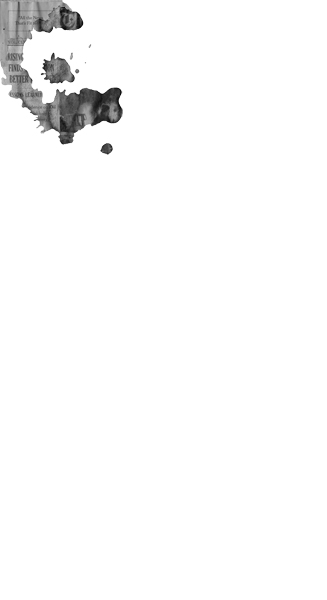
"BETTER," Spills on The New York Times, #8 © Lindsey Muscato, 2011
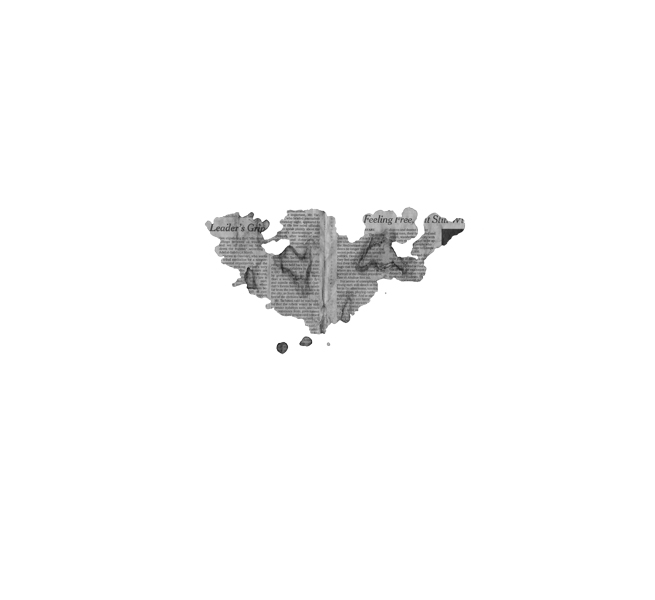
"exaltation," Spills on The New York Times, #7 © Lindsey Muscato, 2011
First, I would like to apologize for the lateness of this post! I had misread the instructed timeline requested in the email, and then never realized I was late till now!
Anyway, here’s the final five.
Since our last meeting, I have been developing a new sub group of small spill drawings for my participation on the 365 Days of Print blog. The small works for the blog took a slightly different approach to the project, and I believe the two most recent works (#7 and #8 of the series) reflect that influence, while bridging my ideas throughout the duration of the spill series.
My original pieces, including “wheat farming,” Spills on The New York Times, #2, which was shown at the tiny preview show at _gaia, represented the first phase of the project that focused more on the printed content, and was less reflective of the newspaper as an object. My second phase, exemplified by the above shown “limits,” Spills on The New York Times, #4, began to shift the focus away from chunks of legible sections of the article, and became more about fractured glimpses, composition of content, and echoing the newspaper itself, through scale. My third phase of this work, in the month of March with 365 Days of Print, pushed my speed of output, and the quality of the drawings was forced to adapt. I decided to mostly limit myself to the front page, so that the daily paper was less overwhelming, and to focus more on the headlines. I began to be interested in how presenting headlines as opposed to the smaller print of the article created a totally different viewing experience. For me, the headlines began to read like signs. There was not the subtle coaxing to step closer in order to read the text, it was legible from several steps away. I was interested in what that would mean in the context of these larger works, when headlines and small print were presented together, and in the total grouping where some are more intimate and quiet than others.
To complete my group of five drawings for the New News is Old News show, I have decided to incorporate a center fold piece, “exaltation,” Spills on The New York Times, #7. As discussed in the critiques, the creasing of the paper itself is rendered, describing the paper not only through it’s printed content, but also through its basic physicality and material. The center fold drawing merges all three of my focuses and approaches throughout the project by including legible sections of articles, fractions of headlines, and the rendering of the newspaper as an object itself.
Secondly, I have decided to include a spill I created on the front page during the March 365 Days of Print online residency. This piece is important to me, as it will be 12 x 22 inches, exactly half the scale of the opened broadsheet, I feel that it takes the scale of the pieces to a more litteral place for the viewers. As with the center fold, this piece bleeds into the corner of the paper, and includes fragments of a photograph, to echo the piece “blowouts,” Spills on The New York Times, #6, as well as sections of headlines, and the iconic “T” from The New York Times header. By introducing a piece that is the scale of the front page, places a greater importance to sequencing these works in a way that is visually interesting, without being overly “easy” of narrative. I have not begun to sequence the works in terms of their arrangement on the wall, and would like feedback on this point at the meeting.
I am interested in including the two earlier, small pieces (posted below) in the New News is Old News show, hung as a pair, with spacing from the other five. Of course, this is up for discussion and only if space allows.
I look forward to all feedback, and to seeing you all on Sunday!
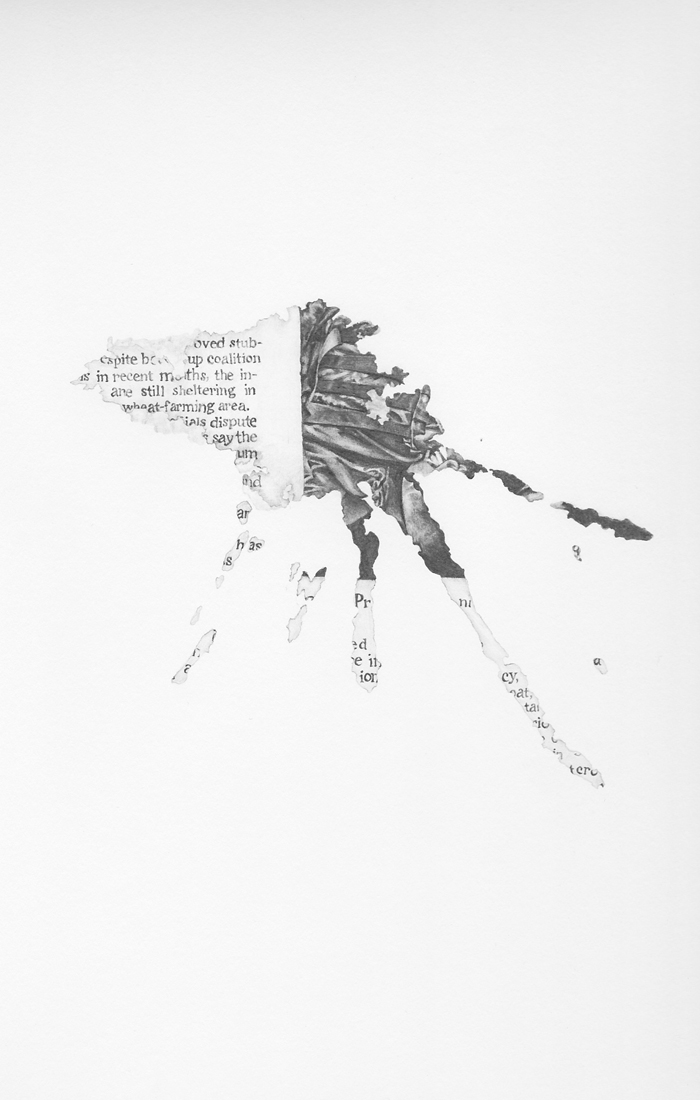
"wheat farming," Spills on The New York Times, #2 © Lindsey Muscato, graphite on paper, 17 x 12 inches, 2011
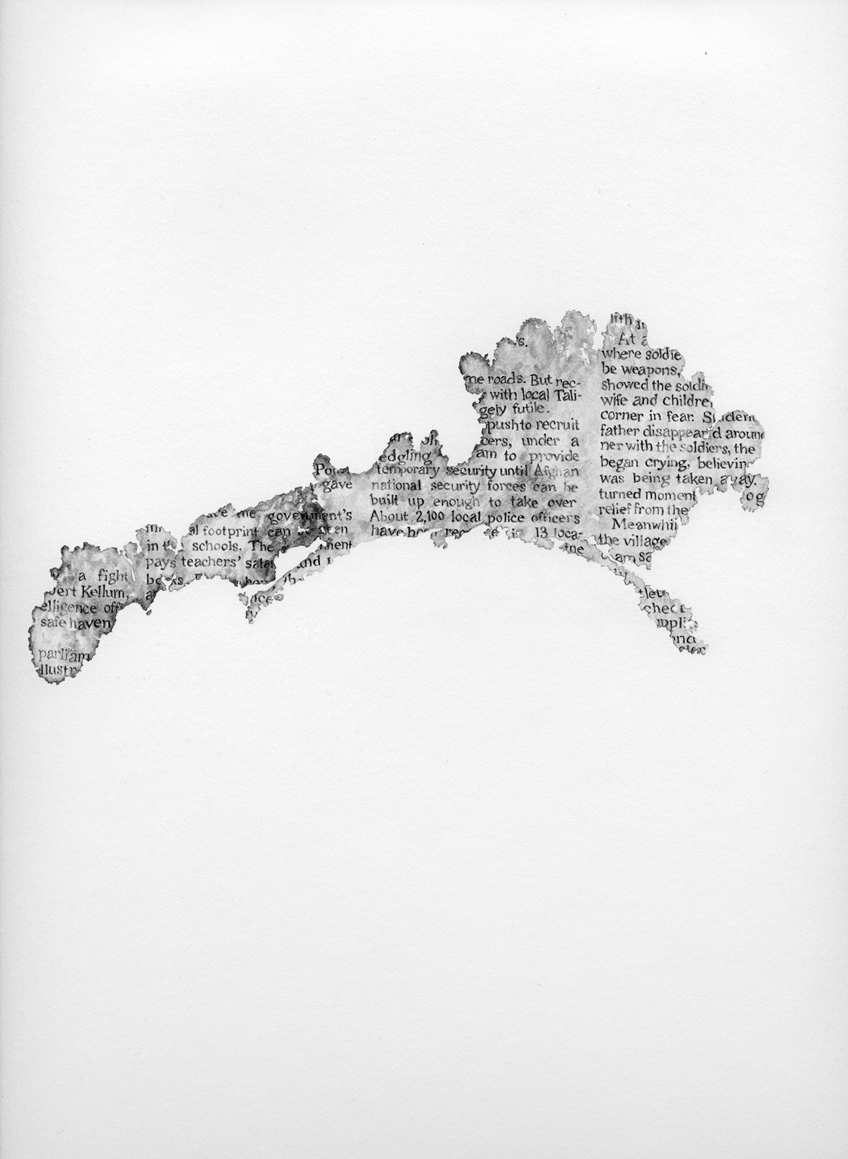
"local police," Spills on The New York Times © Lindsey Muscato, graphite on paper, 17 x 12 inches, 2011

One Response to Final 5 works for the spills on The New York Times series