Sitti | My Grandmother, Ummi | My Mother, and Binti | My Daughter
When I was invited to participate in Root System 2026, I was drawn to the connection between roots and intergenerational lineage. Beneath the surface, roots reach outward, intertwine, communicate, and connect. A tree in New Jersey may seem impossibly far from a tree in Palestine, yet I began imagining them speaking to one another through the earth.
That thought made me wonder about our own roots as human beings.
Where do we lay our roots when we migrate, whether by choice or because we are forcibly displaced and uprooted from our home and land? What happens to the traditions, memories, culture, and connection to land that we carry with us? Do they remain within us, perhaps in ways as deep and invisible as roots? I believe they do.
Even when separated from homeland, our root systems continue through memory, identity, and intergenerational connection.
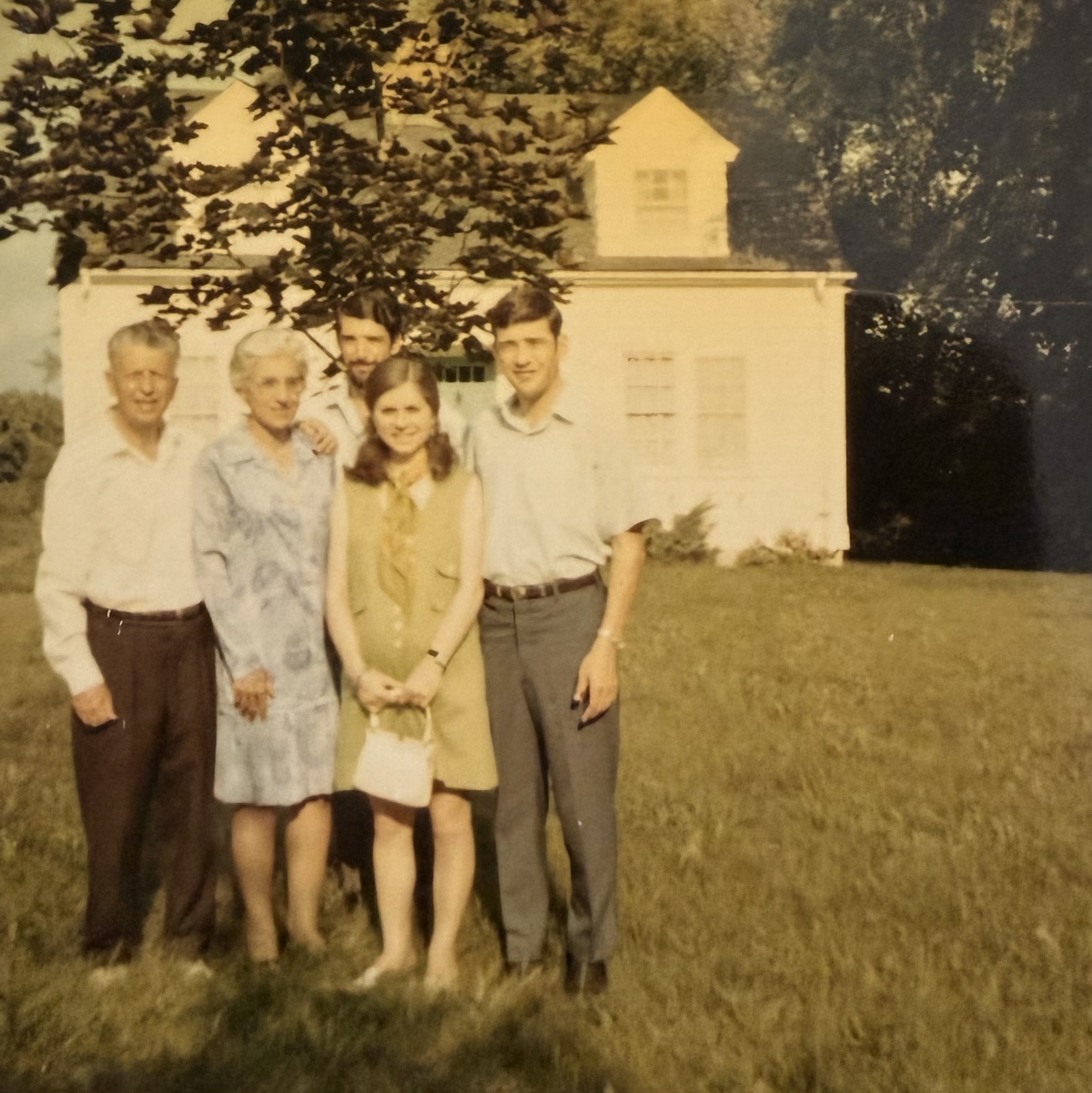
I am first-generation Palestinian, born and raised in the United States. I am rooted here because this is where my life and my family have grown, but I am also rooted in Palestine, where my ancestors lived for generations. I exist somewhere between these two places, connected to both.
My connection to Palestine lives in memory.
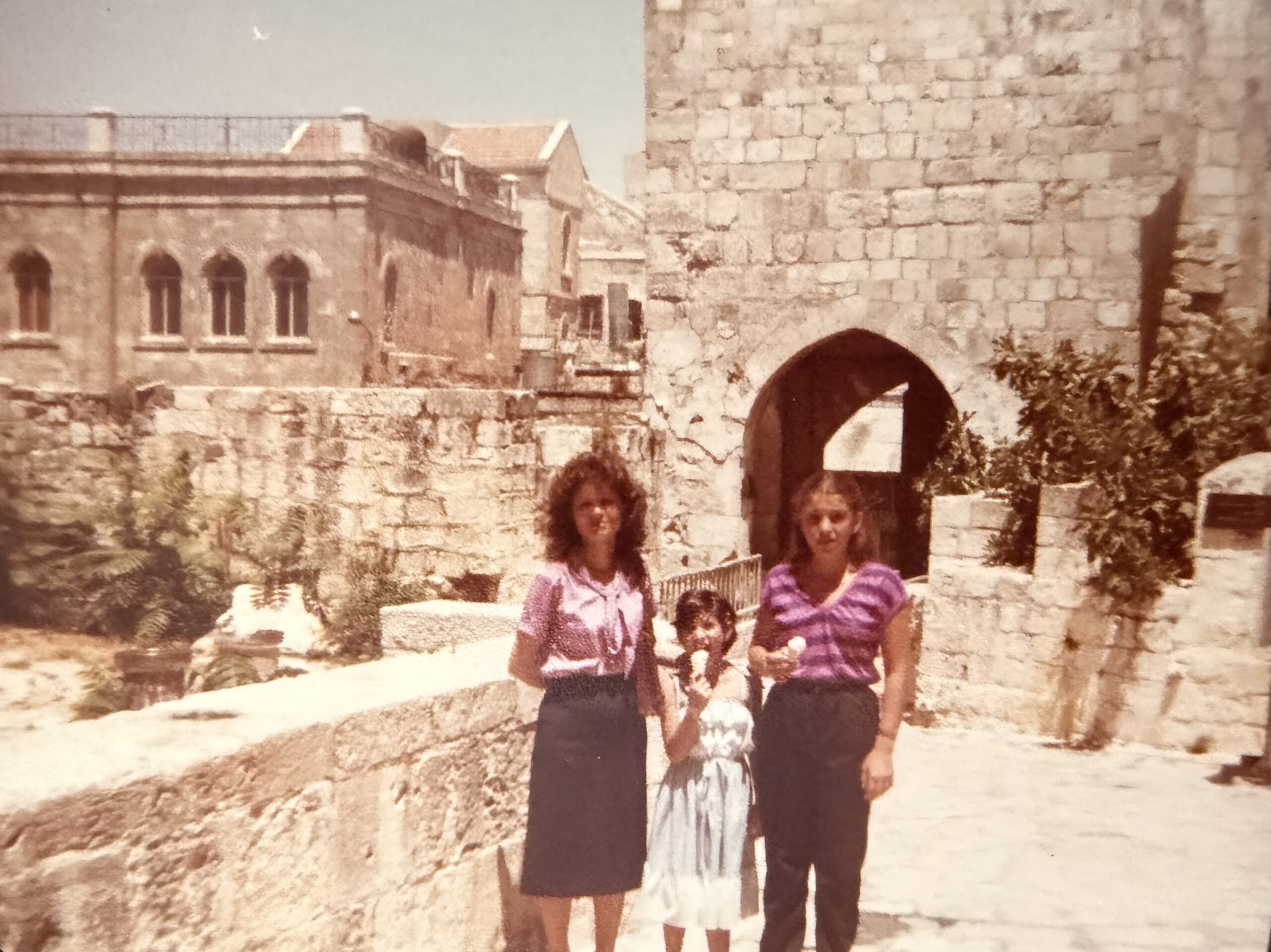
I remember the summers visiting my grandparents in Jerusalem and spending time with family in Ramallah. I remember the hot days and cool nights, the breeze moving through the trees, the smell of the earth, and the vibrant sunsets seen from the rooftop. I remember nights filled with bright stars and the smell of food always coming from the kitchen.
I remember my Tata’s (grandmother) garden. Her almond tree, grape vine’s, sour cherry and lemon trees, sabar plant, roses, and jasmine that she so lovingly tended.
I remember the sounds of children playing football in the streets and the calls for Rokab ice cream on hot days. I remember the ordinary, beautiful moments of childhood that become precious with time. Sometimes I find myself longing for just one glimpse of those days, to return for a moment, to see my grandparents again, to hug them tightly.
Those memories are rooted in me.
They connect me to a place I cannot always physically be.
When I walked through the preserve, I began thinking about the root systems beneath my feet and the possibility that these networks might somehow connect us beyond the boundaries we create on maps. The roots beneath the land reminded me that we are connected not only to one another, but also to the natural world and to something much older than ourselves.
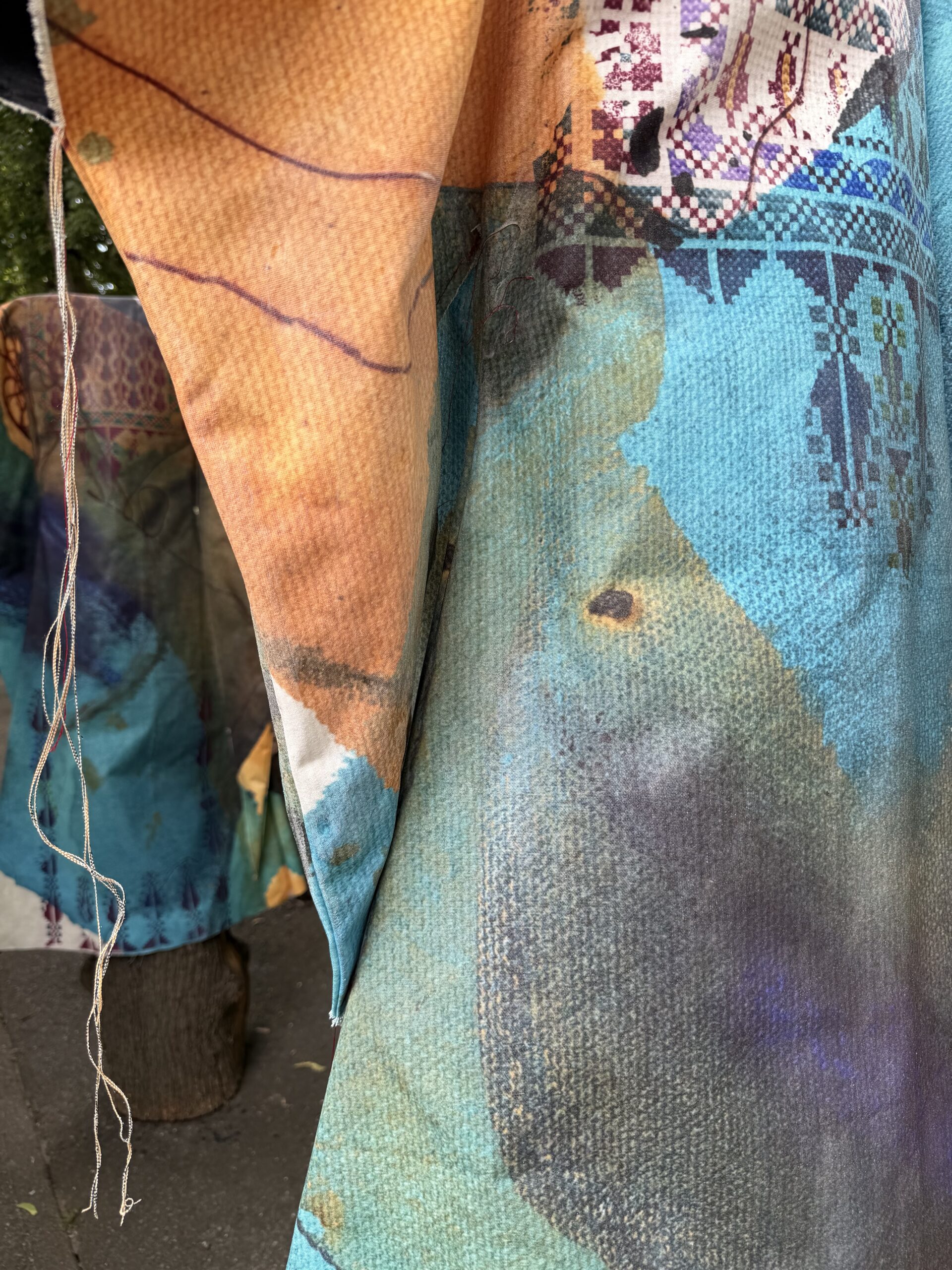
This project explores the root system as a living connection between generations, and how the land carries memory, identity, and belonging.
The preserve also reminded me of Palestine. Both landscapes are full of life, shaped by the people who love and care for them. I thought about the mountains and valleys of Palestine, and the cypress, olive and orange groves. I remembered my family’s home in Ein Siniya, a small Palestinian village near Ramallah.
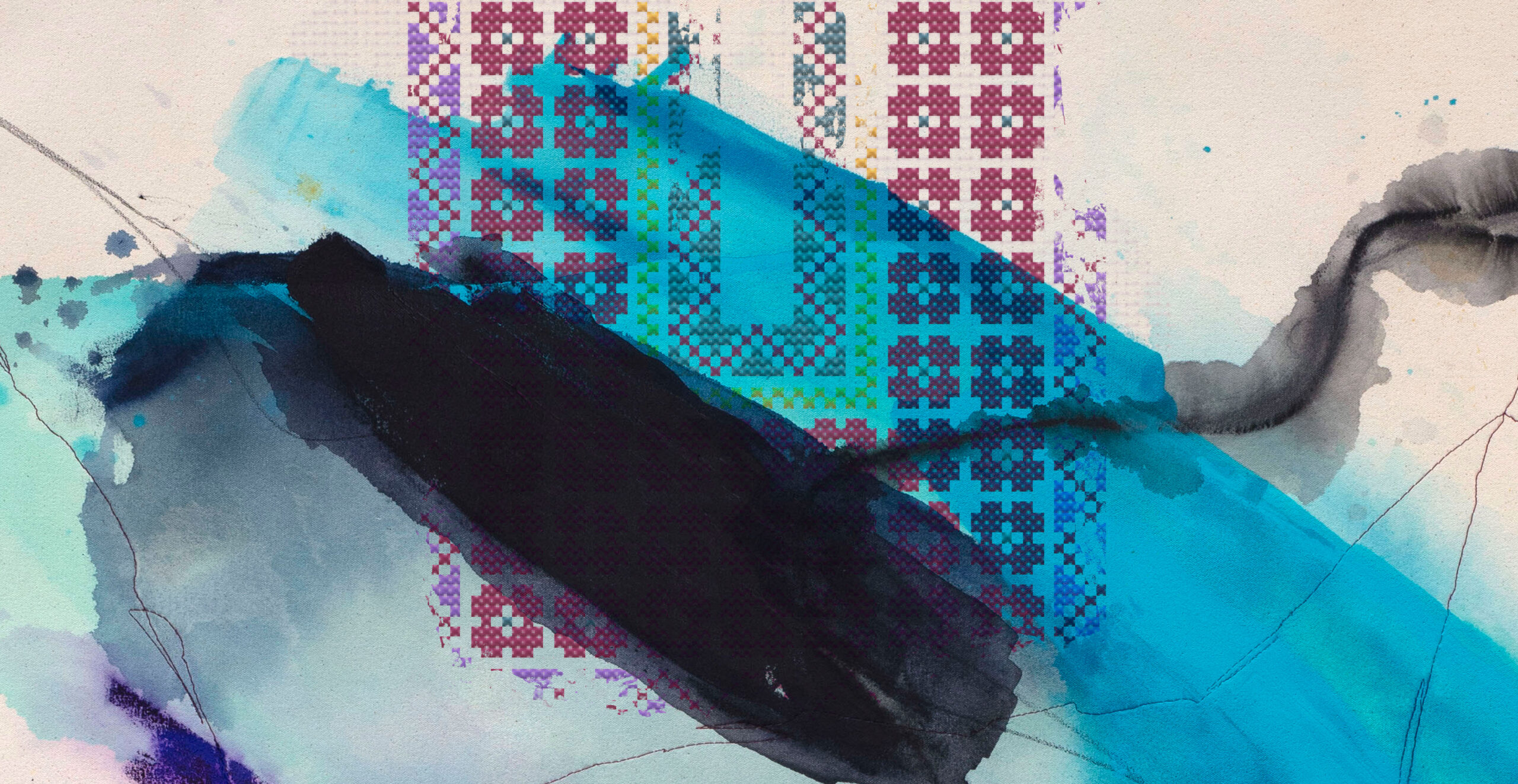
As I began developing the installation, I wanted to bring together the organic and the cultural. I wanted the sculptures to connect the Palestinian thobe, with its deep connection to regional identity and women’s traditions, to the natural world beyond the traditional embroidered motifs that reference the land.
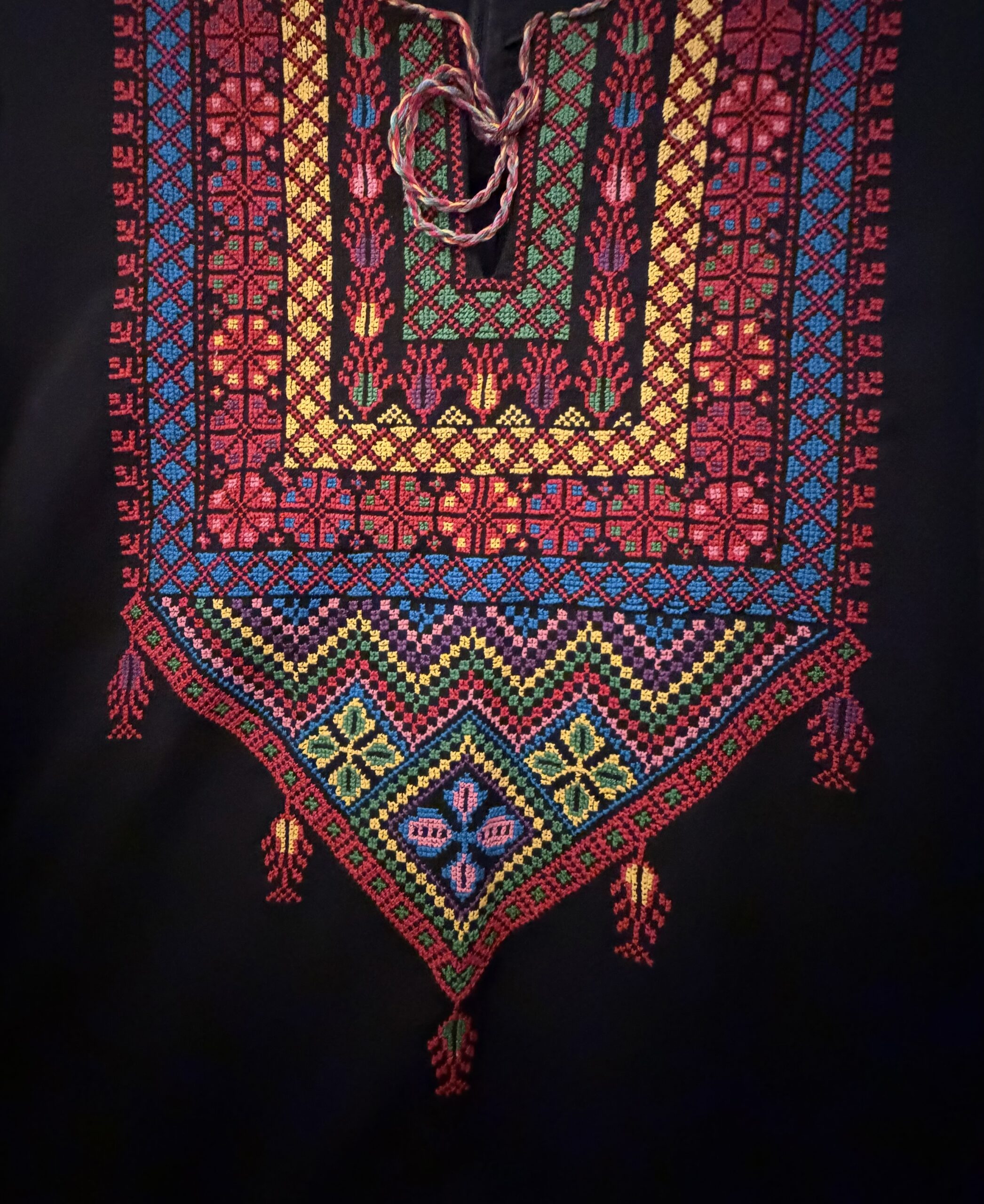
Tatreez, traditional Palestinian cross-stitch embroidery practiced and passed down through generations, is reinterpreted in my work from motifs handed down to me by my grandmother and mother. They reference the olive trees and cypress trees of Palestine, as well as poppies that grow both in Palestine and here in the United States. Through these patterns, the dresses carry images of the land across distance, connecting Palestine to the place where I live now.
The thobe becomes a form without a body, a vessel for generations of women. Through it, I honor the women who came before me, the women who continue these traditions today, and the women who will carry them forward.
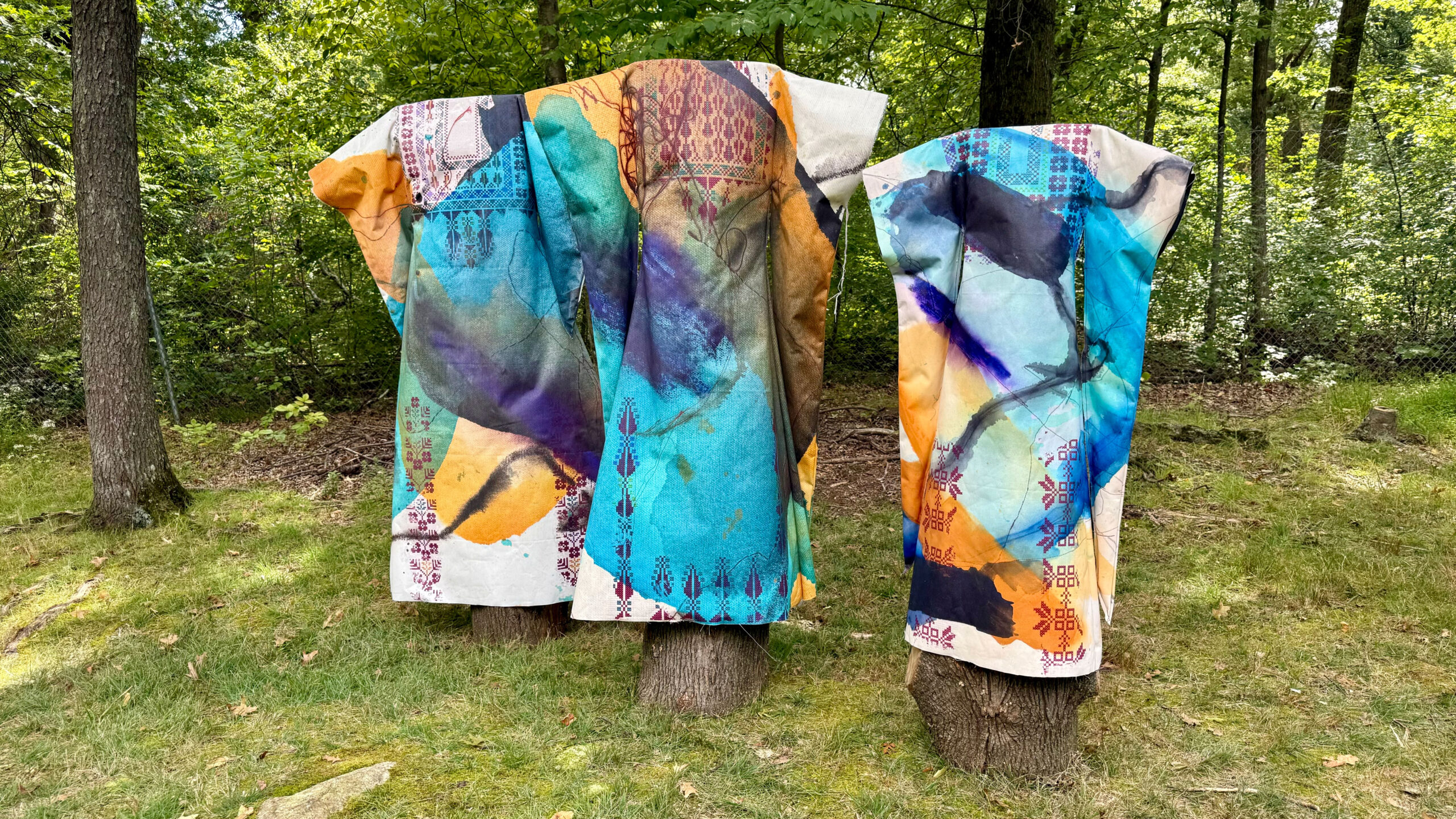
The three thobes emerge from the tree as if they are being born from nature itself. They are secured by the roots beneath them, grounded and strong. The three figures represent grandmother, mother, and daughter, three generations connected through the same root system. Sitti, my grandmother, Ummi, my mother, and Binti, my daughter.
Past. Present. Future.
The dresses become extensions of the same natural world.
The root system becomes what connects us and gives us strength.
The thobes become the continuation.
The land becomes the connection between them.
In this way, the sculpture is not only about where we come from. It is about what we carry forward.
Nature has witnessed everything.
It has witnessed people arrive and leave, generations being born and passing away, communities changing, landscapes transforming. We may leave, but the trees remain. We may disappear, but the land continues to hold what came before.
Nature reminds us that life is constantly adapting.
Growing.
Changing.
Falling.
Regenerating.
The land taught me to appreciate all that has been shared with us: the shade of a tree, the fruit it gives, the stories held by a family, the traditions carried by women’s hands, and the memories that travel from one generation to another through the root system that connects us.
I began this project thinking about roots as a network beneath the earth. I ended by understanding the root system as the living connection between generations, carrying memory, identity, and belonging within us.
Perhaps we are all connected through the landscapes we inherit.
Perhaps a tree in New Jersey can speak to a tree in Palestine.
Perhaps our ancestors are still speaking to us through the things we remember, the traditions we preserve, and the stories we choose to carry forward.
And perhaps, like the root system that sustains and connects us, we are stronger because we are connected.
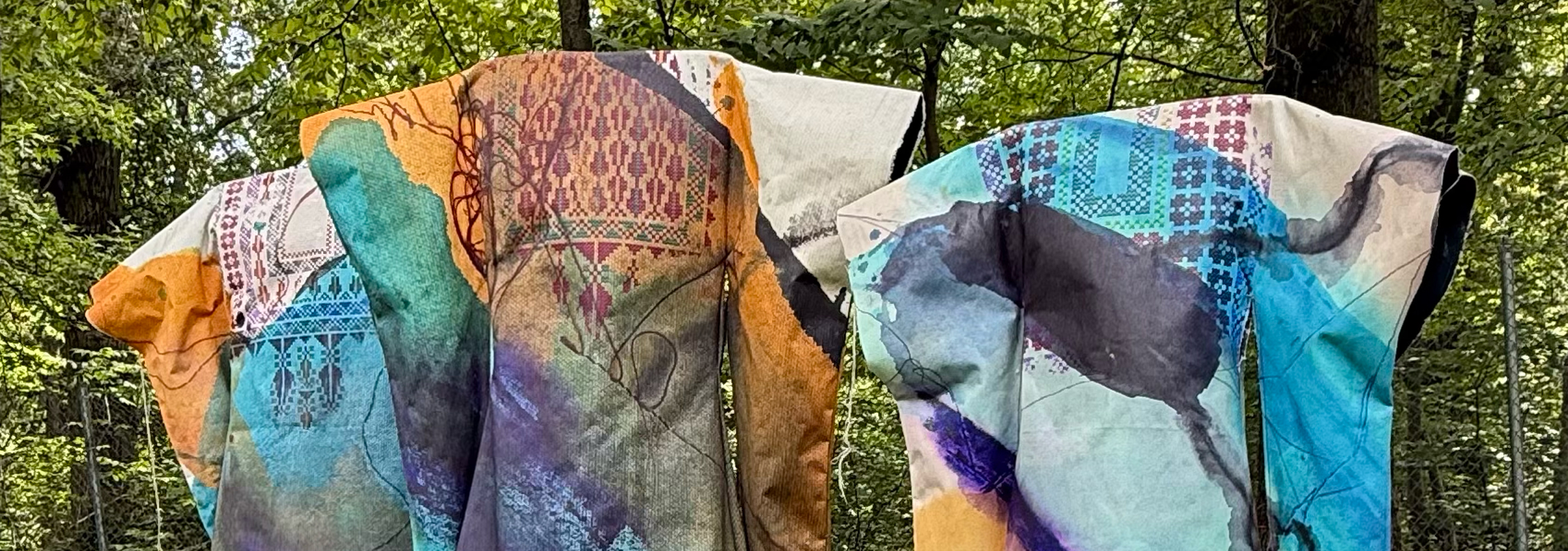
The installation is ultimately a message of hope, survival, and resilience.
The land may be distant, but the connection remains.
We may be separated from one another, but the root system continues to hold us together.
And just as the land continues to change, regenerate, and sustain life, I believe humanity will continue to find ways to survive, adapt, connect, and grow.
Warmest gratitude to the Wildflower Sculpture Park residency for giving me this opportunity to share my art and journey, and to all the artists who are part of this exhibition. I’m so grateful to share this experience with you. And most of all, thanks to Doris Caçoilo and Penelope Malakates for curating and managing a wonderful exhibition.
This installation is dedicated to the strong women in my life, my mother, Lama al-Hussaini; my Sitti’s, Rabiha al-Hussaini and Ulwiyya al-Hussaini; my Great Aunt Hind al-Hussaini; my daughter, Maya Serene al-Hussaini Hatcher; and to all the strong women who came before us, who passed down their strength and pride in ourselves and our culture. And to the men who supported, encouraged, and lifted us up, my grandfather Ishaq Musa al-Husseini; my father Hatem Ishaq al-Hussaini; my dearest Uncle Nabil al-Hussaini; my son Aden al-Hussaini Hatcher; and the love of my life Rob Hatcher.
