I have re-conceived my food advice project as an “emotional vending machine,” inspired by a critique of the vending machines in Japan that use facial recognition to identify a buyer’s age, gender and (most controversially) race before offering them beverage choices based on demographic preference. (FYI Microsoft just filed a patent on facial recognition posters that would display ads based on the age and gender of people who walk by… Minority Report, here we come!). I was also inspired by a recent New Yorker article about emotional facial recognition technology.
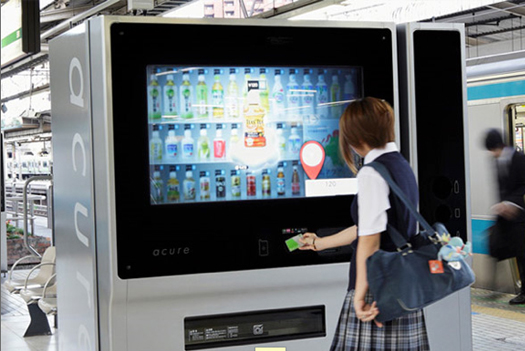
Facial Recognition Vending Machine
Here is a draft of an updated project description. The title is a working title, but I like the way it personifies the vending machine.
Emotional Vending Machine (EVM) is an interactive sculpture of a vending machines that offers advice about what to eat based on the user’s feelings. When a user stands in front the machine and clicks start, EVM, by reading their facial expression through its web cam, identifies one of four emotions: happy, sad, bored or anxious. EVM then offers advice for what to eat for this feeling from its database of emotional eating advice. The advice is culled from individuals the machine has encountered, and the database of advice grows as the machine travels to different locations. EVM’s inaugural voyage will occur at Gallery Aferro in Newark, with the initial advice contributed by SuperFood participants. Users at the gallery are invited to contribute their own advice, which will be added to the database after the opening.
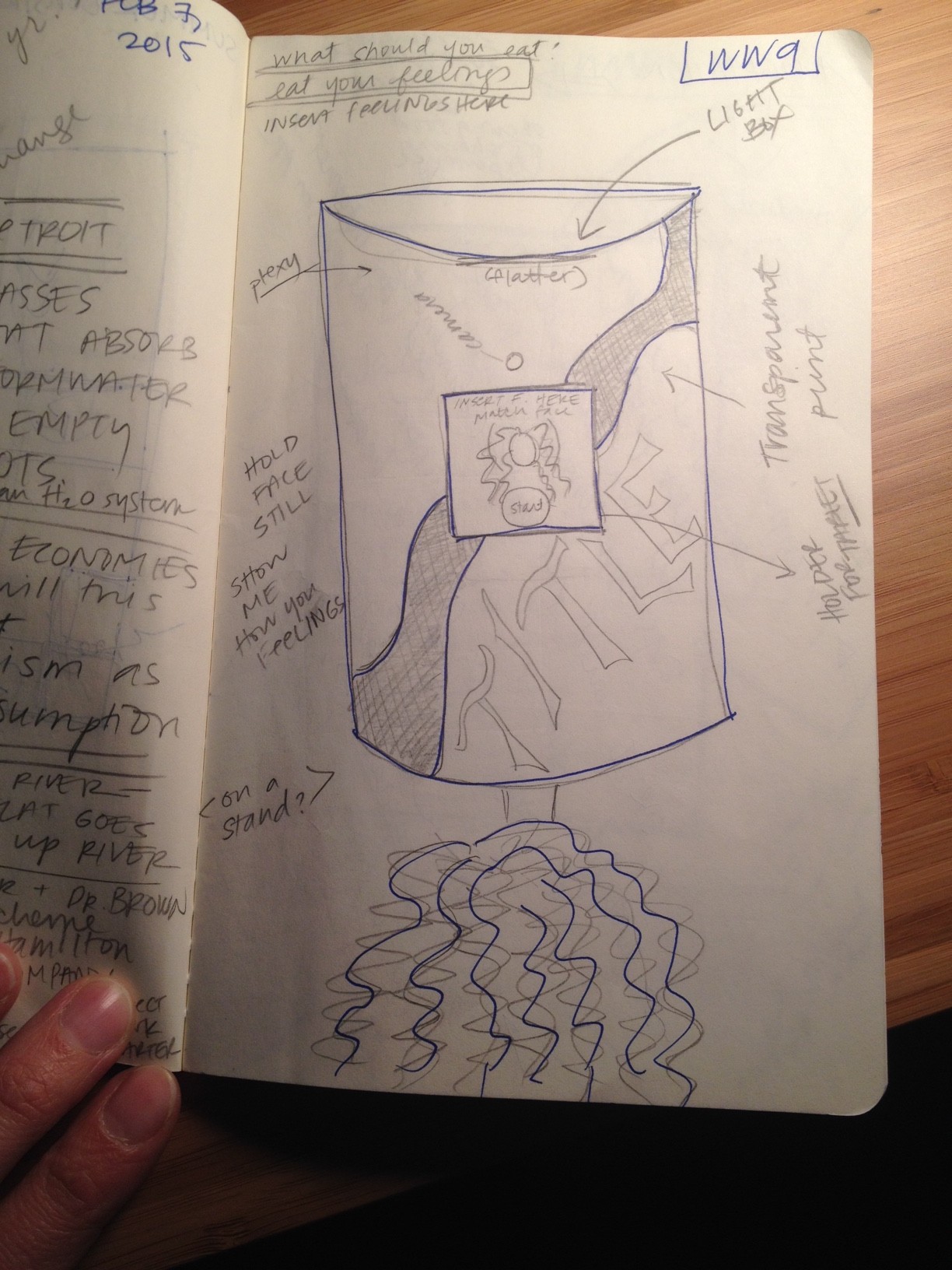
Sketch of a user standing in front of the Emotional Vending Machine
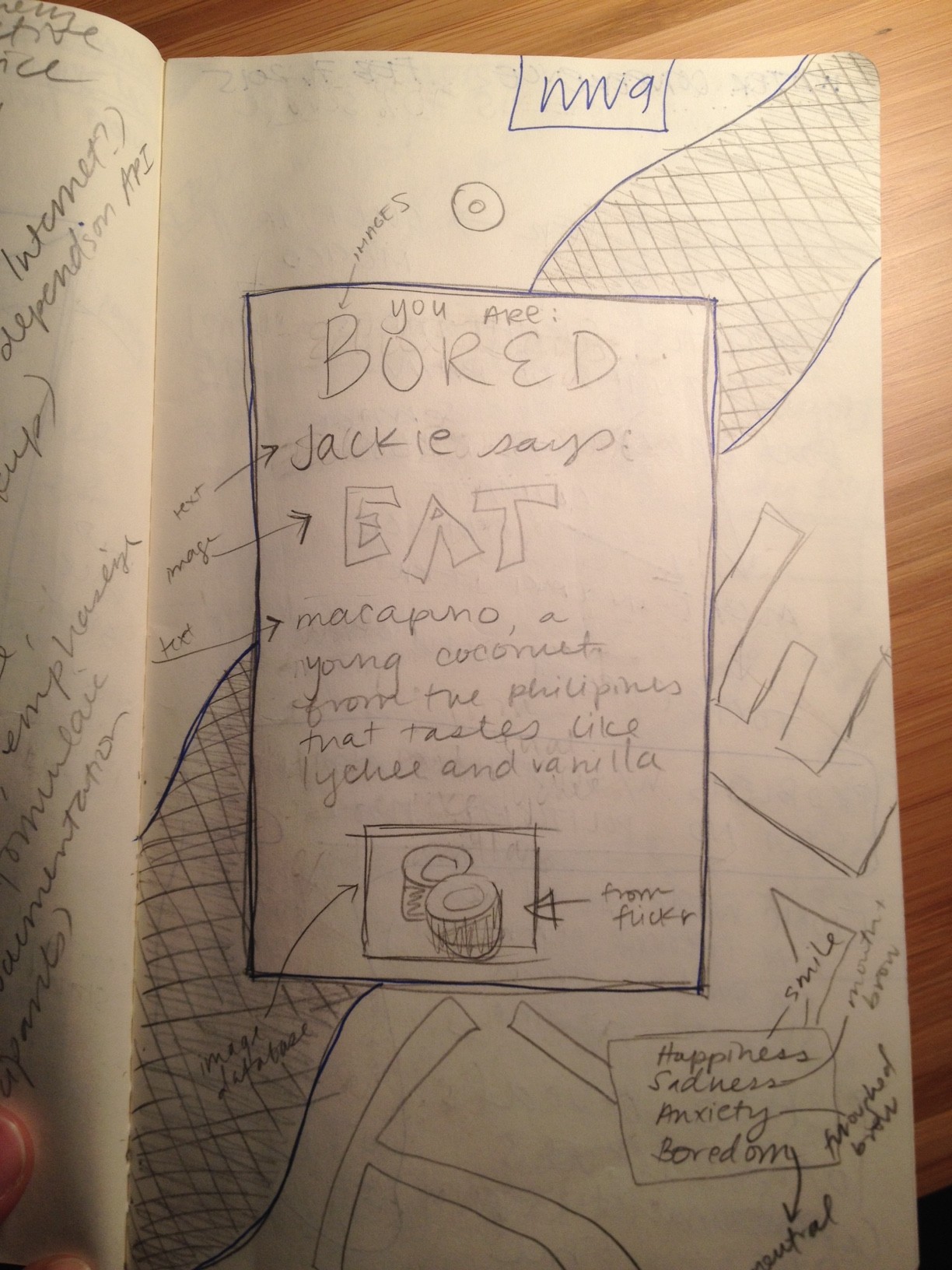
Screen displaying advice. The images will be preselected from the flickr creative commons.
Questionnaire
Please answer the following questions. Feel free to reference specific places, businesses or cultures.
What do you eat when you are celebrating?
I eat: ________ It comes from: _________ It tastes like: ______
What do you eat when you are bored?
I eat: ________ It comes from: _________ It tastes like: ______
What do you eat when you are worried?
I eat: ________ It comes from: _________ It tastes like: ______
What do you eat when you are sad?
I eat: ________ It comes from: _________ It tastes like: ______
Conceptual Questions:
-Anonymity of the contributors?
-wording on questionnaire
-Initial advice seeding in Newark (at an earlier Aferro event?)
-Scale (for travel, how to install)
-ok to not have your advice added instantaneously (hate the idea of users typing in the gallery)
-Light box – needed?
-Contribution card – printing quality, how to display/collect
-language translation (i.e. if I wanted to bring it to Sunset Park)
Tech Questions:
-need to find a Processing library that can do basic facial expression recognition (smile, neutral, eyebrow furrow)… if not, what?
-can I have a database within my Processing app or will I have to manually enter the advice as full sentences? (if yes, is there a limit to how many in processing)
-what concerns about moving the app to a tablet? (ie folder of images)
-any reason I should do this in Max/MSP (which I would find easier, but I don’t know about facial expression rec with it, or about showing it on a tablet)

